A Beginner’s Guide to Chinese Astrology Through the Lens of Daoism
To kick off the Lunar New Year, Yun Shu shares some insights into the architecture of the Fire Horse year and how understanding your birth chart is the best way to navigate the heat it will bring
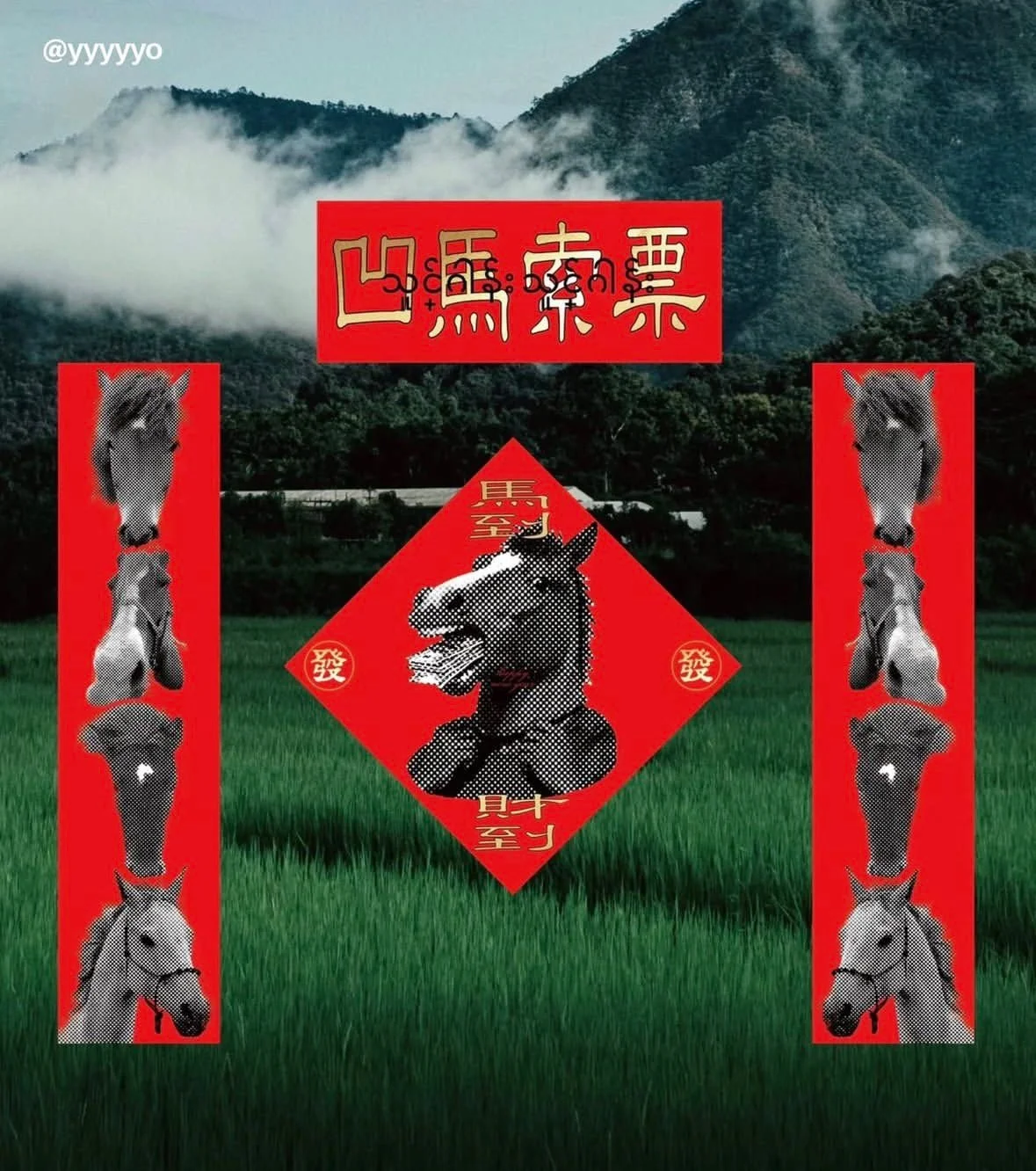
We’re officially in the midst of the first new moon of the lunar calendar, when about two billion people around the world celebrate Lunar New Year. The festivities stretch on for fifteen days – until the full moon, culminating with the Lantern Festival.
Now that a significant portion of the internet has turned Chinese, I suspect this year might be the biggest celebrations yet. Never have I seen so much commentary and interest around the Chinese zodiacs – post after post about the ending of the Wood Snake year and how to prepare for the Fire Horse year.
As a Chinese person, I am bewildered. I think to myself: could it be that ancient Chinese cosmology is the new astrology, the new Ayurveda, the new 16Personalities, the new Human Design??
If that’s the case, then there’s a lot I want to unpack for the newly Chinese.
Firstly, the handover from the Snake to Horse year actually happened on Feb 4th, on Li Chun, which is the start of the traditional Chinese solar calendar used by professional astrologers. What’s happening now is the cultural celebration. Confusing, I know. This news might change some people’s zodiacs.
But just like how you are not only your sun sign in astrology, you are not only your zodiac animal. It accounts for one-eighth of your birth chart, if that.
I’m going to take the scenic route and arrive at the zodiacs at the end, but I promise it’s an illuminating ride. Let’s settle in with a bit of Daoism.
Daoism and the Natural Order of the Universe
The Chinese psyche largely consists of three governing philosophies: Confucianism instructs morality and behavior for a cohesive society; Buddhism softens suffering while offering a roadmap for the afterlife; Daoism teaches how to flow with the natural order of things.
When we refer to Daoism, it’s based on two texts: Dao De Jing (‘The Classic of the Way and its Virtue’) by Laozi, whose identity is the stuff of legends, and Zhuangzi by the quirky philosopher of the same name. These texts dance with the idea that the Dao (‘The Way’) is the natural order of the universe and invites readers to re-align themselves with the Dao.
Dao De Jing is at least 2000 years old, comprising 81 chapters of poems, each line so purposefully dense with meaning that the rational mind quickly reaches its limits in comprehension.
Take the opening line: “The Dao that can be spoken is not the eternal Dao.”
So the Dao is something beyond words.
Yet, we try.
The Daoist Creation Story: How Yin & Yang Interact
Chapter 42 of Dao De Jing opens rhythmically:
道生一,一生二,二生三,三生萬物。
萬物負陰而抱陽,沖氣以為和。
(“The Dao gives birth to One,
One gives birth to Two,
Two gives birth to Three,
Three gives birth to Ten Thousand Things.
The Ten Thousand Things carry Yin and embrace Yang,
Harmonised through the Circulation of Qi”)
Let’s break it down.
道生一 (“The Dao gives birth to One”)
The Dao is the inexplicable beginning of all things, before space, time, matter, energy. Like a womb, it gives birth to the One – which is the universe in a state of singularity, containing all potential but no division.
一生二 (“One gives birth to Two”)
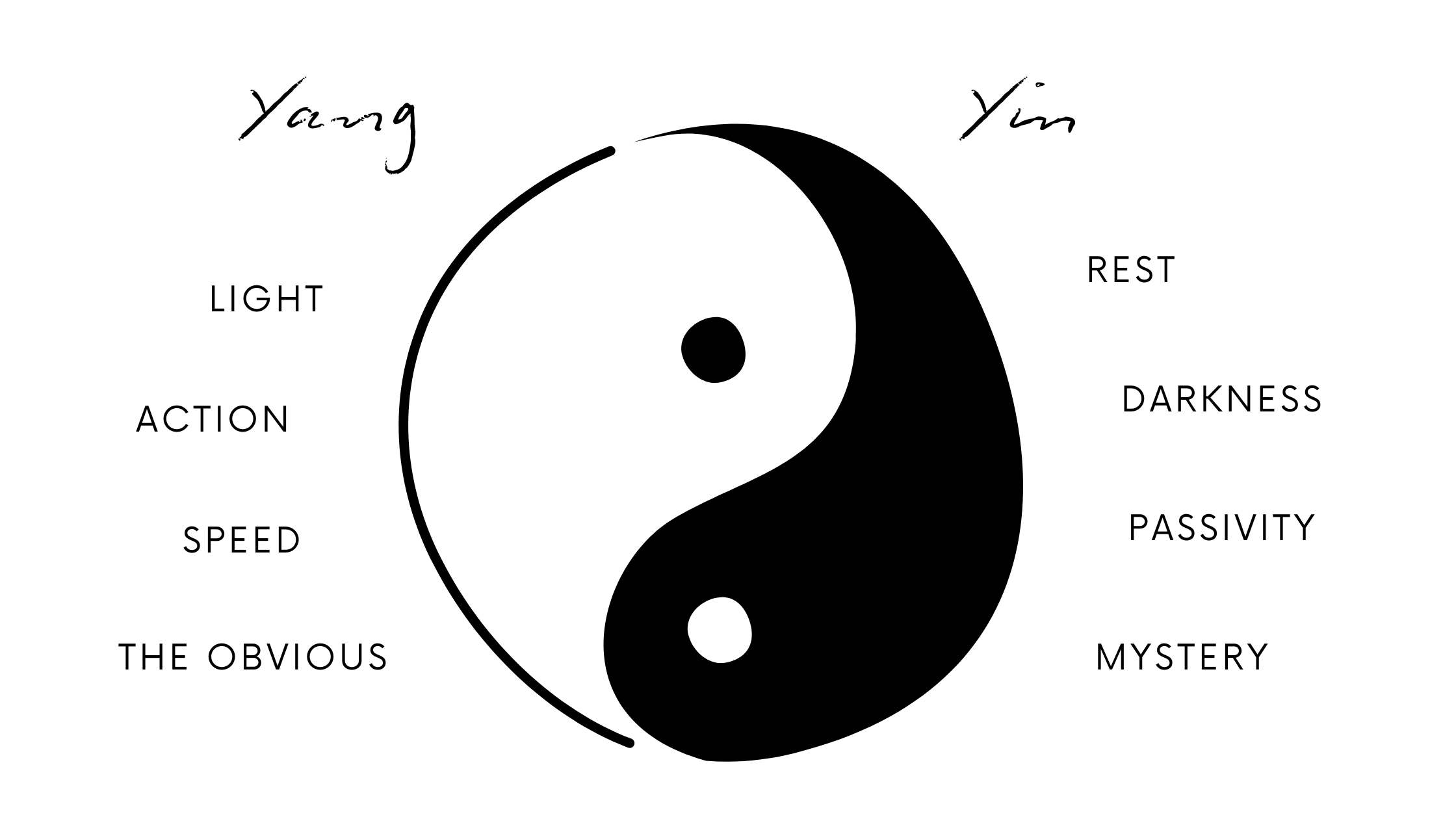
As the One moves, it differentiates. The heavy, cool energy (Yin) sinks, while the light, warm energy (Yang) rises.
Yin and Yang are not separate entities; they arise together. Perhaps the term “paradox of duality” helps here – because within Yin there is Yang, and within Yang there is Yin, and they exist only in relation to one another.
二生三, 三生萬物。(“Two gives birth to Three, Three gives birth to Ten Thousand Things.”)
As Yin and Yang interact, they are held together by a third balancing force called Qi – often translated to ‘energy’ in English, though closer in meaning to breath, vitality or life force, like ‘prana’ in Sanskrit.
As Qi flows between the Yin-Yang poles, the ‘Ten Thousand Things’ manifest – a poetic Chinese way of saying ‘everything that exists’.
萬物負陰而抱陽,沖氣以為和。(“The Ten Thousand Things carry Yin and embrace Yang, Harmonized through the Circulation of Qi.”)
Everything in the universe is in constant dialogue with Yin and Yang. It is the law of Qi that when Yang reaches its peak, it flows back toward Yin, and when Yin reaches its peak, it returns to Yang.
Yet, our society is obsessed with Yang – the drive for growth at all costs and relentless activity – while Yin is seen as a weakness or waste of time.
This imbalance comes at a high cost: systemic burnout and mental health crises, fueled by power structures that treat both the human spirit and the natural world as resources to be exhausted rather than ecosystems to be nurtured.
It’s in the continuous flow between these polarities, mediated by Qi, that all things find their harmony. Including us: the tiny human beings with our own love and hope and despair, coming and going for tens of thousands of years.
The Five Phases: Wood, Fire, Earth, Metal and Water
The ancient Chinese believed that Qi moved in five phases (“Wu Xing”): Wood, Fire, Earth, Metal and Water.
Unlike the Western materialist view of fixed ‘elements’, these five phases are not nouns, but verbs – reflecting a worldview where all matter are processes and ever-changing energy fields.
Wood is not literally wood, but the movement from yin to yang, like the energy of spring.
Fire is not literally fire, but a phase where there is peak yang energy, like summer.
Earth functions as the center and the transition point when yin and yang are in balance.
Metal is the movement from yang to yin, like autumn.
Water is a phase with peak yin energy, like winter.
The cycle of the Five Phases follows a certain logic too. Because they are active processes, they are constantly generating one another:
Wood fuels Fire;
Fire creates ash to enrich Earth;
Earth crystallizes into Metal;
Metal collects Water;
Water nourishes Wood.
Each of the 5 Phases also has a Yin and Yang expression, creating “10 Heavenly Stems”. Again, the words in italics below refer to the quality of the energy, not the literal object.
The principles are emerging. Stay with me.
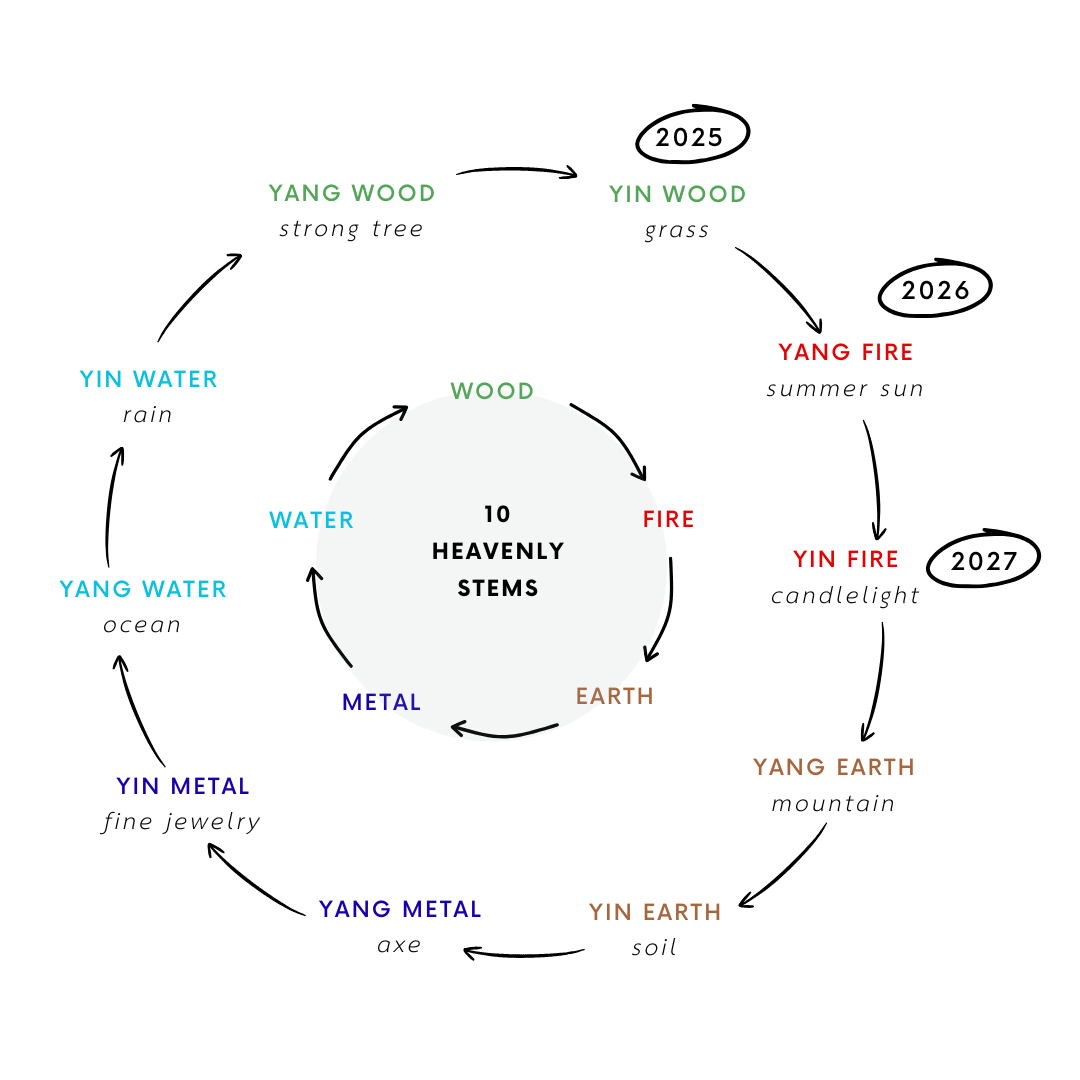
The 10 Heavenly Stems, and the yearly movement of Qi.
The Energy of 2026, According To Ancient Chinese Cosmology
In Chinese cosmology, each year carries a particular quality of Qi, formed from two layers of energy.
The first is the “Heavenly Stem”, which describes the cosmic atmosphere of the year. The second is the “Earthly Branch”, represented by the zodiac animals, which reflects the earthly expression of that energy.
Together, they create the energetic signature of a year.
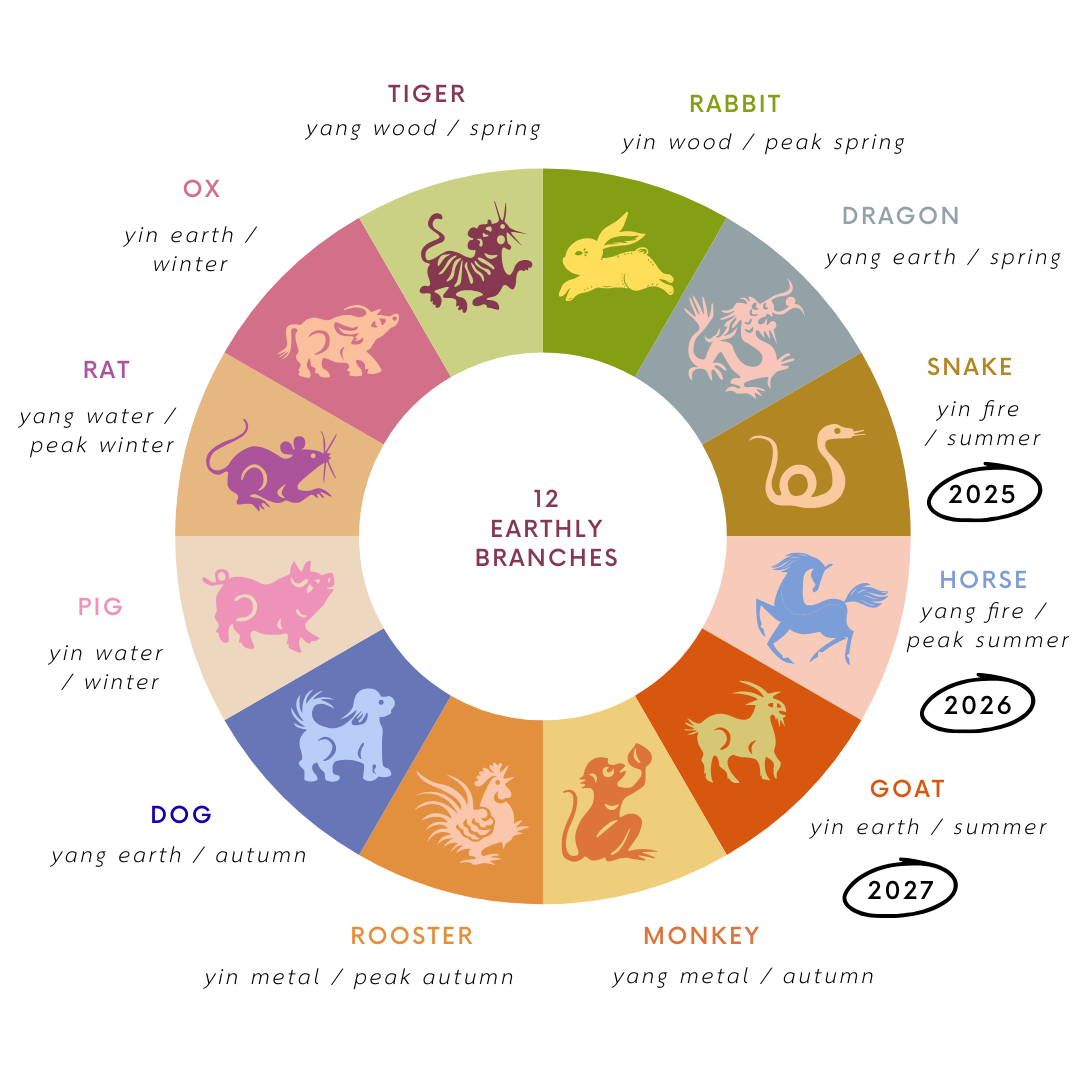
The 12 Earthly Branches, showing how the energy of each year moves through the cycle of the zodiac.
The energy for 2026 is striking: Yang Fire paired with the Horse. You cannot create conditions more fiery than this.
Yang Fire evokes the image of the summer sun – bright, expansive and intense. The Horse is also associated with peak summer, movement and strong Yang energy. When these two meet, the result is a year charged with heat, momentum and activity.
But the year doesn’t affect everyone in the same way. Each of us carries a different internal composition of Qi. A year that exhausts one person may energize another.
Imagine someone whose internal nature is already dominated by Yang Fire. A year like this might feel overwhelming. By contrast, someone whose constitution leans towards Yang Metal might find it transformative. In Chinese cosmology, Fire refines Metal – what feels intense may also clarify, cut away and force decisive action.
So, the trending preoccupation with the energy of the year is only part of the picture.
The more useful question is: What is my internal Qi, and how do I work with it?
Your Chinese Astrological Birth Chart
Your Chinese astrological birth chart is called Ba Zi (“Eight Characters”). It’s a snapshot of the Qi present at the moment of your birth.
By taking the year, month, day, and solar hour of birth, eight specific characters are calculated, revealing your energetic DNA. Take this Ba Zi chart for example:
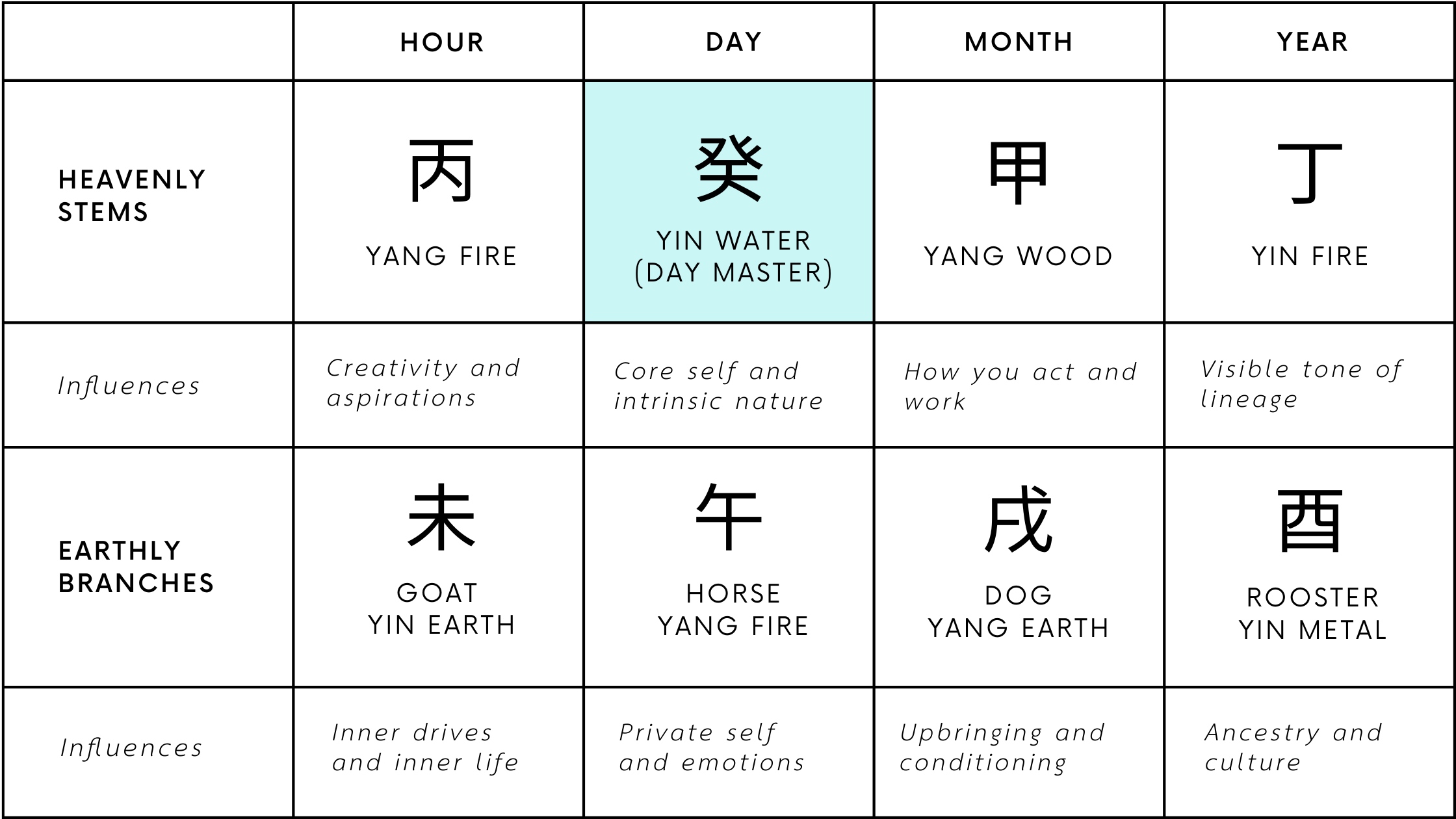
The four pillars of a birth chart, each containing a Heavenly Stem (how Qi expresses itself) and an Earthly Branch (the deeper field in which it lives).
The popularized “Zodiac year” is the character in the bottom right-hand corner. ‘Rooster’ is only one of the eight characters, representing the background climate rather than identity.
If you take away anything, let it be this: Your birth chart centers around your ‘Day Master’ (Yin Water in the example). When a ‘Yin Water’ Day Master meets a ‘Yang Fire’ year like 2026, the quiet, reflective water meets a roaring sun. This interaction might represent wealth, pressure, or transformation, depending on how this person’s internal Qi handles the external heat.
No reading of Ba Zi is static; everything is understood in relation to the Day Master. If seven characters stayed the same, but the Day Master changed, then the reading would be entirely different.
The Day Master is your core self – the you that exists beneath the social conditioning and familial expectations. When you read your chart from right to left, you are tracing a movement inward: from the external influences of ancestry and environment toward a deeper awareness of your own nature.
The energy and interplay of all eight characters form the architecture of your entire life, influencing your approach to love, your capacity for wealth and the way your body processes stress and communicates its needs.
Returning to Harmony
Life, then, is a constant dialogue between your internal Qi and the external cycles of time and spaces and people. By learning your Ba Zi, you are learning the blueprint to return to the harmony promised in Dao De Jing.
The Daoist concept of wuwei is pertinent here: learning how to swim with the currents of life, rather than struggling against them.
And even if you do struggle, the Dao is, as always, working overtime.
What I’ve covered is barely the tip of the tip of the iceberg, but it’s foundational to understanding the five arts of Chinese metaphysics: Ba Zi, Traditional Chinese Medicine, Tai Chi/Qi Gong, Feng Shui, and the I Ching.
Many blessings to you for Year of the Fire Horse. May you find grounding, stillness and rest in a year so very charged with Yang energy.
Comment “BA ZI” if you’d like to receive a step-by-step guide on how to get your Ba Zi chart.
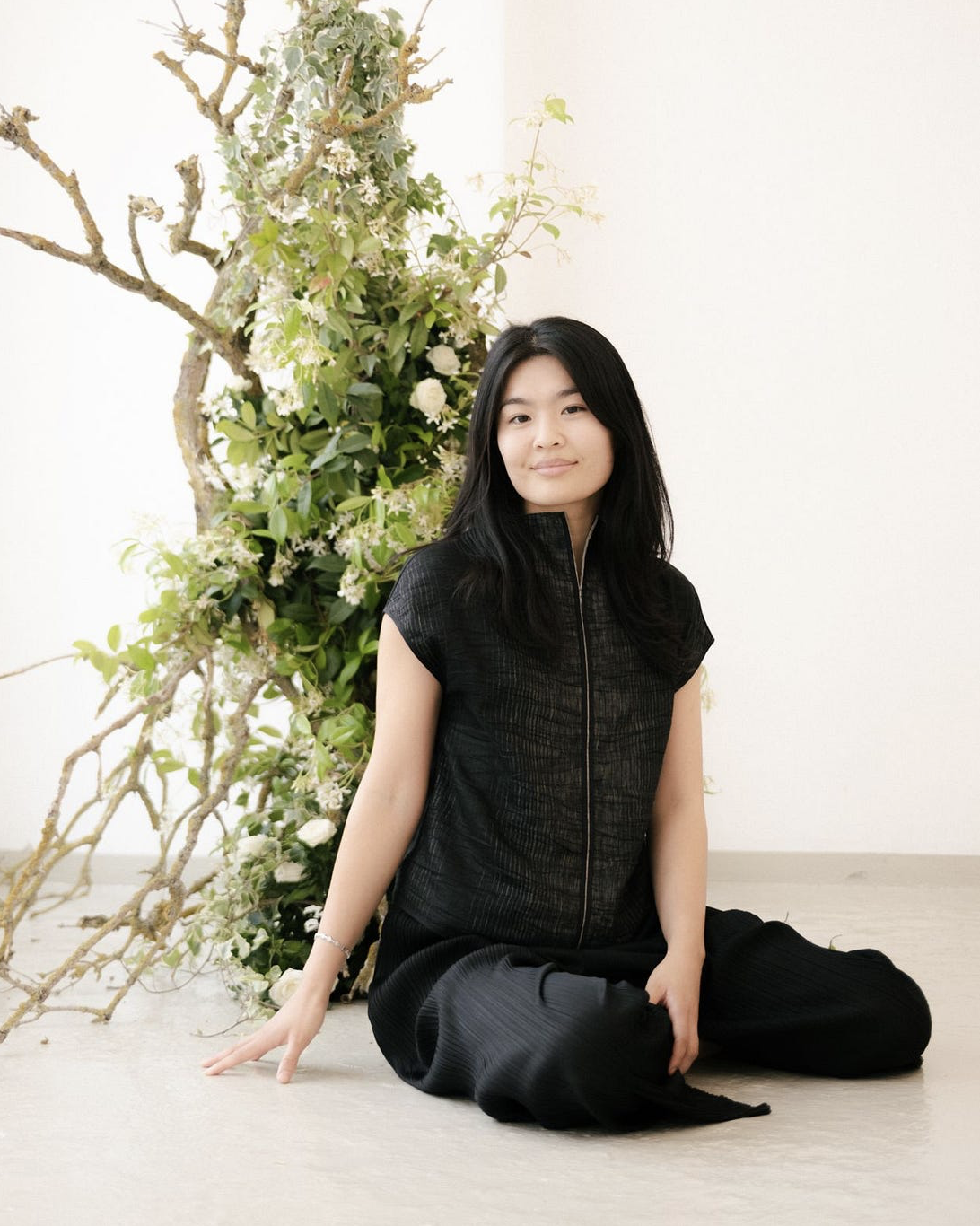
About Yun Shu
Yun Shu is a writer and somatic coach based in Berlin, born in Shanghai. She is the author of ‘The Future is Fungi’.
Her work weaves together Eastern philosophy, the body, and plant medicine, helping people reconnect with their inner knowing and vitality. Here’s how you can work with her:
1:1 Somatic Coaching: For those who feel called to harmonise their internal Qi and are ready to listen to their bodies to create the art and lives they desire.
Group Microdosing Immersion: Deepen your relationship with mushrooms and explore what is ready to move through you. Email ‘spring equinox’ for details. 10 spots only. Registration closes 23 Feb.
Microdosing for Creative Attunement: In-person workshop on 14 Mar at SVERA.
Weekly creativity and writing circle: Sundays 11am at SVERA.
For any questions, you can reach her via email, Instagram or Substack.