The Pagan Roots of Christmas and The Ritual Journey between Years
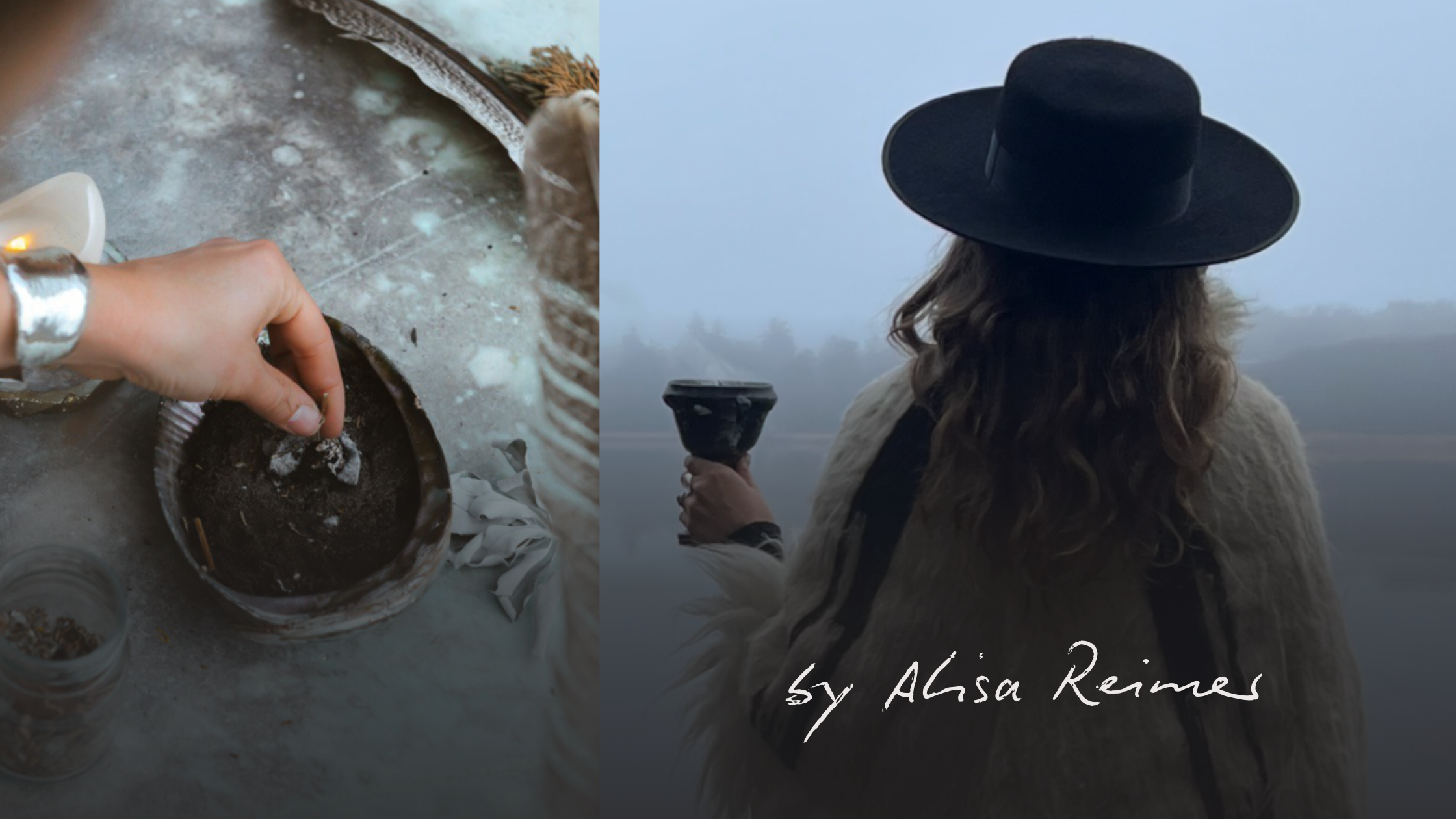
by Alisa Reimer
The Winter Solstice is approaching, and with it an annual threshold opens: the Rauhnächte, as they are known in German-speaking regions - a pagan ritual passage between years. This is the liminal time, which was once devoted to ritual, divination, integration, and communion with ancestors, the animate forces of the land, and the invisible worlds within and around us. This way of relating to winter long predates Christianity. And yet, what we now call Christmas grew directly out of these land-based winter practices.
Many of the symbols and gestures we associate with Christmas have their roots in pre-Christian cosmology and ritual life.
What could not be fully suppressed was gradually re-framed, its symbols carried forward under Christian names and meanings. My German grandmother introduced me to the Rauhnächte in early childhood, and I’ve celebrated it ever since. For the past decade I’ve also guided others through this passage, online and in person, with a strong pull to return to the land, ancestral ways, and deeper listening. The Rauhnächte have become quite popular in Germany in recent years, yet much of what is being offered has little to do with the original ways. It often slips into another expression of consumer-culture manifestation — far away from an in-depth conversation with land, spirit, and the wider web of life that weaves its threads through collective dreaming at this time of year.
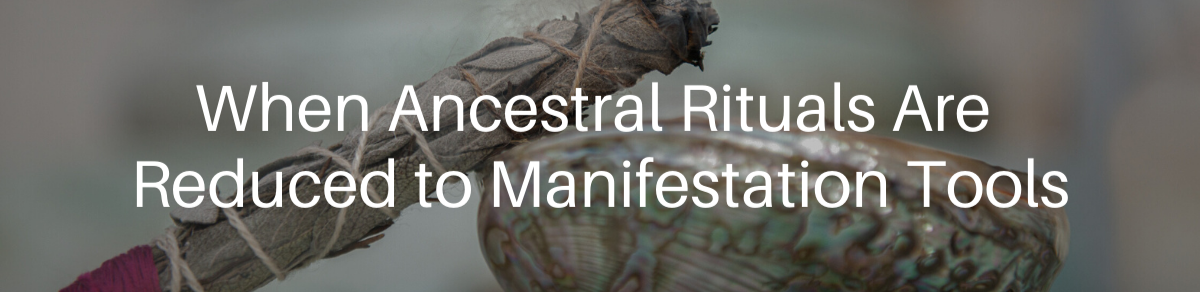
Experiencing the Rauhnächte is not about sitting down and manifesting. It is also not about extracting quick meaning from practices that emerged within complex cultural and ecological contexts. I observe much of what circulates today around Rauhnächte offerings, mainly online, with unease and discernment, as it seems to arise from the consumerist mindset of late-stage capitalism, simplifying, decontextualising, and instrumentalising that which was never meant to be consumed.
What was once deeply embedded in land, relationship, lineage, and long arcs of tending to the invisible worlds with patience, respect, and care is now too often compressed into efficient techniques, promises, or products, stripped of the relationships that once gave it meaning.
And yet, I am, like anyone else, simply here, remembering and learning. One research period, one ritual, one turning of the Wheel of the Year at a time. And I am grateful for anyone who feels inclined to join this shared journey of remembering the ancestral roots of the land we are standing on today.

The Rauhnächte begin after the Winter Solstice and traditionally run from December 25th to January 6th, the twelve nights that bridge the old year and the new. In older calendars, these nights emerged from the gap between the lunar and solar year, eleven days and twelve nights considered “outside of time,” suspended between what has been and what is yet to come.
In many regions, each Rauhnacht was said to correspond to one month of the coming year. Dreams, symbols, weather patterns, and animal encounters were read as carrying meaning, instruction, and oracular texture.
In pre-Christian Central and Northern Europe, this was a sacred interval dedicated to goddesses, gods, ancestors, and unseen forces of the land.
It was a time to integrate the old year, dwell consciously in the in-between, and open toward what was yet to come, with the support of the invisible.
Storms howled around the houses, the land lay under snow, and people gathered close inside. The world felt thin. The boundary between this world and the otherworld loosened.
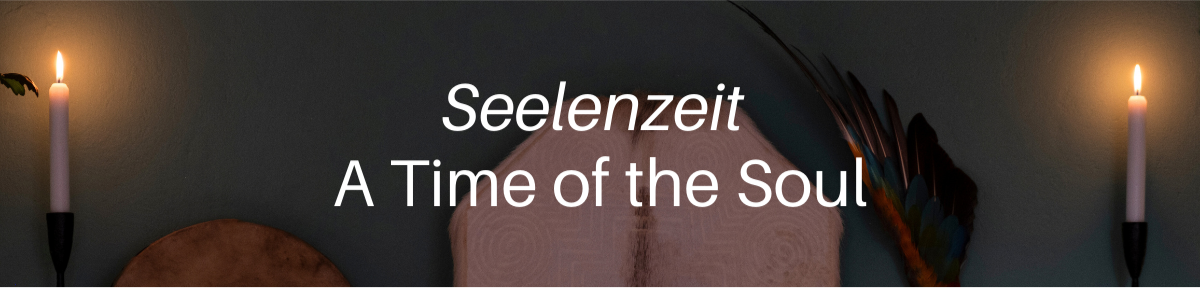
No heavy work was done; threads were not spun, laundry was not hung outside so wandering spirits would not become entangled, promises were completed, debts were settled, and nothing unfinished was carried into the new year. These nights were understood as Seelenzeit, a time of the soul.
Dreams, signs, and oracles were central; evergreens, incense, and cleansing smoke were used to protect the home and invite benevolent forces in, creating a space where what feels life-protecting and supportive could enter.
Today, the Rauhnächte invite us into a similar posture: stillness, reflection, release, tending the inner world, listening to dreams, honoring the ancestors, and welcoming the returning light with intention.
A time to clear what no longer serves, to step across a threshold consciously, and to begin the year attuned to deeper rhythms and aligned with the living ecology around us.
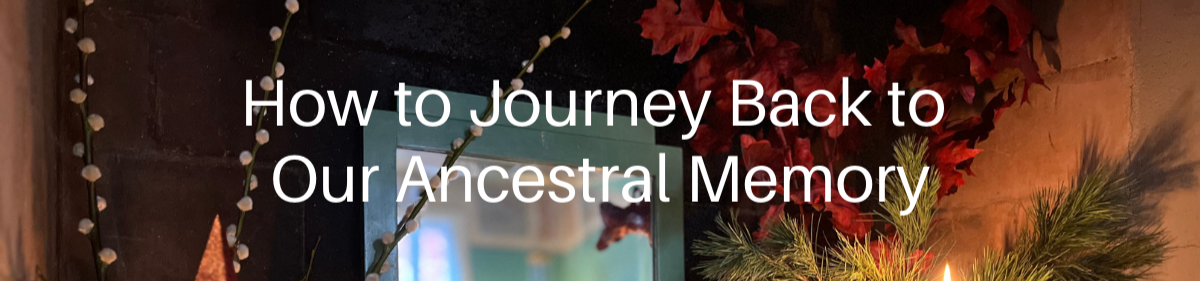
We tend to forget that everywhere on this planet, people once ritualised life. They tended land, spirits, and allies in the form of plants, animals, and the wider more-than-human world. It is time we remember this again, not by borrowing from elsewhere, but by awakening the ancestral memory that resides within each of us. Some of us may simply have a little more practice and experience. But it lives in all of us.
In my experience, what restores this remembrance most deeply is lived experience. What we encounter through our own body, spirit, and heart is what truly stays with us.
To meet the animate world and begin to shape rituals that are genuine rather than imposed, the first step is simple: turn toward the land. Become still. Listen deeply.
This is when the animate forces begin to present themselves. A practice I feel especially present during the Rauhnächte, when the outer world grows quiet but the spirit world, oh dear, is very much alive.
The pre-Christian peoples of these lands lived in close relationship with winter, in friendship and alliance with its forces. These relationships survived through myths, rituals, symbols, stories, and oral transmission. Within this continuity, I would love to guide you through these spaces of remembering and practice, and to step together into the invisible worlds with curiosity, care, and a sense of adventure.

About Alisa Reimer
Alisa is a Berlin based degreed cultural researcher (M.A.), multi-disciplinary artist, educator and co-founder of Soneiro Collective. In 2024, Alisa launched the Invisible Worlds Study Program, offering learning environments that engage the senses, prioritize experiential learning, and combine critical thinking with intuitive embodiment, creative practice and ritual art.
Journey with Alisa into the Invisible Worlds
This year, Alisa is hosting two in-person day retreats outside of Berlin to open the Rauhnächte on Dec. 21st and to create a vision for the new year on January 4th. For those who wish to practice from a distance, you can join her guided online journey in collaboration with Advaya, an international learning platform rooted in relational consciousness, land-based wisdom, and spiritual ecology.
→ Read more from Alisa on Substack.
→ Listen to Alisa’s Dreamtime playlist on Spotify.
Use the code ALISA-20 for 20% off the online journey
The journey begins on December 21st. Enrollment closes on December 28th.