What Wellness Facilitators in Berlin are Reading
Book recommendations from wellness facilitators across different modalities
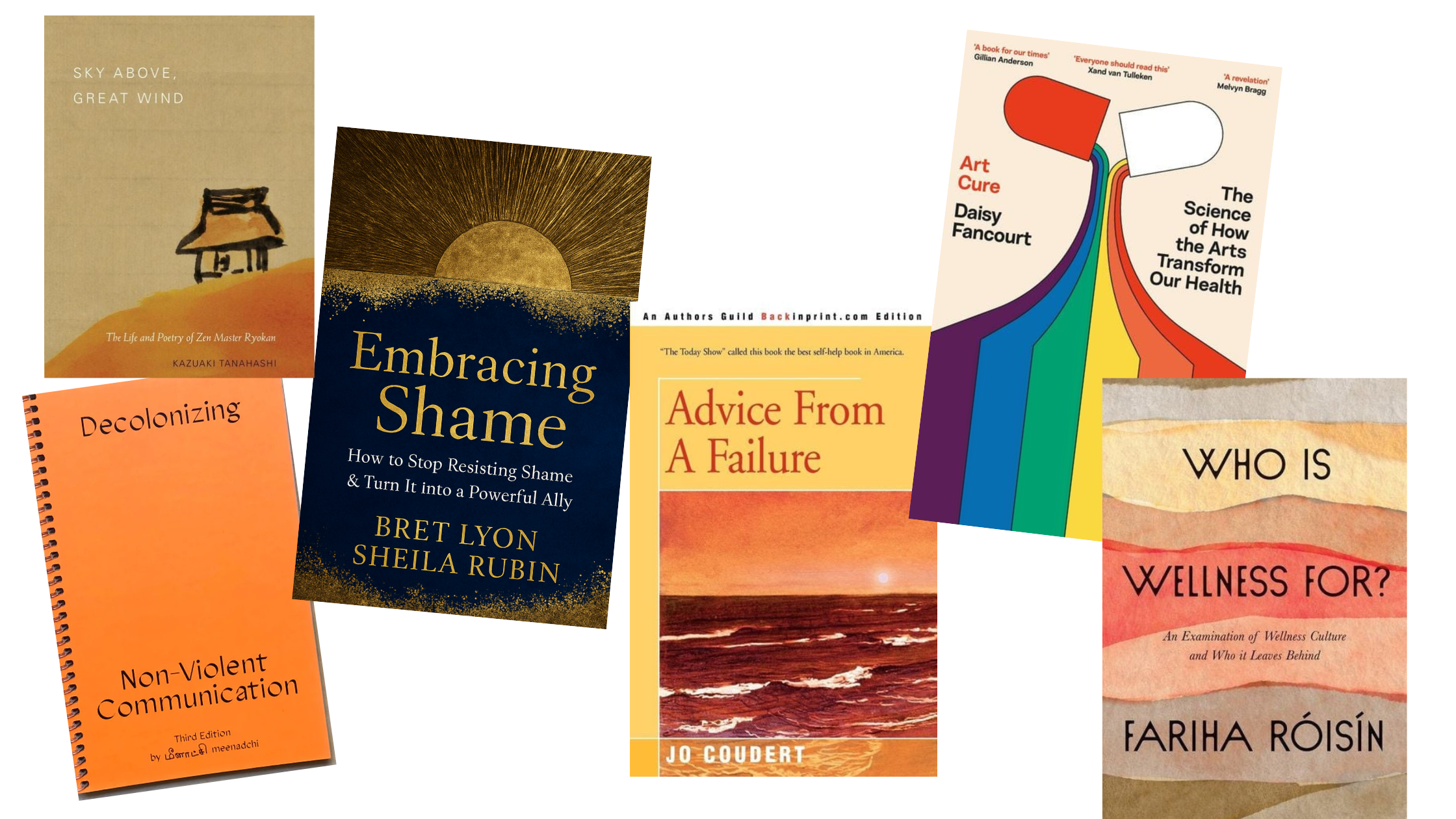
Let’s make the best out of the cozy weather days still ahead of us by curling up with a good book. This week, we asked wellness facilitators across different modalities to share the books that have been inspiring them lately.
Dennis Obanla
Dennis (he/they) is a Berlin-based somatic practitioner in the field of sexology, accompanying individuals and groups towards greater body awareness and intimacy - with themselves and others - rooted in slowness and gentleness.
Decolonizing Non-Violent Communication | Meenadchi | 2019
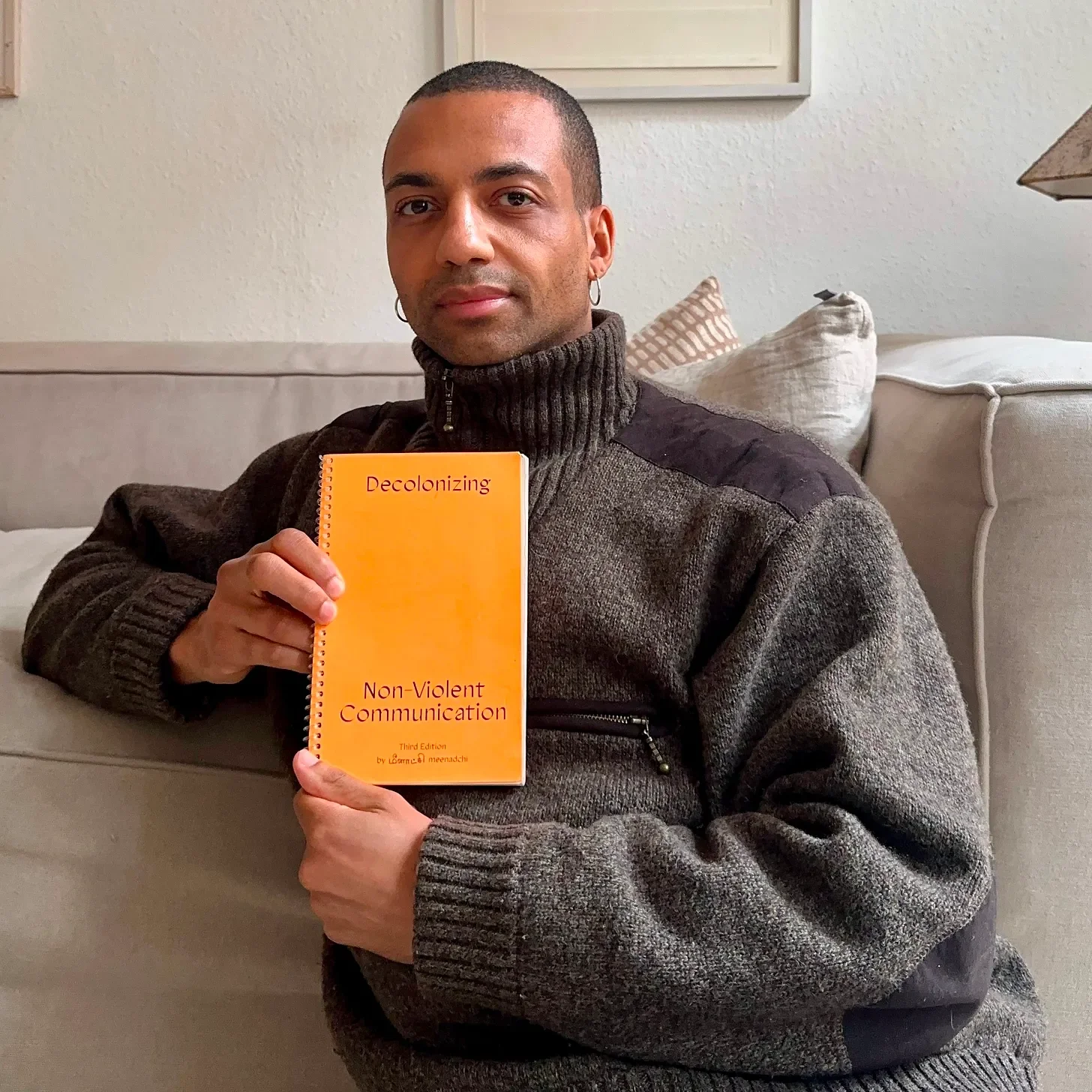
If you’ve ever tried to use Nonviolent Communication in real life and ended up sounding like a polite robot (“When you do X, I feel Y…”)… then Decolonizing Non-Violent Communication might be the spicy somatic upgrade your nervous system has been waiting for.
I’ve been obsessed with this workbook by Meenadchi (~80 pages), that takes the well-known communication model and lovingly flips the table on its colonial, overly “nice,” conflict-avoidant tendencies. Instead of tone-policing and performative calm, it invites us to bring our whole bodies back into the conversation — rage, boundaries, cultural context, power dynamics and all.
As a somatic practitioner, I love how this book reminds us that communication doesn’t just happen in the mind; it lives in breath, posture, gut feelings, and the moment your shoulders tense when someone says “let’s stay respectful.”
It’s practical, reflective, and full of exercises that help you notice what your body actually knows about consent, safety, and justice. Also: it’s delightfully queer in spirit — less “be agreeable” and more “be real, stay accountable, and don’t abandon yourself to keep the peace.”
Perfect for facilitators, lovers, activists, and anyone ready to communicate with integrity and a pulse.
Lois Hayes
Lois is a Somatic Experiencing Practitioner guiding sensitive, creative and high‑feeling individuals through somatic trauma-resolution work that meets the nervous system where it is to restore your innate vitality.
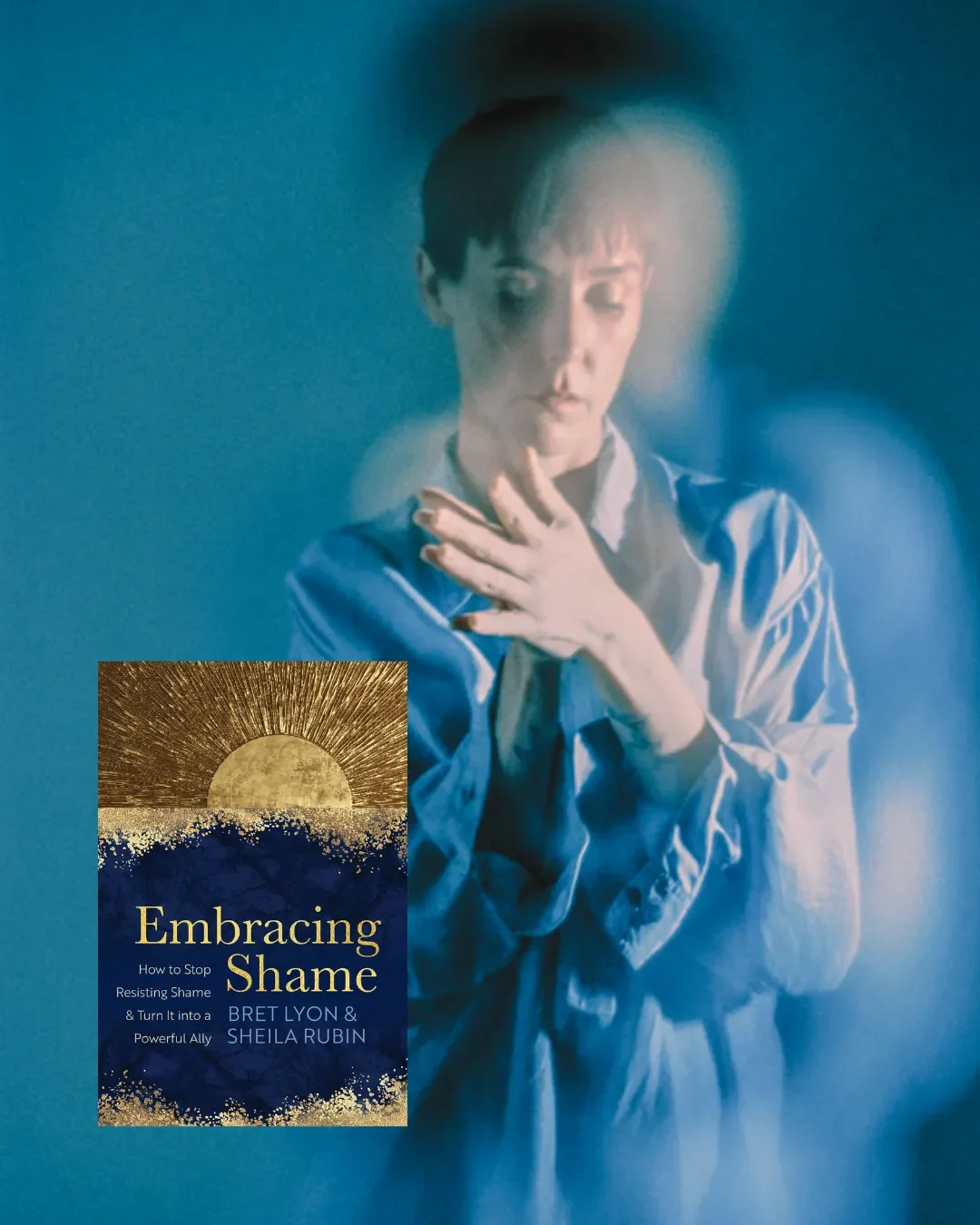
Embracing Shame: How to Stop Resisting Shame and Turn It into a Powerful Ally | Bret Lyon & Sheila Rubin | 2023
In my work with clients I often see how early boundary violations lead people to suppress healthy aggression (aka boundaries) in order to preserve connection or avoid further harm. This can show up as self-silencing, chronic accommodation of others and difficulty expressing needs.
I also encounter the opposite pattern. Some people develop rigid or brittle “boundaries” that function less as relational limits and more as forms of avoidance, with feelings of shame projected outward onto others. Without the capacity to remain present with conflict, withdrawal and contempt can easily be mistaken for boundary-setting.
In Embracing Shame: How to Stop Resisting Shame and Turn It into a Powerful Ally, Bret Lyon and Sheila Rubin describe shame as a binding emotion that can fuse with our nervous system responses. Shame can organize how we relate to ourselves and others, shaping patterns of perfectionism and hiding.
When shame becomes internalized in this way, it often disconnects people from their natural vitality and healthy aggression, the life force that allows us to express needs and limitations, while staying in connection.
The somatic perspective in the book has influenced how I approach these patterns in my work. By helping clients externalize shame and create space around it in the body, the binding begins to loosen and people can gradually reconnect with a more flexible sense of self. Boundaries naturally emerge from that place.
Marije Terluin
Marije Terluin (pronounced ‘Mariah’), is a certified Past Life Regressionist, originally from Amsterdam, now living in Berlin. Marije studied at the Quantum Healing Hypnosis Academy (QHHT) of Dolores Cannon, and offers both 1:1 Past Life Regressions and Group Regression Workshops.
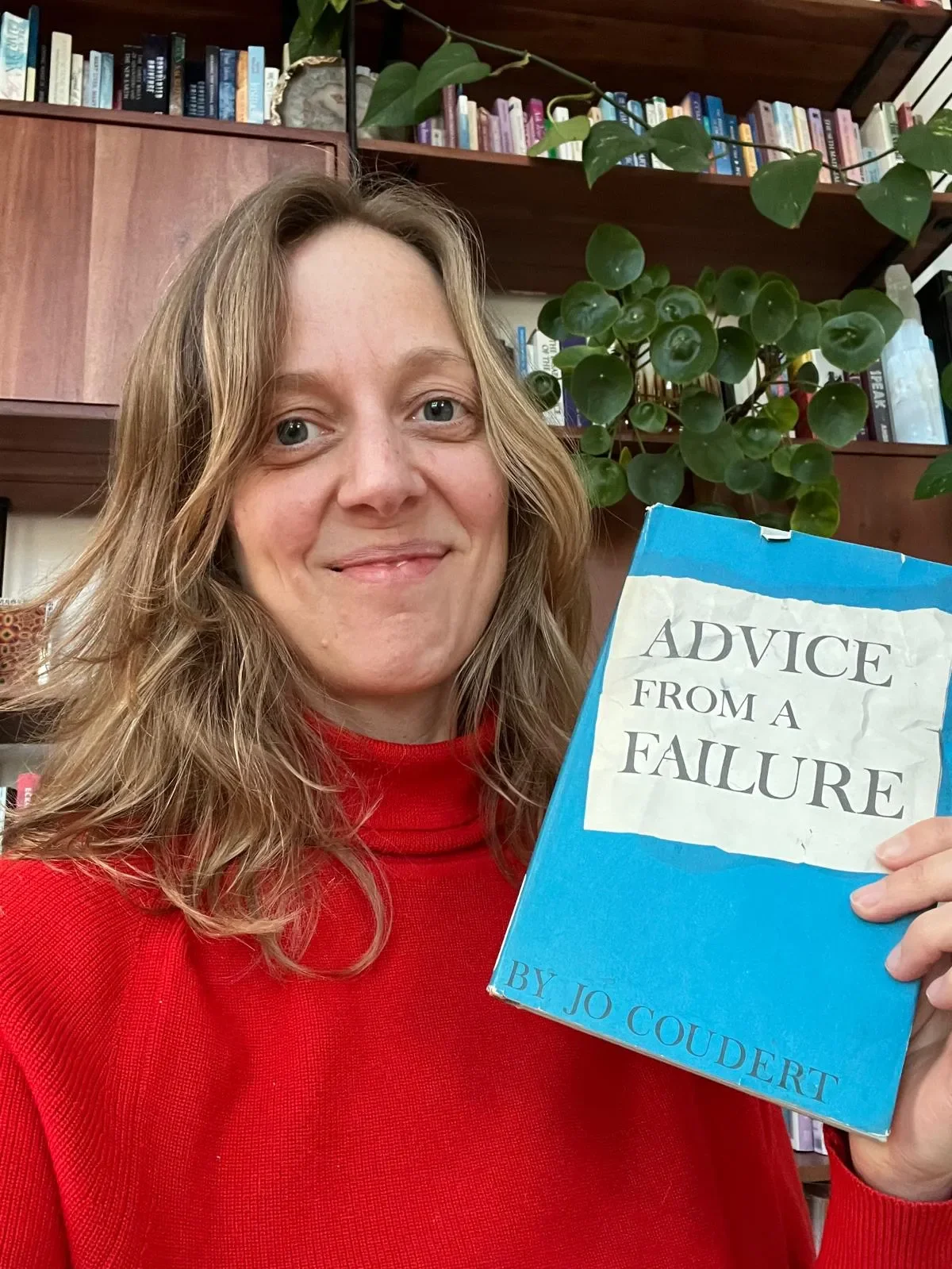
Advice From A Failure | Jo Coudert | 1965
One of life’s quietest tragedies is failing to fully become ourselves. Too often, we craft a filtered version of who we are just to be accepted, conforming to rules and expectations that were never ours to begin with. In my past life regressions, the Higher Self shares with my clients loud and clear, you are not here to fit in, you are here to be your unique self because this world needs exactly what it is that you are.
The 1965 classic, Advice From A Failure, is a profound guide to reclaiming that essence. By teaching you how to “read” your own actions, it helps you reach the core of your identity. It beautifully illustrates how we are wired to repeat what we do not understand, providing the intuitive tools needed to uncover the hidden parts of our unconscious. Through this book, you don’t just learn to see and understand yourself, you learn to view the entire world through a transformative new lens.
“Of all the people you will know in a lifetime, you are the only one you will never leave nor lose. To the question of your life, you are the only answer. To the problems of your life, you are the only solution.” - Jo Coudert, Advice From A Failure
Simon Knockton
Simon is a Certified Mind Body Medicine Practitioner accredited by the American Institute of Mind Body Medicine and Dr Kim D’Eramo.
Sky Above, Great Wind: The Life and Poetry of Zen Master Ryokan | Kazuaki Tanahashi | 2012
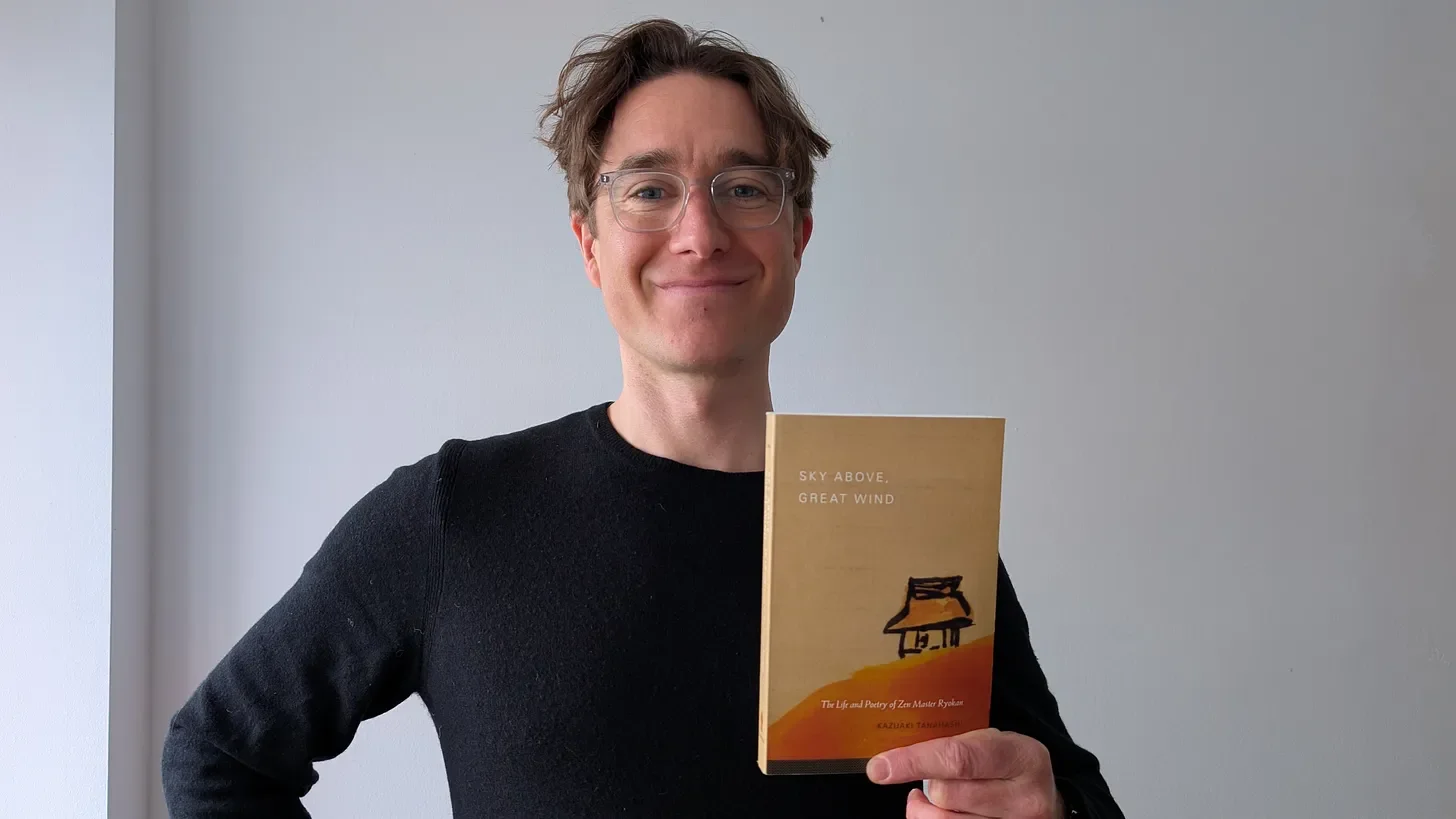
I recently asked one of my teachers for advice on how to deal with rumination. He said — poetry.
I reached for this book. Sky Above, Great Wind: The Life and Poetry of Zen Master Ryokan by Kazuaki Tanahashi. Ryokan’s spacious observations of life connected me to beauty and truth. It softened my system. My teacher’s advice helped me and I can fully recommend this book of unassuming poetry.
Through my work as a Mind Body Guide I help creative humans navigate life challenges. By combining conversation and somatic energy methods I guide clients to release blocking energies and see their truth more clearly.
As we gently witness ourselves at the deepest levels we create space for our systems to recalibrate. Our health, relationships and creative capacity can then re-organize entirely.
Thuli Wolf
Thuli is an art therapist, medical doctor and artist, holding space for playful self-expression, exploration and true transformation. Her work is trauma-sensitive, anti-racist, system-critical and queer-friendly.
Art Cure: The Science of How the Arts Transform our Lives | Daisy Fancourt | 2026
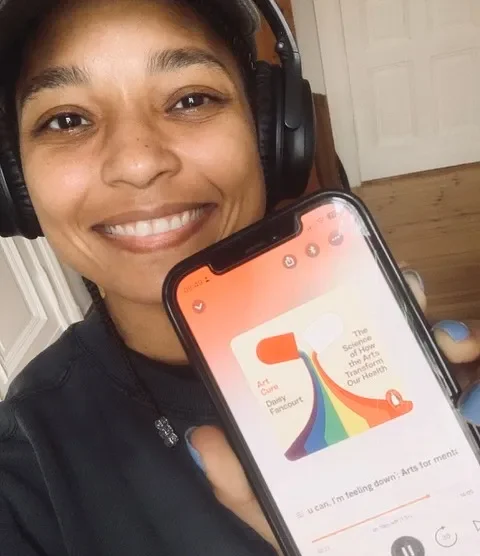
I often get asked how art therapy actually works. Creative therapies are still met with huge skepticism or misunderstanding because they seem to defy the logic of science. This is why Fancourt’s book Art Cure is such an important publication to me. In the book neuroscientist Fancourt describes in depth the latest science behind creativity and aesthetic experiences. Music that helps us remember, singing that lowers depression risk and reduces health care costs, or a museum visit that helps us self-regulate. To Fancourt creativity is more than just a hobby - it’s the fifth pillar of health, right next to nutrition, exercise, sleep and nature. She gives a detailed insight into why we need creativity in order live healthier and longer and gives a scientific explanation of what creatives have intuitively known for centuries. I recommend this book to everybody who wants to learn about a different aspect of art and creative expression and understand how much we need it - especially in times like these.
Ana Feijoo
Ana is a yoga teacher and the owner of SANA Studio. For Ana, sharing yoga is about creating a safe space where students can immerse themselves in the present moment and work towards personal growth and introspection.
Who Is Wellness For?: An Examination of Wellness Culture and Who It Leaves Behind | Fariha Róisín | 2022

As a yoga teacher and studio owner, Who Is Wellness For? by Fariha Róisín made a strong impression on me when I read it.
Holding space for others has taught me that wellness is not just about practices like yoga or meditation, it’s about who feels welcomed, seen and supported in those spaces. This book challenged me to reflect on the systems and assumptions that shape the wellness industry and encouraged me to think more intentionally about inclusivity, accessibility and care within my own studio.
Róisín’s writing feels both personal and political, reminding me that creating a meaningful space means listening, learning and continually expanding who wellness is for. It’s a book I’d recommend to anyone in the wellness world and an eye-opening recommendation for anyone interested in health, equity and the deeper meaning of true well-being.