How to Make Your Own Altar with Maya Hahn
Reiki Master and psychotherapeutic counselor Maya Hahn shares with us the history of altar practices, and how to create your very own altar at home.
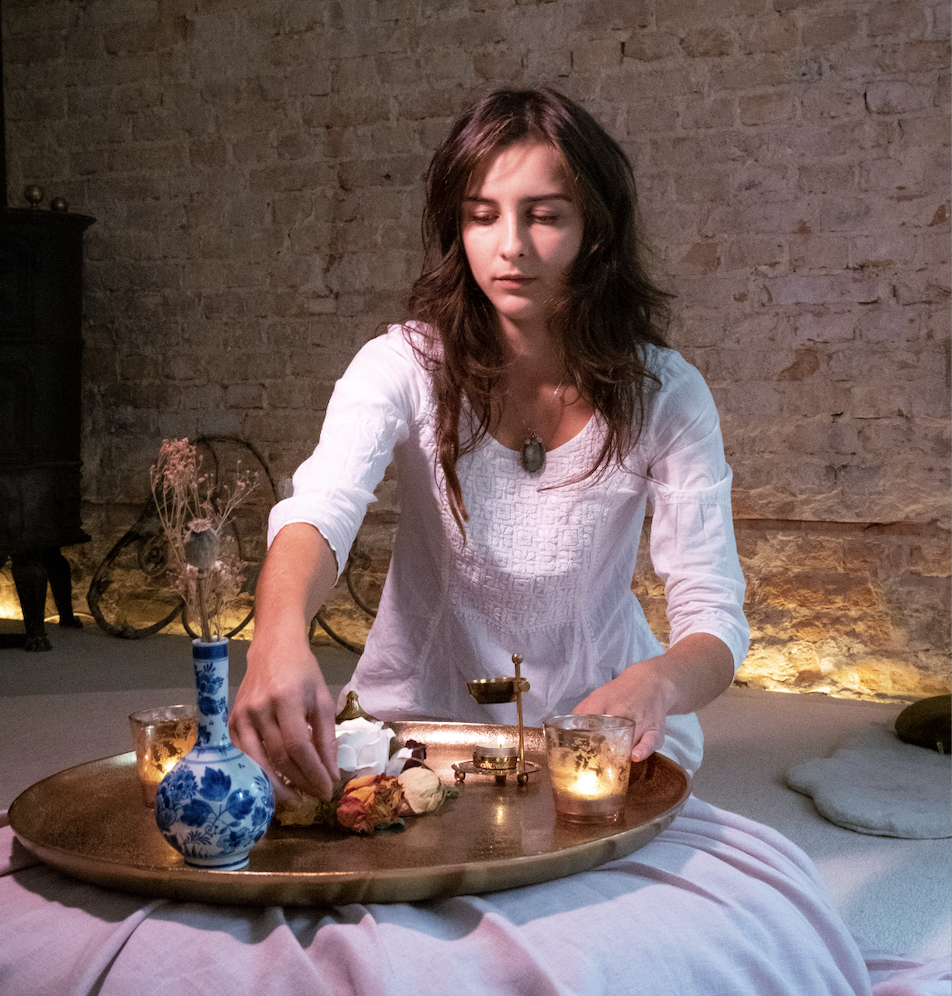
I am a researcher of the mystic, of felt sense and lived experience. Alongside academic research in this field in my psychiatry work, I dive into different kinds of topics related to anything witchcraft and spiritual. I just observe.
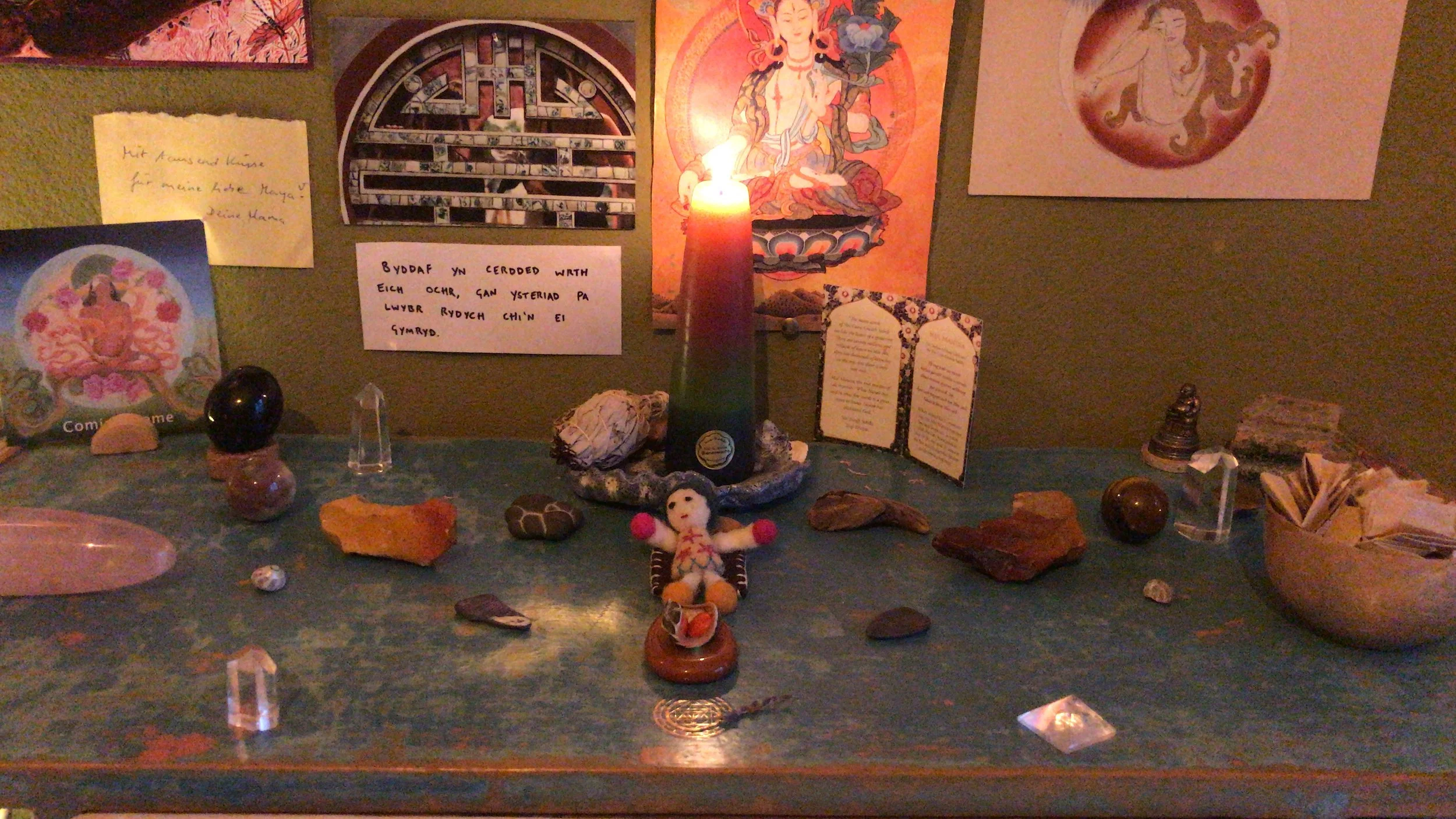
Over the last seven years of my life, I have kept an altar. Always visible. Sometimes more active, following the seasonal celebrations. Other times not at all. But what I witness whenever I return is the relationship I built a long-lasting feeling of returning home.
I cleanse the altar, brush off the dust with my tiny broomstick I bought from a witch in Mississippi, and just start right there. In the contemporary world having an altar can feel easily like “something else I have to do”, so starting simple can take the pressure away for me. I have had emotional breakthroughs in front of my altar, breathing through them, holding myself and all of my heart. These memories flashing by, I notice how much this space helped me to step into contact with myself. And alongside that, I can observe how much I am — right now — in contact with myself.
The History of Altar-Making
Altars go far back in history and in spirituality across almost every culture. Keeping an altar has long been associated with worshipping, praying to deities and saints and also with the more complicated inheritance of organized religion. Long-held emotions like shame and embarrassment tend to surface here too. But today I want to speak about altar keeping for the self, without being a member of any particular religion.
So I went on that quest, reading on Reddit, on Substack, in old texts.
What I found is that altars and shrines, though often used interchangeably, carry distinct meanings across traditions. An altar is primarily a place of action, where offerings are made, rituals performed, prayers sent. Think of the central table in a church where the Eucharist is celebrated, or the sacrificial altars of Greek mythology adorned with offerings to the gods. A shrine, on the other hand, is more of a sacred dwelling, a home for a relic, a statue, a holy image. Mary standing in her niche, framed and housed. The Japanese lararium or spirit houses in Buddhism. The ancestor table. A place of veneration rather than active ritual.
The word itself points to something: altare, from Latin: a raised surface, a table of offering. What is placed upon it is meant to be seen, to be tended, to be cycled through.
Across cultures Italian devotional corners, Pagan shrines, Roman lararia, Hellenic practice, the objects differ, but the impulse is the same. To gather the sacred. To mark something as worthy of attention. As Oscar Wilde once said: “It is only the sacred things that are worth touching.”
And perhaps that is exactly the point.
What altar-keeping has taught me
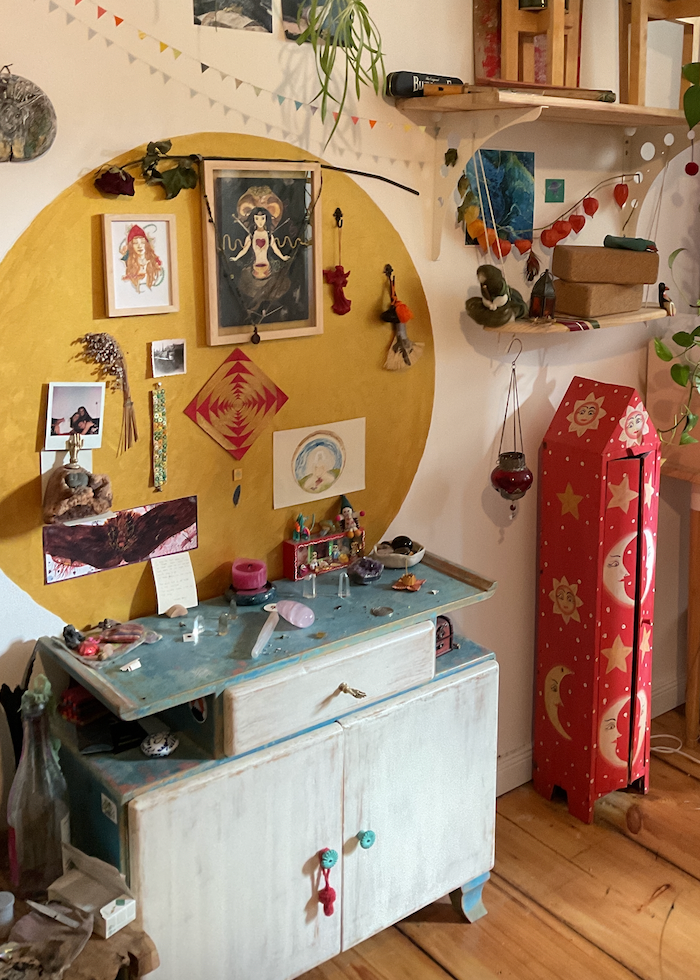
Something I came across in my research stayed with me: the physical state of your altar is a reflection of your inner state. I know this feeling intimately. The guilt of neglect. The altar gathering dust while life moves fast and loud. As my mind is infused with psychology this is also how I approach many things. Altars invite us to engage with the recurring patterns of our everyday lives, and perhaps hold a ritual for ourselves to set a marker of important life-events. They give us an opportunity to honor, for closure, a new beginning or simply gratitude. This conscious look at ourselves, reactions or pattern that are often thousands of years old can widen our horizon beyond simple judgment, thought, and human behavior and it can offer valuable implications across so many fields for example education in kindergartens and schools.
Altars are about willpower.
There is so much untapped potential in looking at rituals and altars through a psychological lens. Maybe these were the psychotherapy of ancient times — much like how Clarissa Pinkola Estés so beautifully describes it through her analysis of fairy tales.
What altar keeping has taught me is this: the relationship doesn’t end when you step away. It waits. And when you return even after months something ancient in you recognizes the space. In psychotherapy, I follow the belief in the personalization of inner felt sense. Through giving form to what lives inside us; through image, through object, through presence we become able to meet what we usually avoid. Turning something invisible into a visible entity makes it easier to approach, to negotiate with, or simply speak to.
Making your own altar
Find a place for your altar
If you are looking for the right place to set your altar, I would suggest going with your intuition. You can set it somewhere more private, like your bedroom — a spot that invites you to slide down from your bed in the morning and sit right there as you wake up. I also had my altar in my living room, opposite the door I would walk through, so it was the first thing that caught my eye as I came in.
An altar is a place that bundles thought. You can charge your favorite jewelry there, your intentions, your wishes. So it is worth thinking carefully about placement. Ideally it sits somewhere that doesn’t disrupt the natural flow of Qi in your room, but rather elevates it — you could look up Feng Shui to dive deeper into what that means. I wouldn’t suggest placing your altar directly in front of a window, as energy naturally escapes a room through windows.
Another experience I had: it becomes special when you place your altar where the light falls in throughout the day, at its most beautiful hour. It gives you an opportunity to pause — innehalten. It makes you want to sit down, exhale, and just observe.
Something else altar setting has taught me is that it offers a kind of aesthetic recharge. Being an urban human these days can make you feel trapped sometimes, in a maze of concrete. My thoughts calm down when I look at something that carries memory, love, or beauty for me.
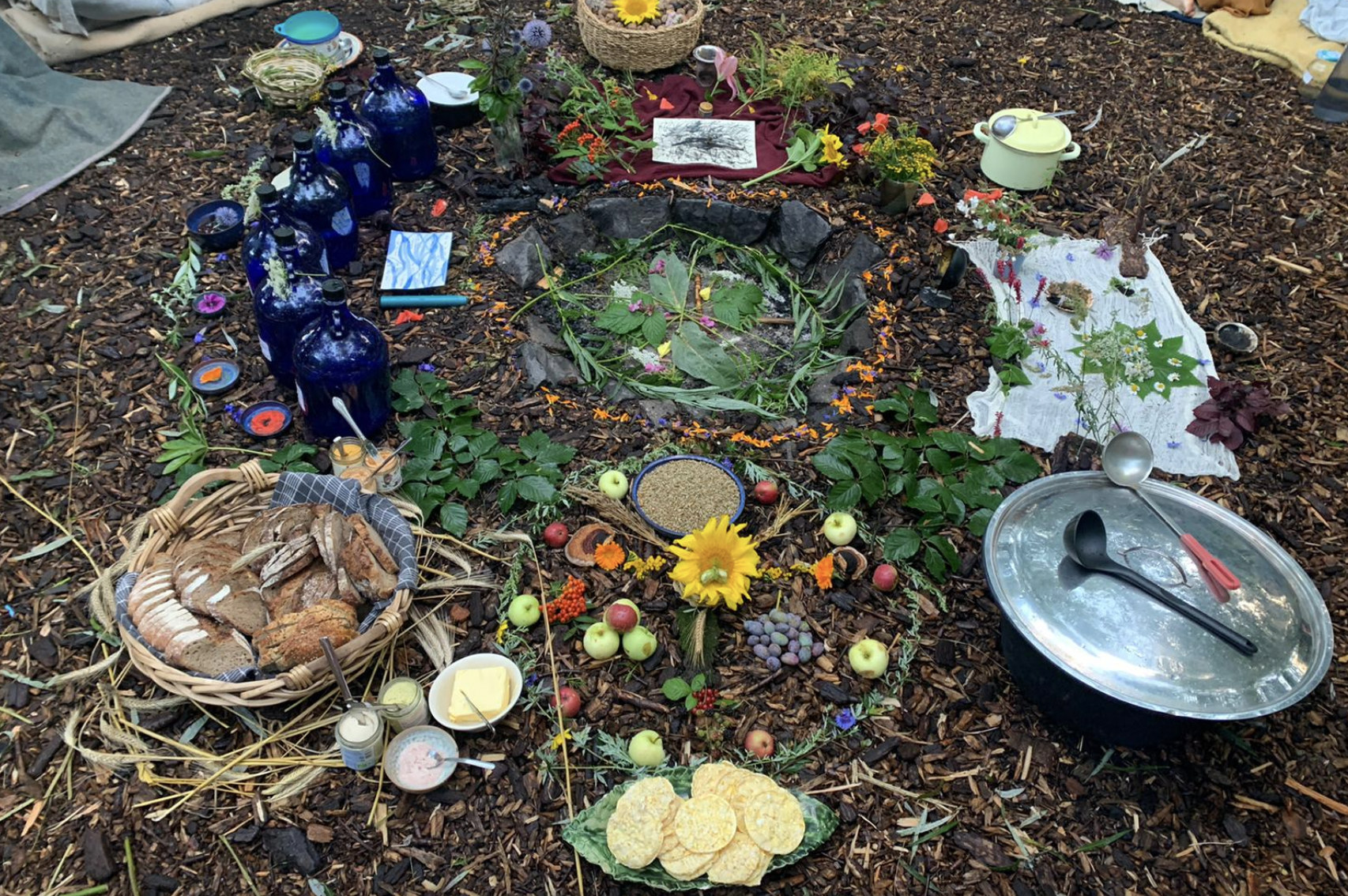
Your altar doesn’t have to live indoors, either. When you spend a day in the forest with a friend and settle somewhere for a break, you can give gratitude to the ground right there — make an altar for Mother Earth, bring offerings like lentils, coffee grounds, beans, or flowers.
Finding the right place for your altar is, at its core, a way of sharpening your intuition. You learn along the way, through observation.
Gather artifacts that symbolize what matters to you
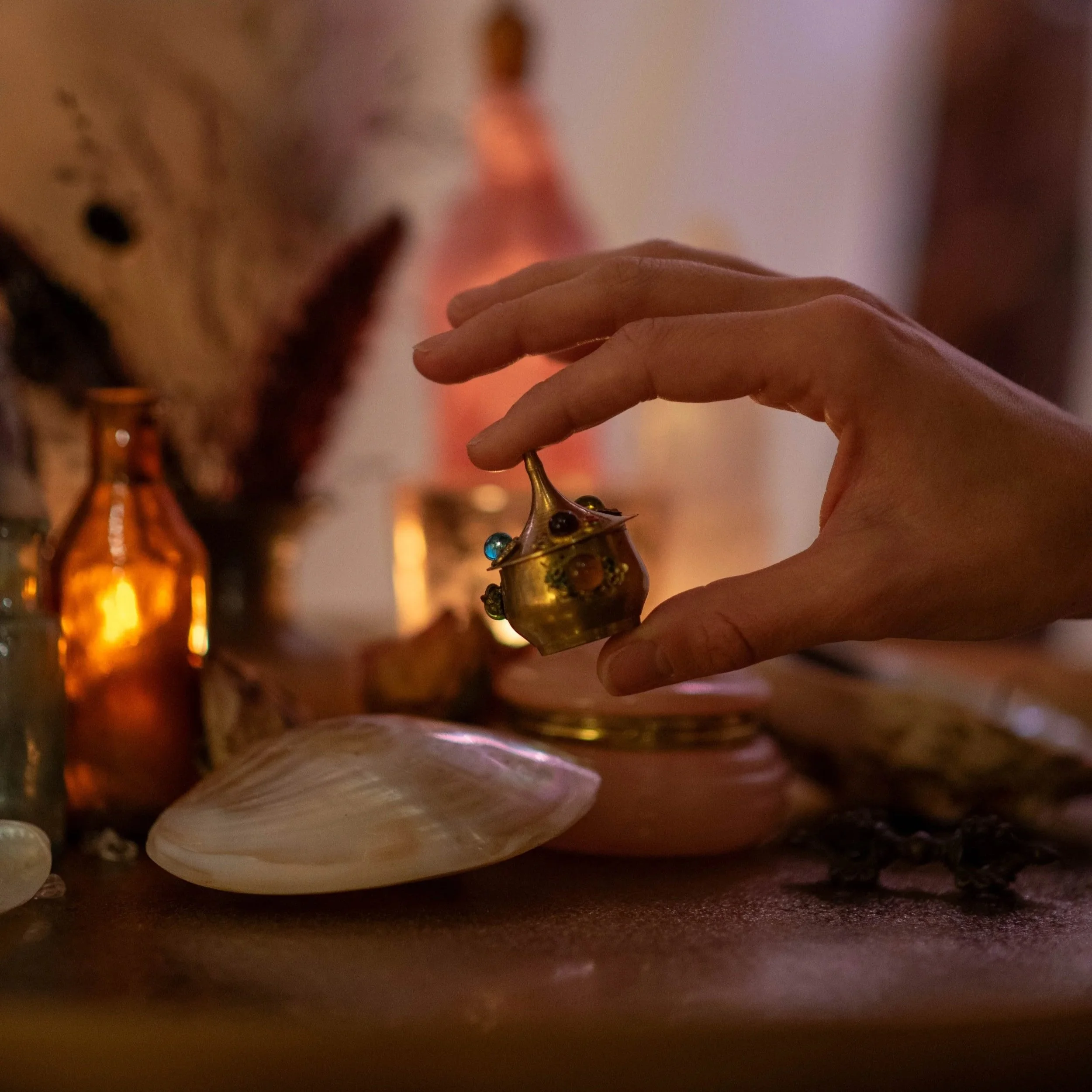
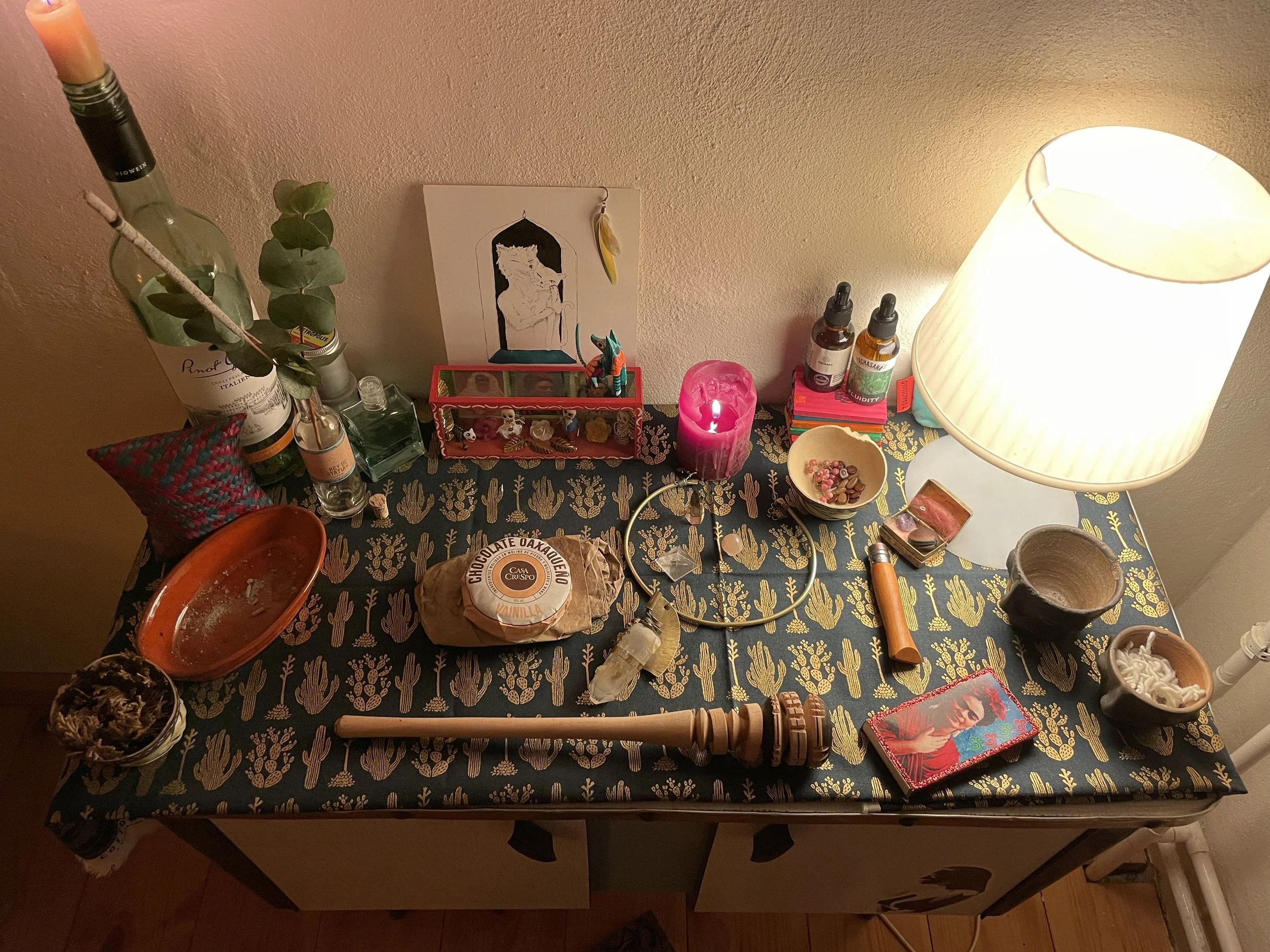
Once you’ve found your place, the next layer is what you choose to put there. I have learned, that natural materials carry a different kind of weight — wood, bone, crystals, herbs. Things that were once alive, or are still alive in some quiet way, hold something that manufactured goods simply don’t. There is a kind of energy in objects born from nature, a substance that feels closer to consciousness itself, and that makes them more powerful to work with.
The same is true for handmade things. A bowl someone shaped with their hands, a piece of jewelry someone strung together with intention. These carry the focused will of the person who made them, and that focus becomes part of what the object holds when you bring it into ritual or your life.
This is also why I would encourage you to be selective. Not everything needs a place on your altar, only what truly feels aligned. It is less about collecting and more about curating a small, living archive of what matters. There are surely lists of sacred objects all over the internet but what I find to be most powerful is what’s meaningful to YOU.
Maintaining that space, dusting it, rearranging it, returning to it again and again is its own form of devotion. The same effort that goes into crafting something by hand goes into tending an altar over time.
Building an altar with your own hands
Last year, the idea came up to host a workshop about making your own altar. Having grown up in a family of craftspeople, it felt natural to want to build an altar with my own hands and paint it too. So I did exactly that, as a pilot project, and the dream kept weaving itself further from there.
Right now I am working on building ten altars out of wood. You’ll be able to sign up, pick your own, and paint it yourself. The workshop will take place this winter, around the solstice — a meaningful seasonal shift to elevate whatever you create there, and to let your altar carry that turning point with it from the very beginning.
About Maya Hahn
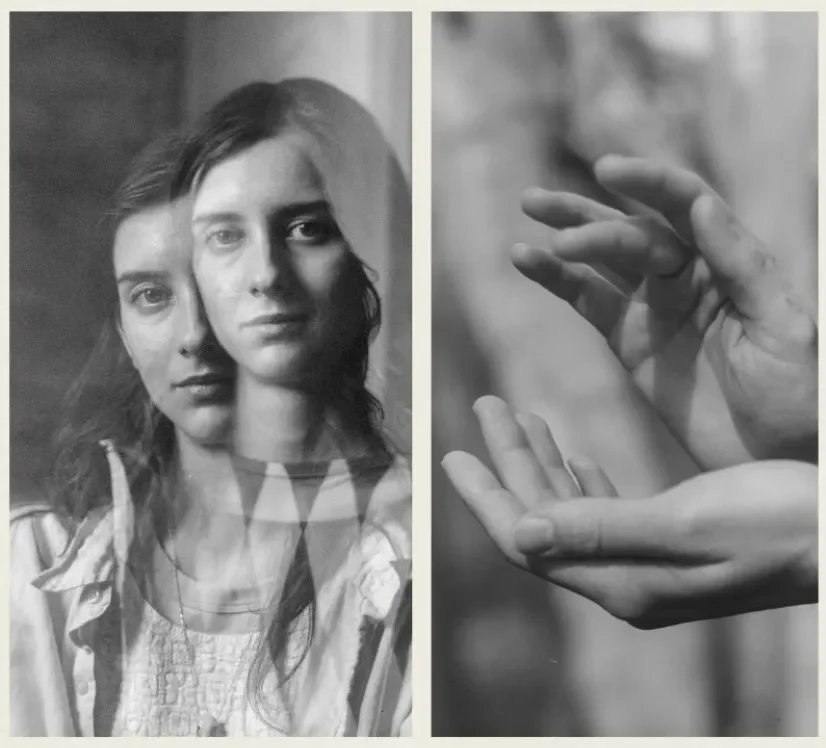
Photo by Fabrizio Bilello
Maya is a Berlin-based psychotherapeutic counselor, facilitating therapy-informed sessions at Resonance Room, Berlin, and online. She offers 1:1 counseling both as short-term support for people navigating the waitlist for an insurance-covered therapy spot, and as longer-term accompaniment for those seeking a sustained therapeutic relationship.
Through her work in psychiatric research and her academic studies in psychotherapy, she builds a bridge between the Western-trained mind and Eastern mystical spirituality. Her focus is on decolonizing therapy: examining how the field has appropriated and commercialized modalities that indigenous peoples and tribal communities have used to heal for centuries, often without acknowledgment or reciprocity. Alongside her counseling practice, she is a Reiki master and workshop and retreat facilitator.
This same commitment extends beyond the individual: Maya also works with organizations to rethink their approach to mental health, helping companies move past checkbox wellness and embed genuine wellbeing into the fabric of the workplace.