
Munga Plains
Chobe National Park, Botswana, Africa
About Munga Plains
👥: 20 guests + 2 facilitators
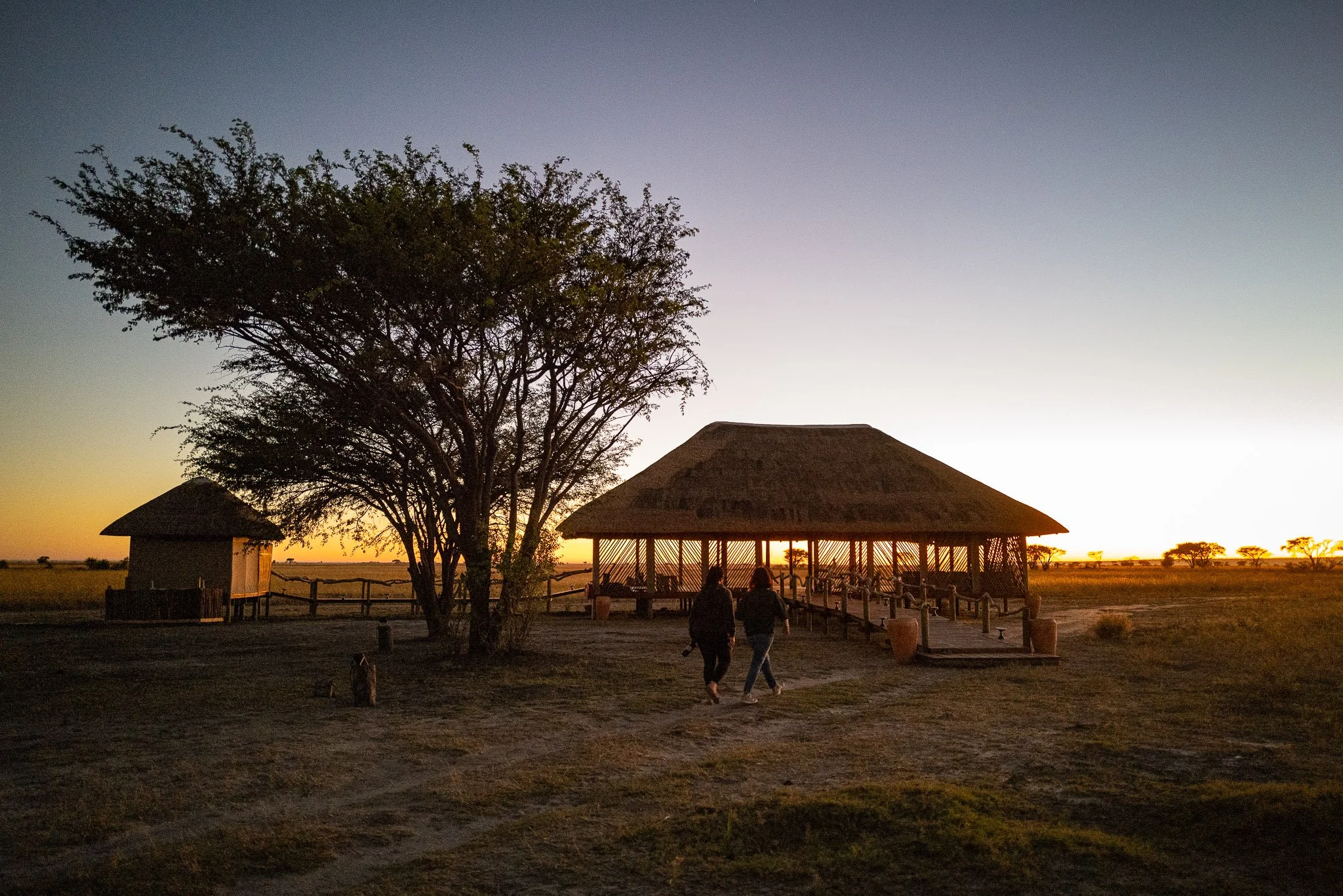
Munga Plains is a small safari camp built for yogis, on the edge of Chobe National Park in Botswana. Safaris here bring you close to the world’s largest elephant population, 450 bird species, and herds pulled to its riverbanks. Practice in a yoga shala 500 meters into the floodplains, surrounded by nothing but the sound of the wild. Built respectfully on ancestral Basubiya land and staffed from the neighboring villages, local traditions are honored by running cultural workshops, hosting traditional dinners, and encouraging genuine connections with the locals.
Accommodation
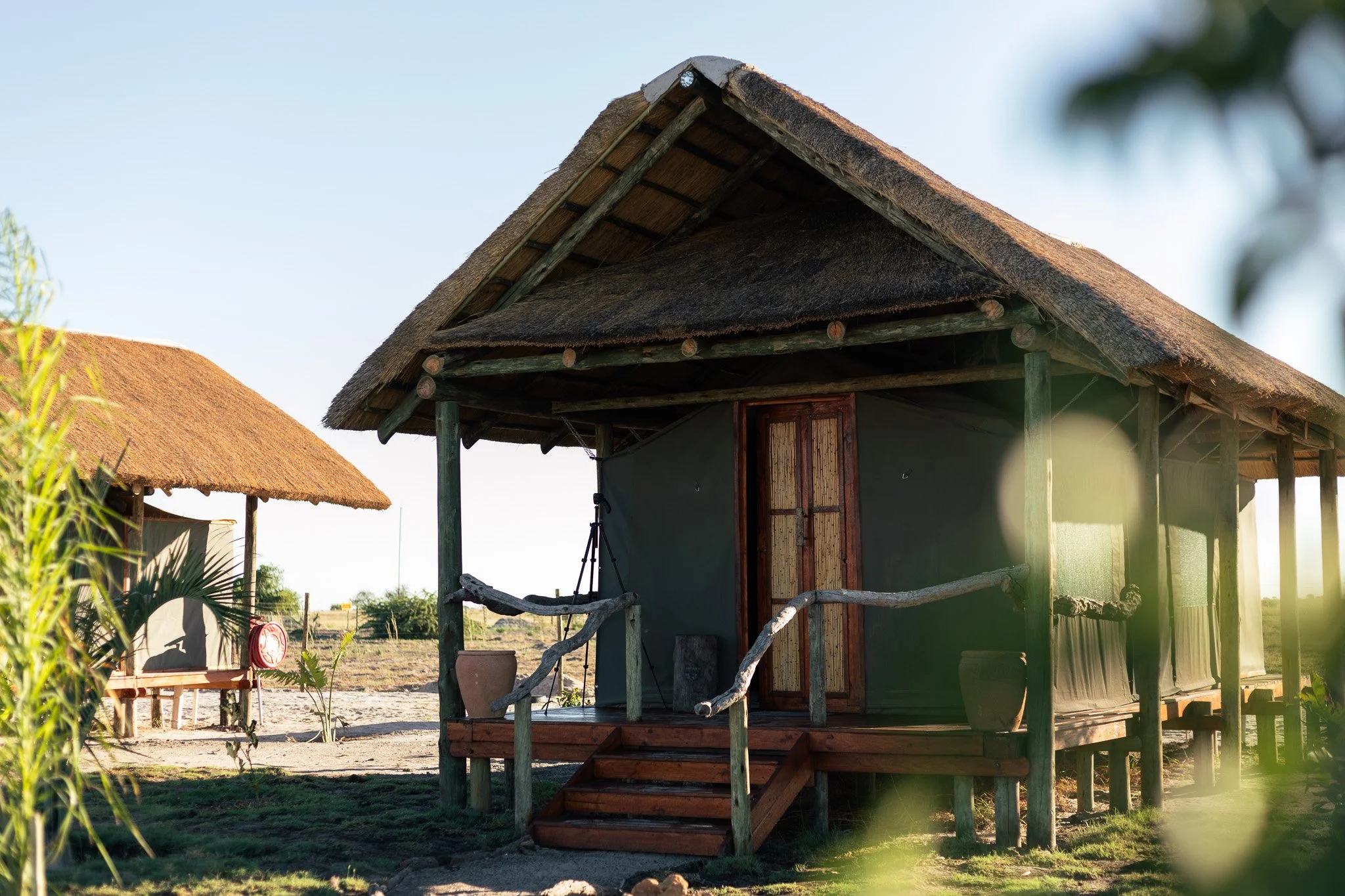
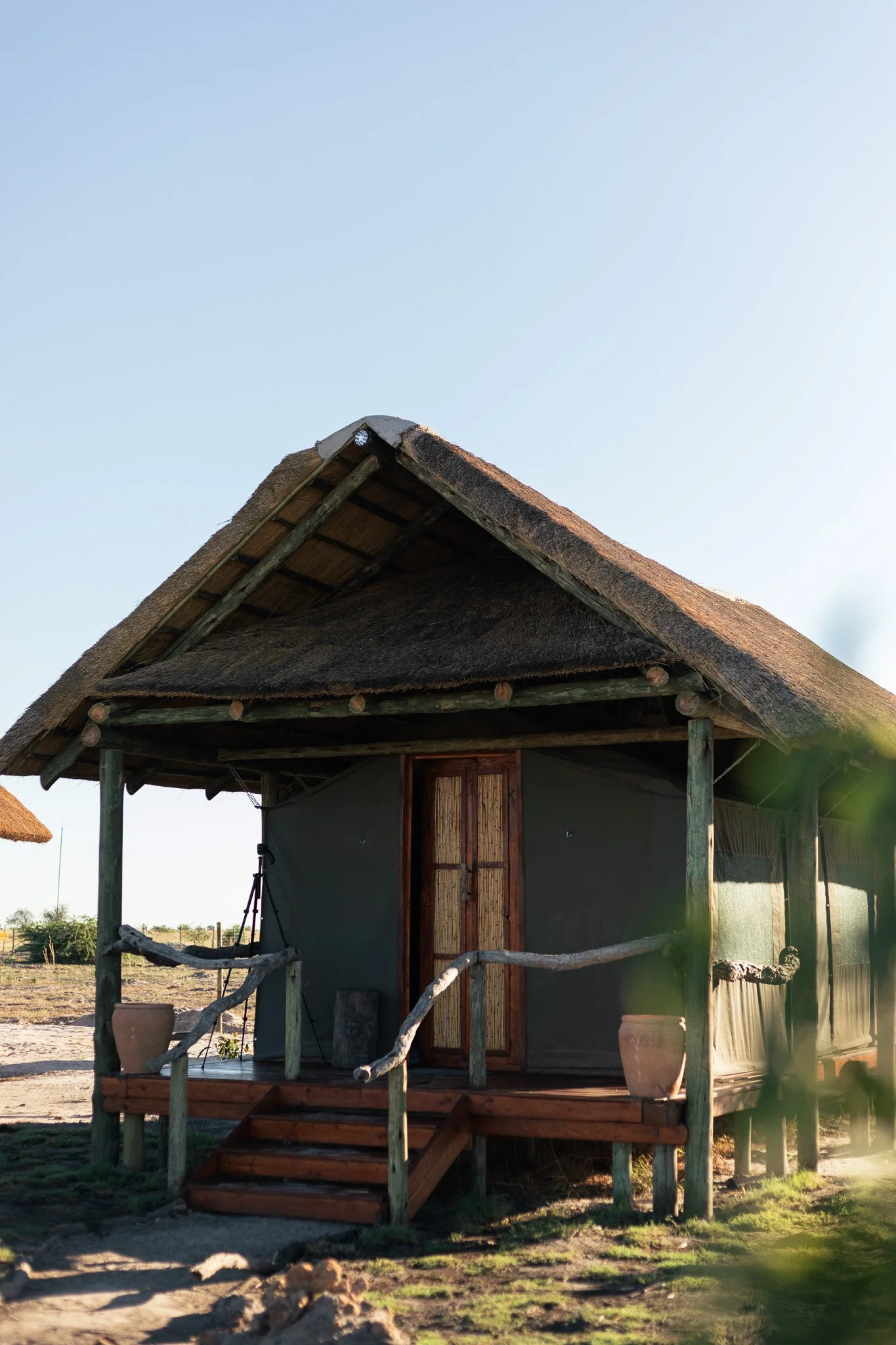
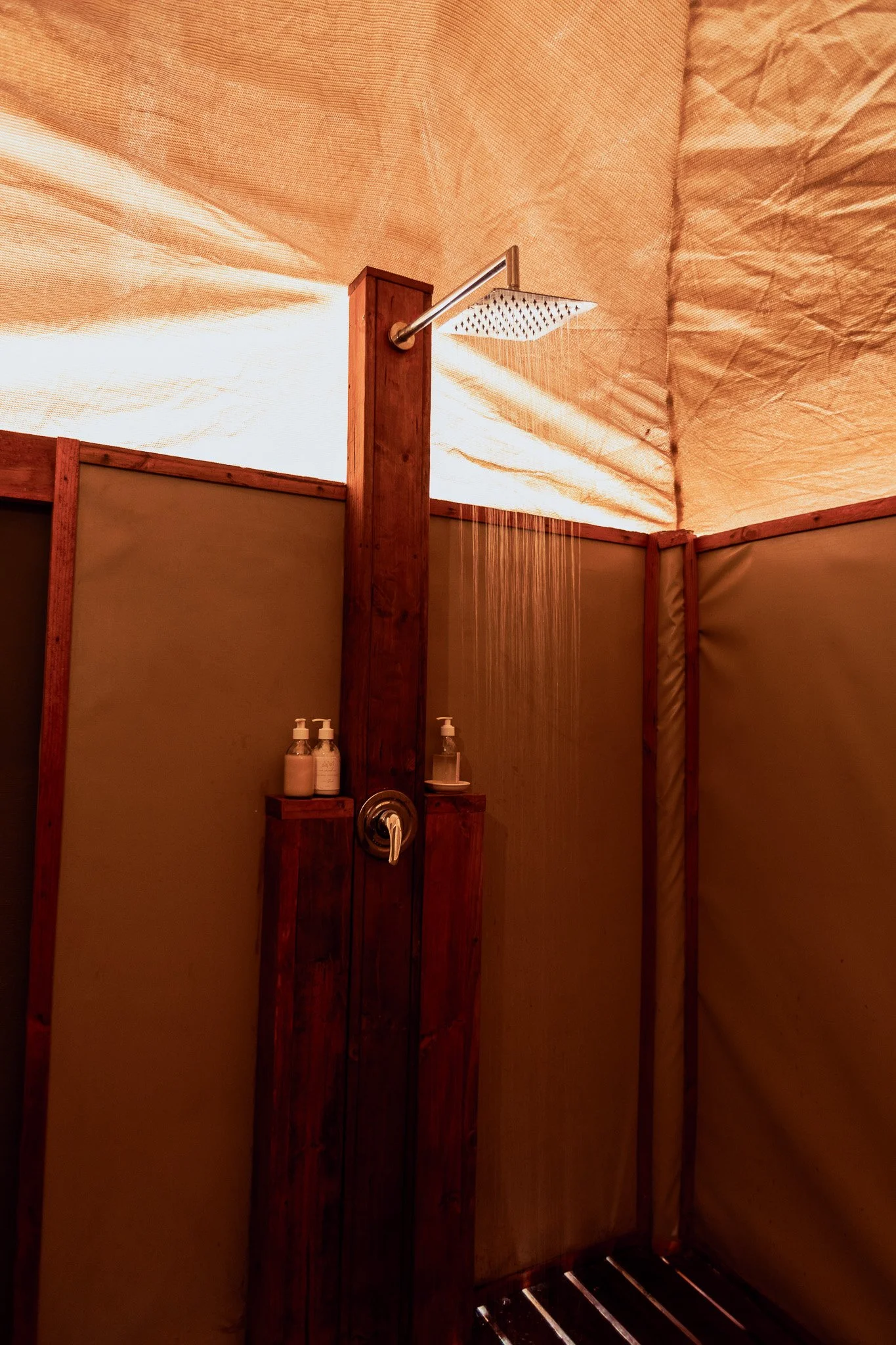
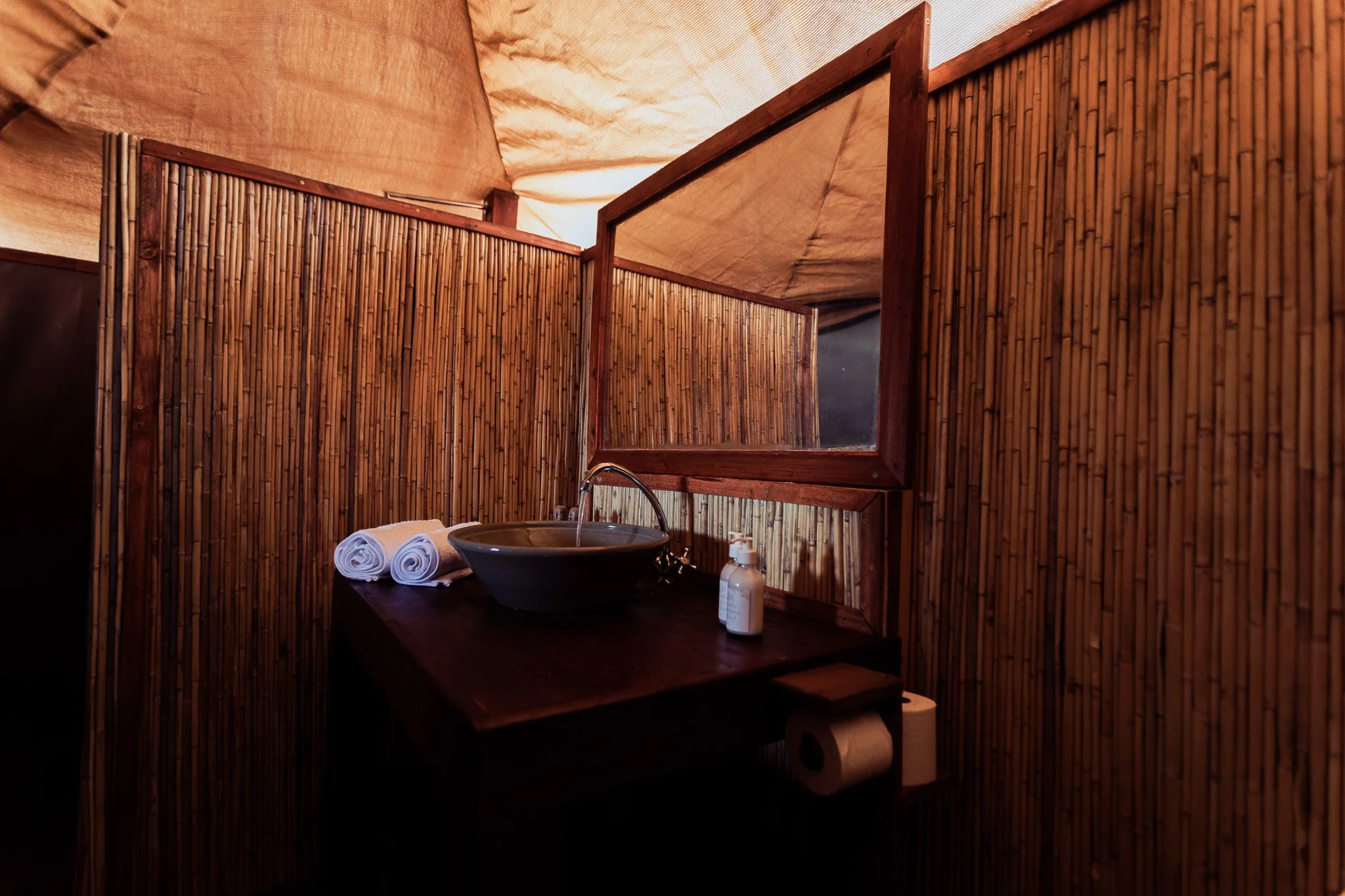
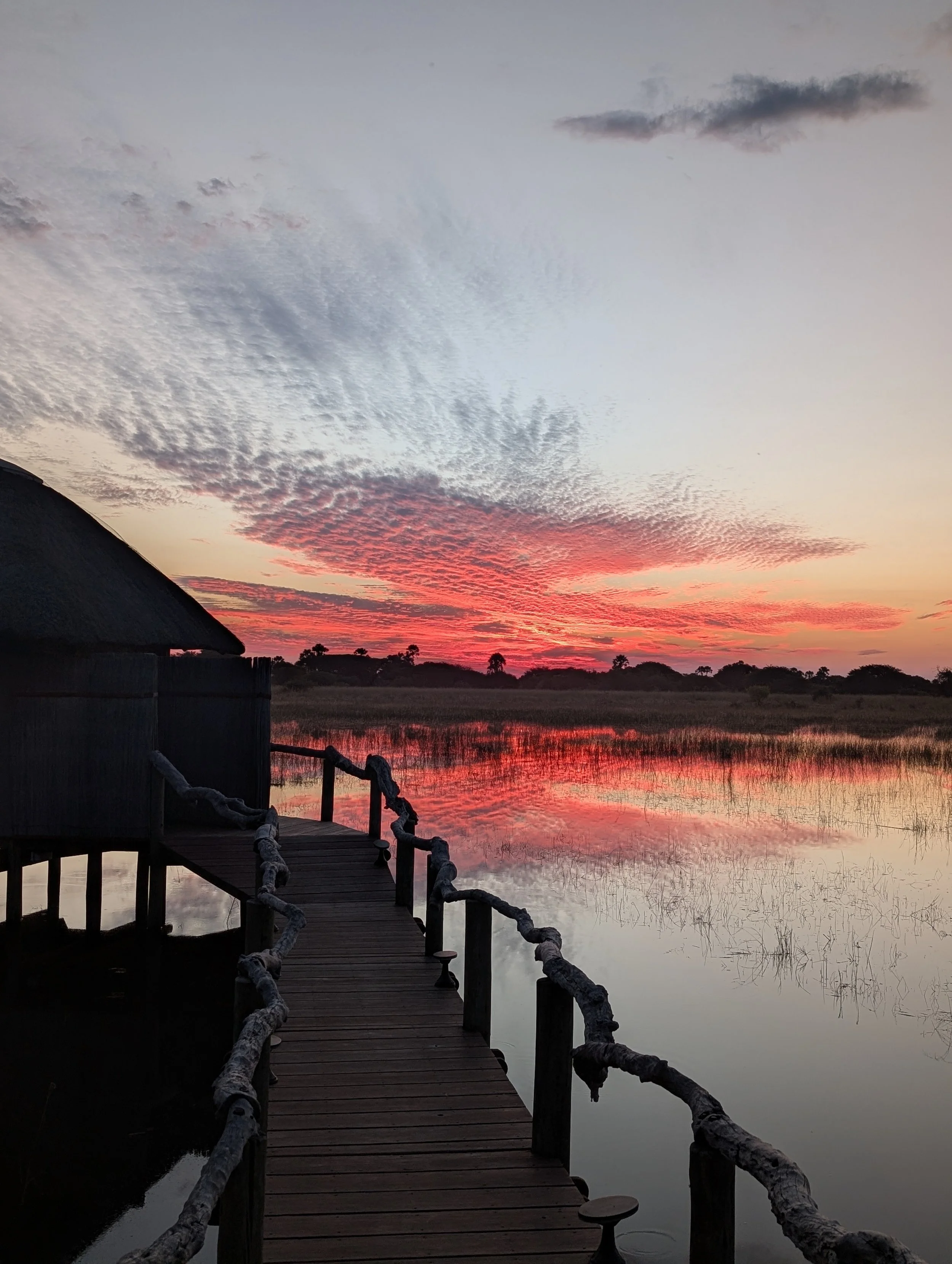
10 beautifully finished double glamping rooms, along with two reserved for visiting retreat leaders, are each set on their own wooden deck with a private veranda. The beds can be configured as either king or twin. Each tent features an en-suite bathroom with a flushing toilet and hot-water shower.
Facilities & services
Communal dining area
Swimming pool
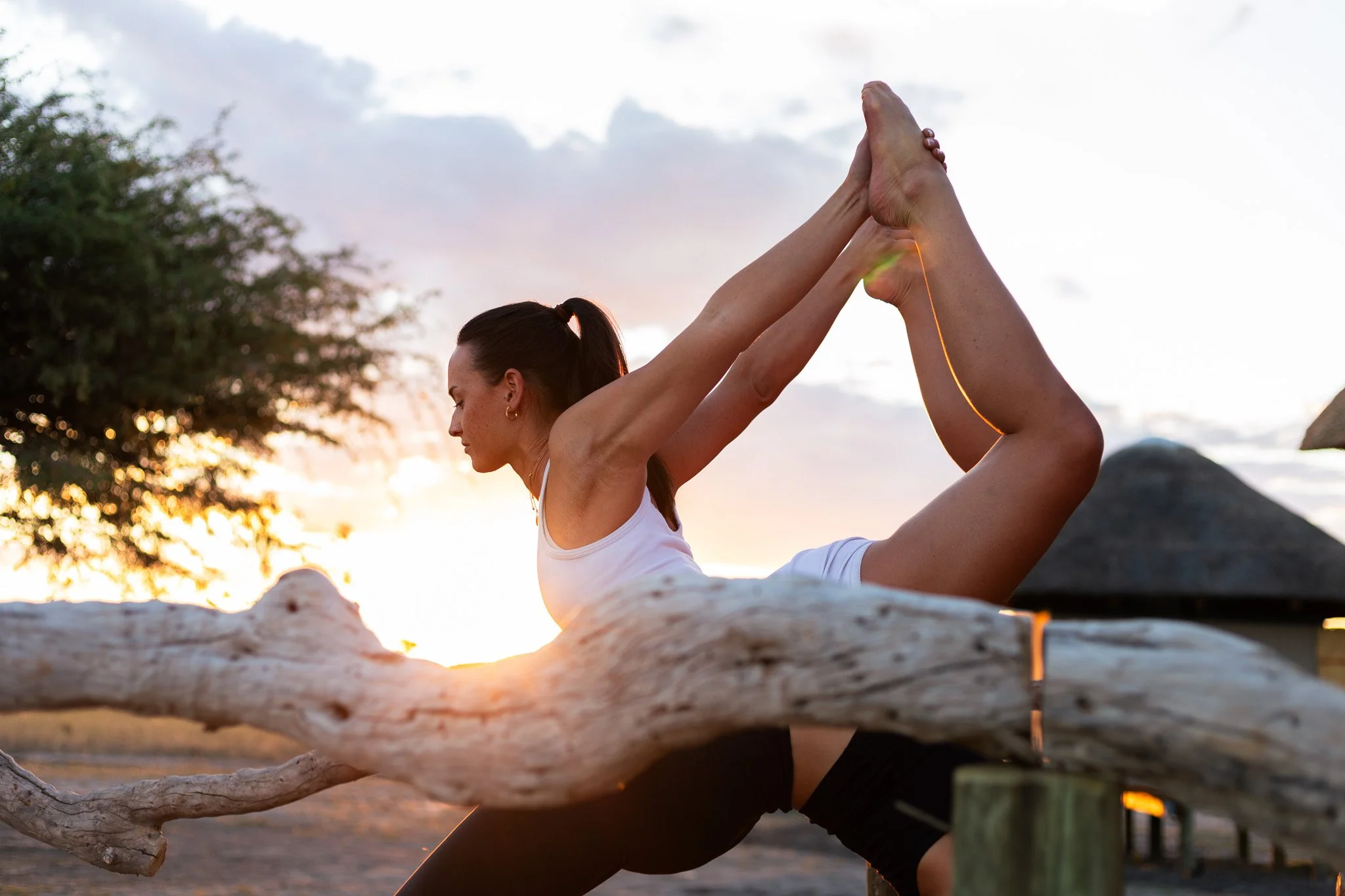
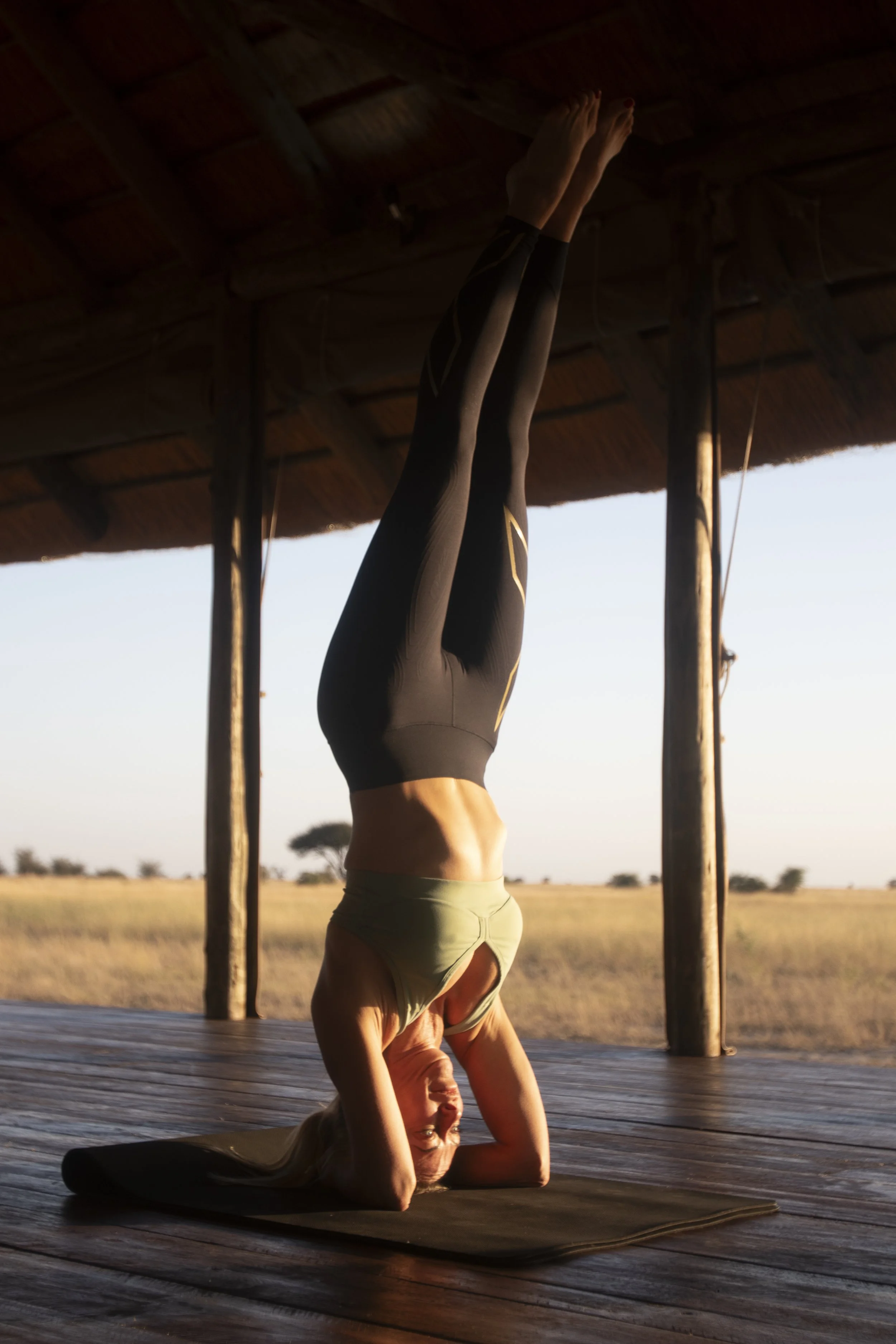
Yoga Shala
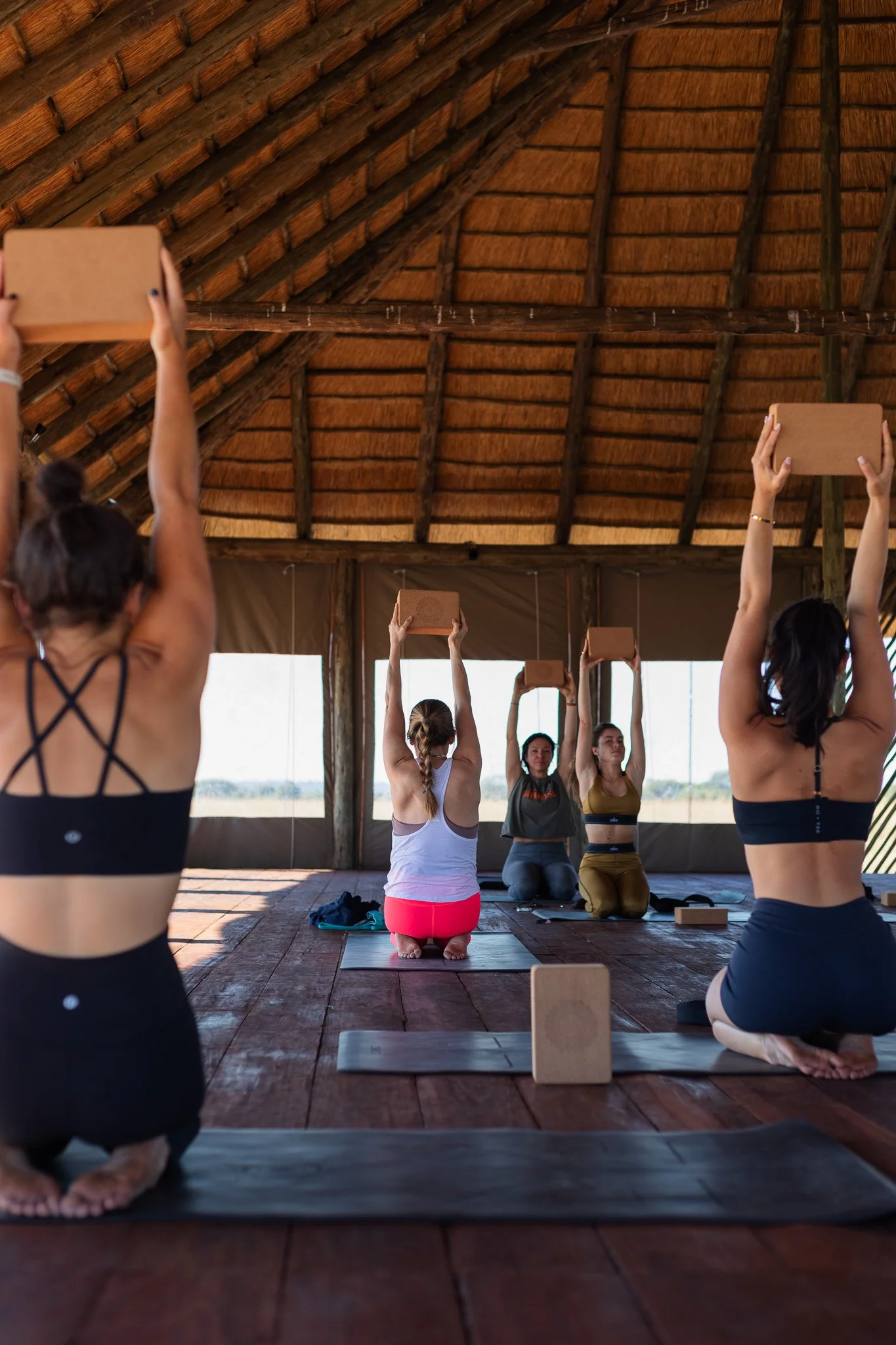
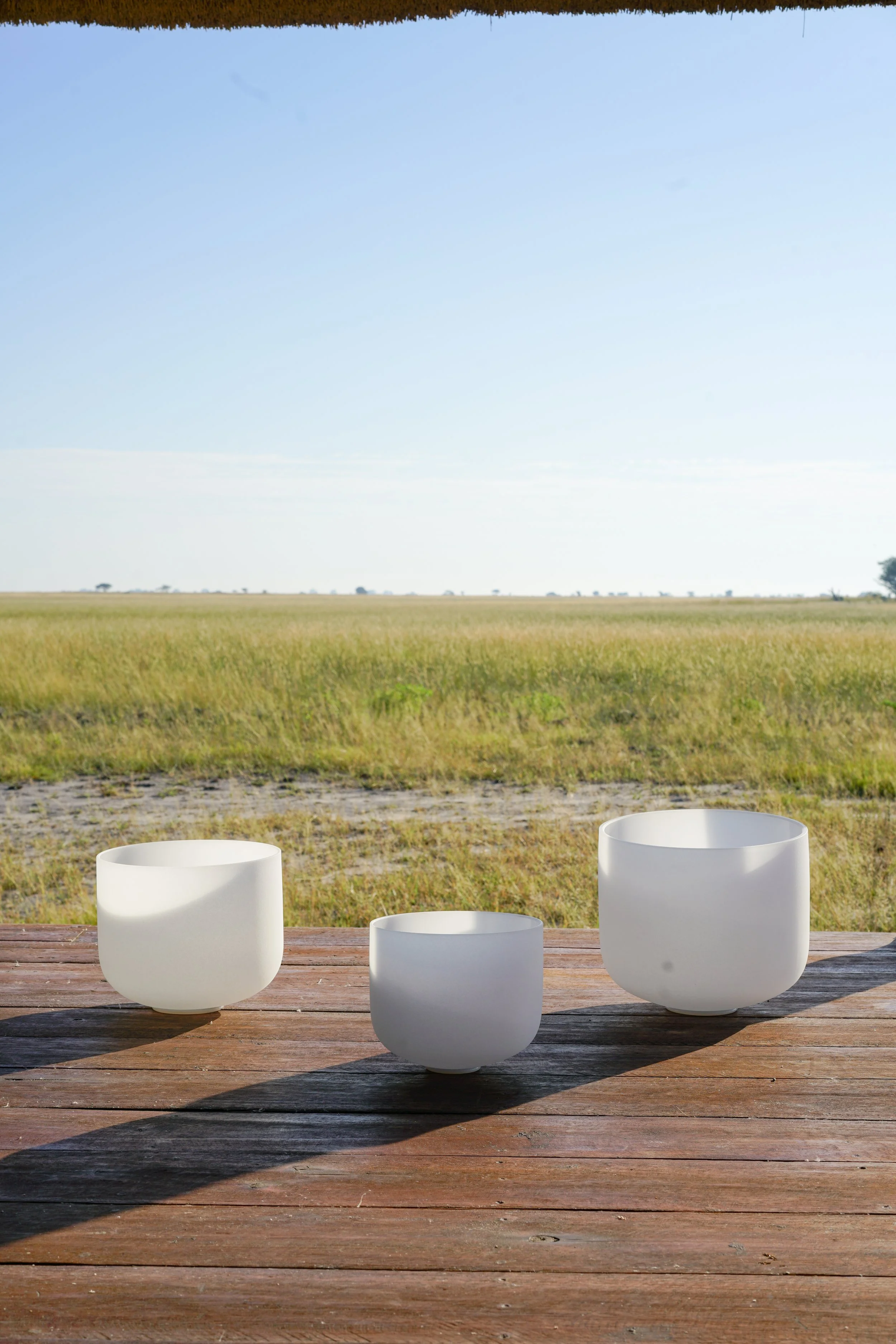
Full equipment for 20 practitioners (mats, blocks, belts, bolsters, straps, blankets, aerial hammocks, and sound bowls)
Extras
Boat cruise
Workshop with local community
Village tours
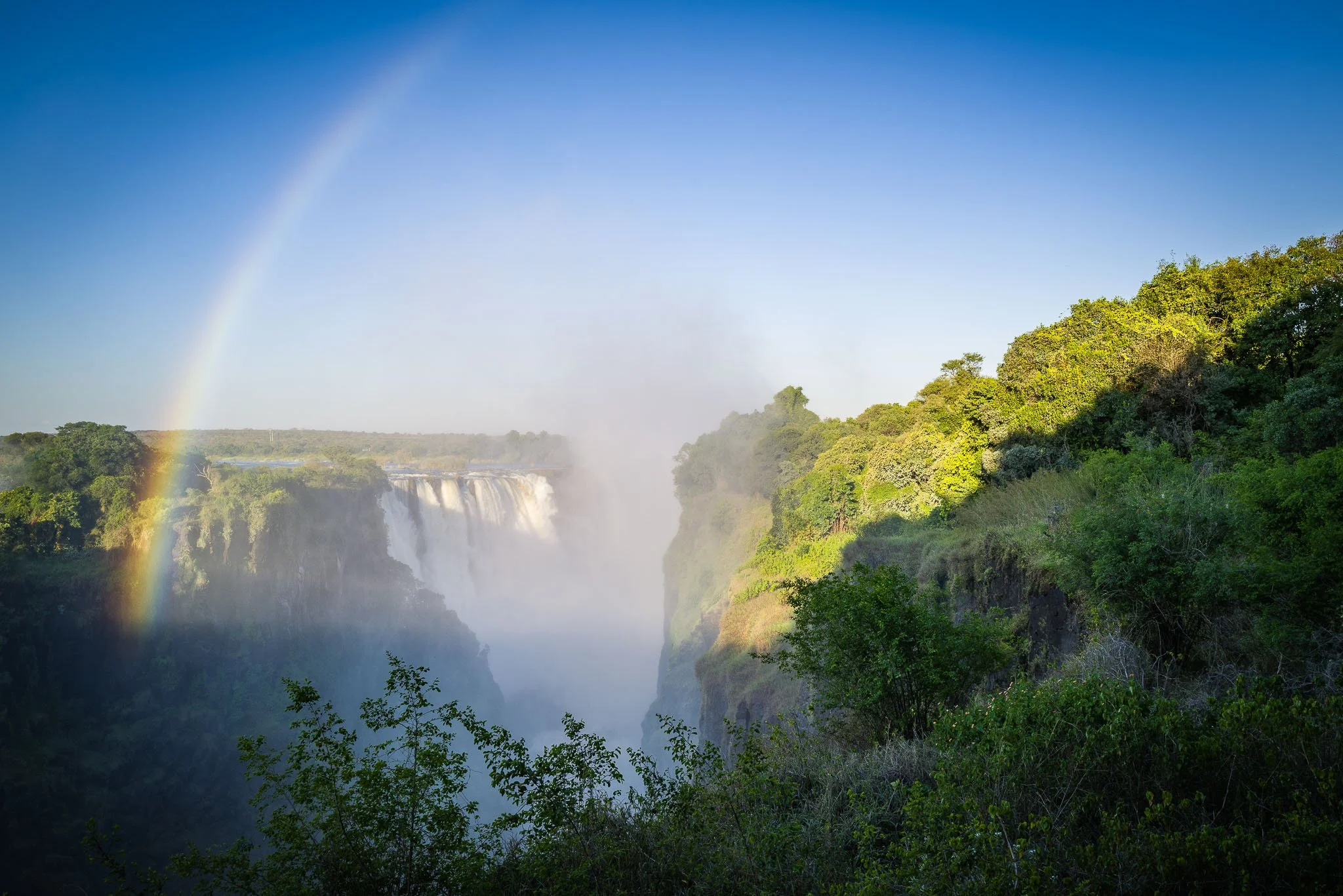
Visiting Victoria Falls
Nearest airport
Victoria Falls Airport or Kasane Airport
Direct flights are available from cities including Johannesburg, Cape Town, Nairobi, and Addis Ababa
The Camp
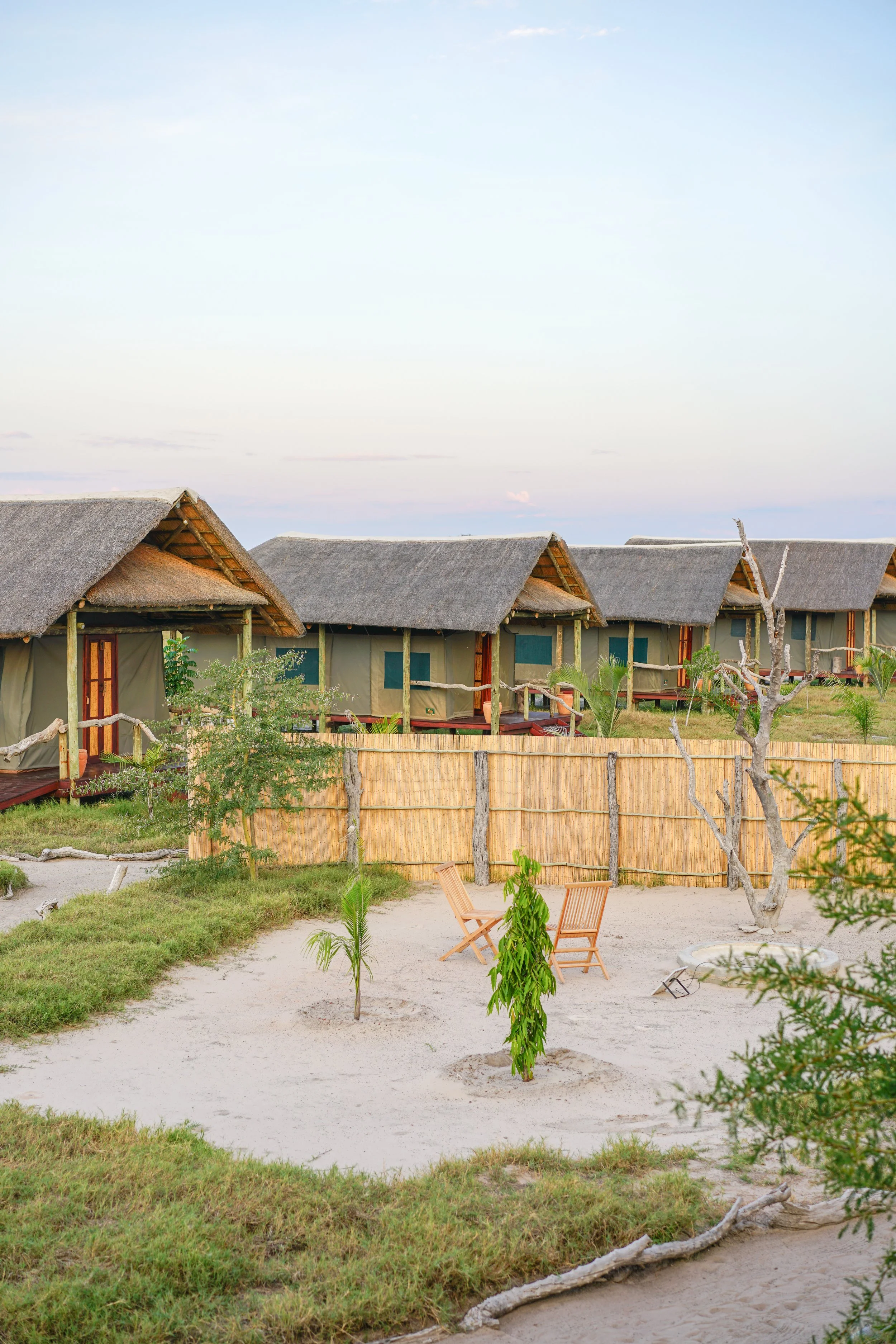
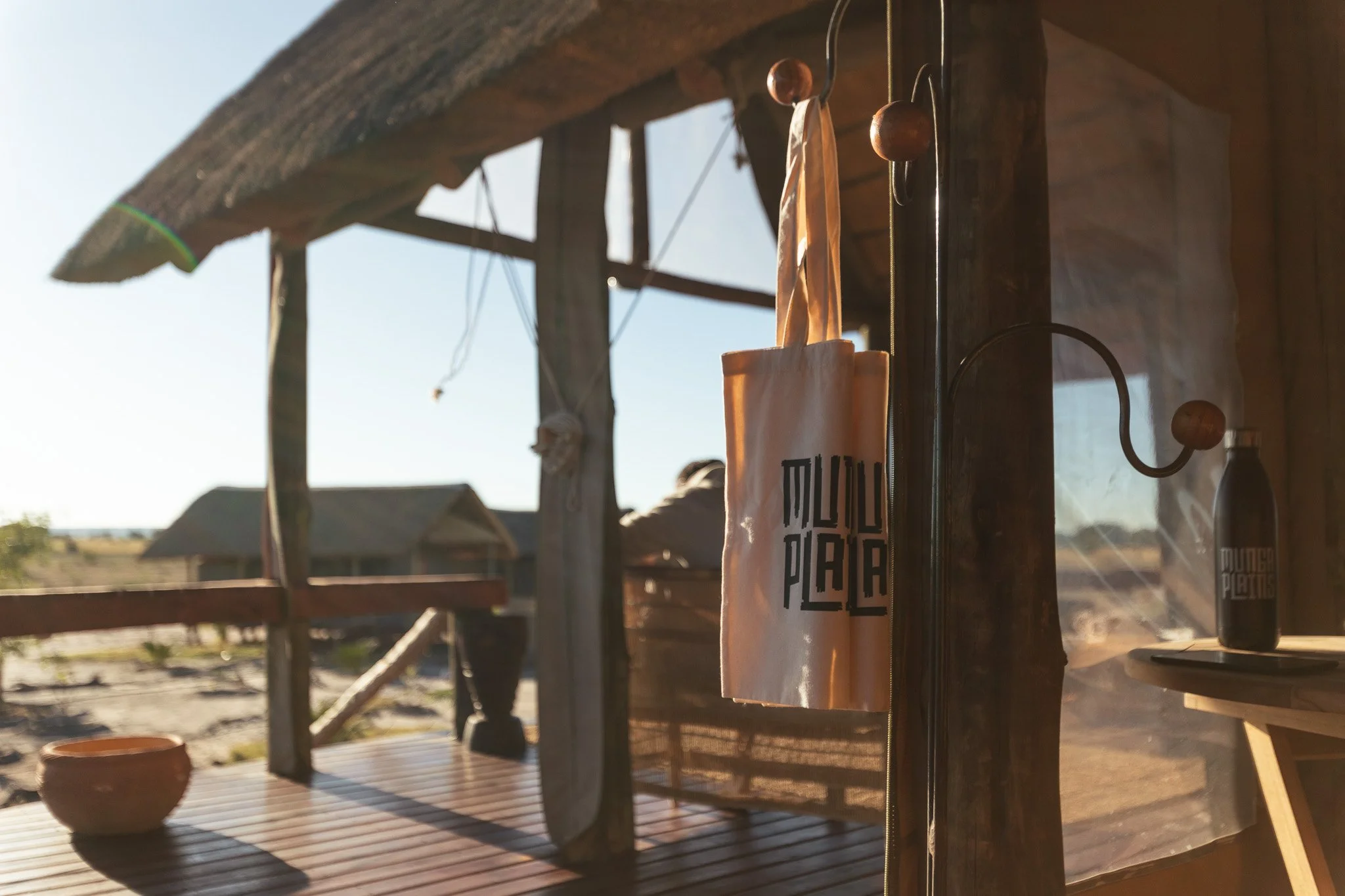
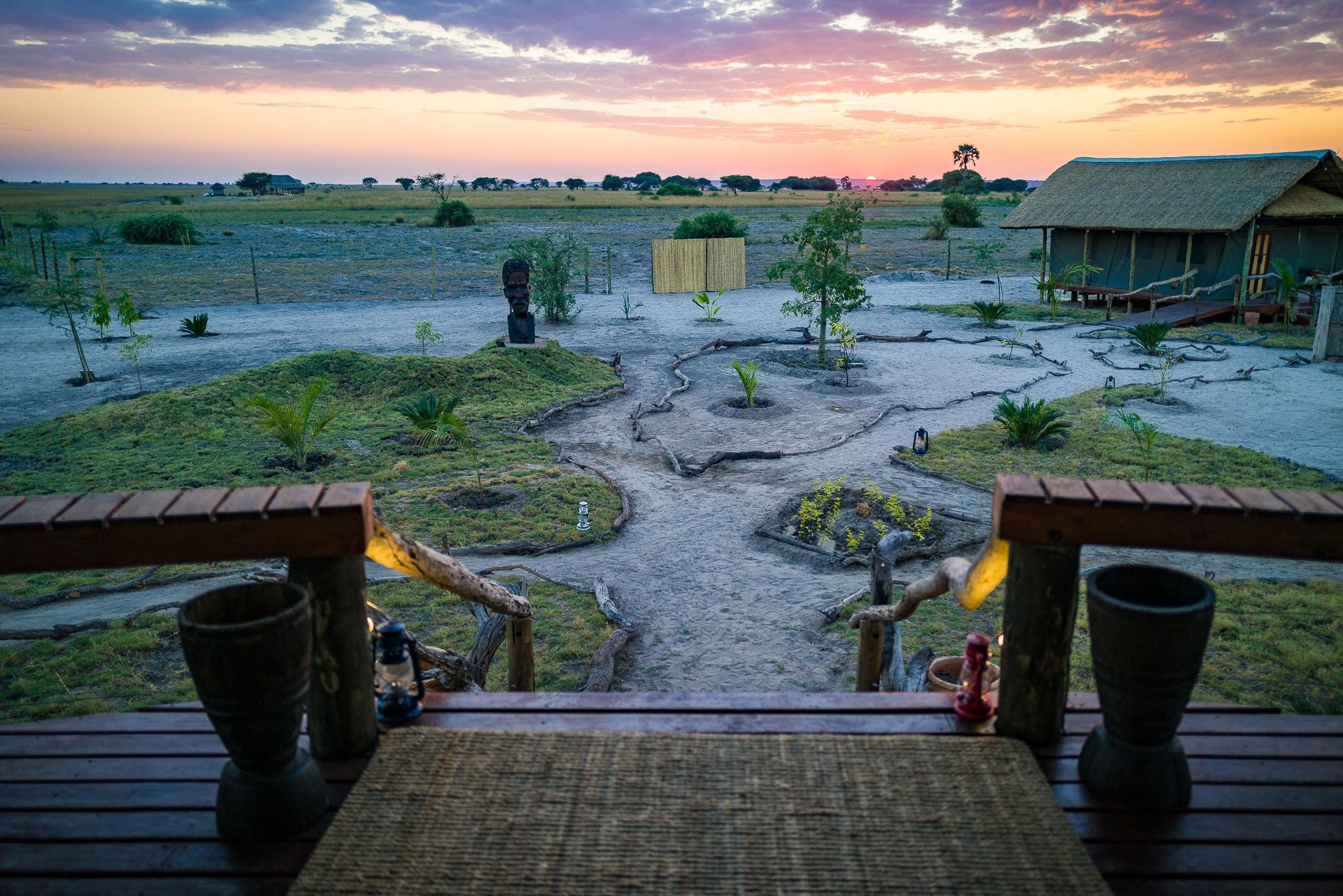
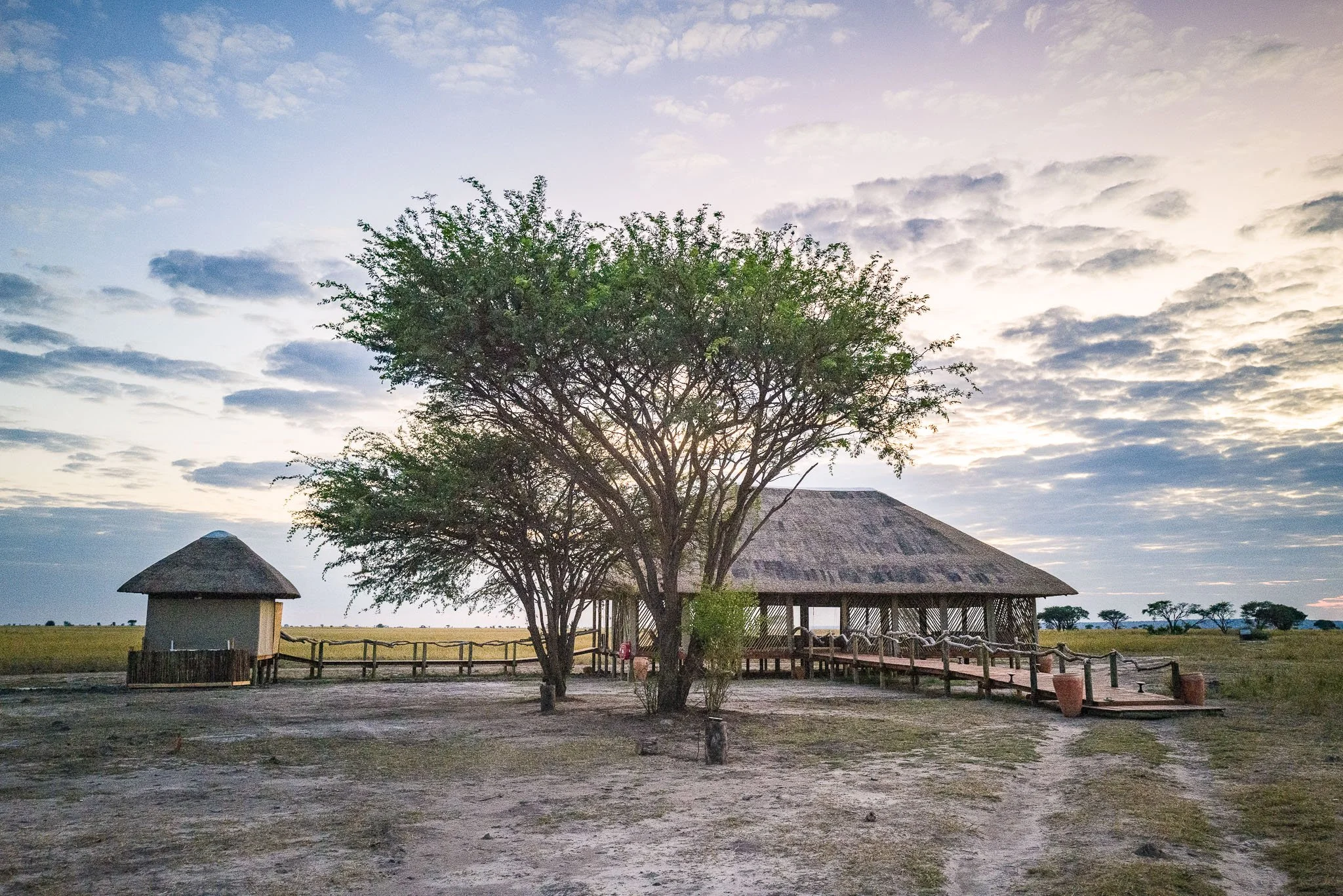
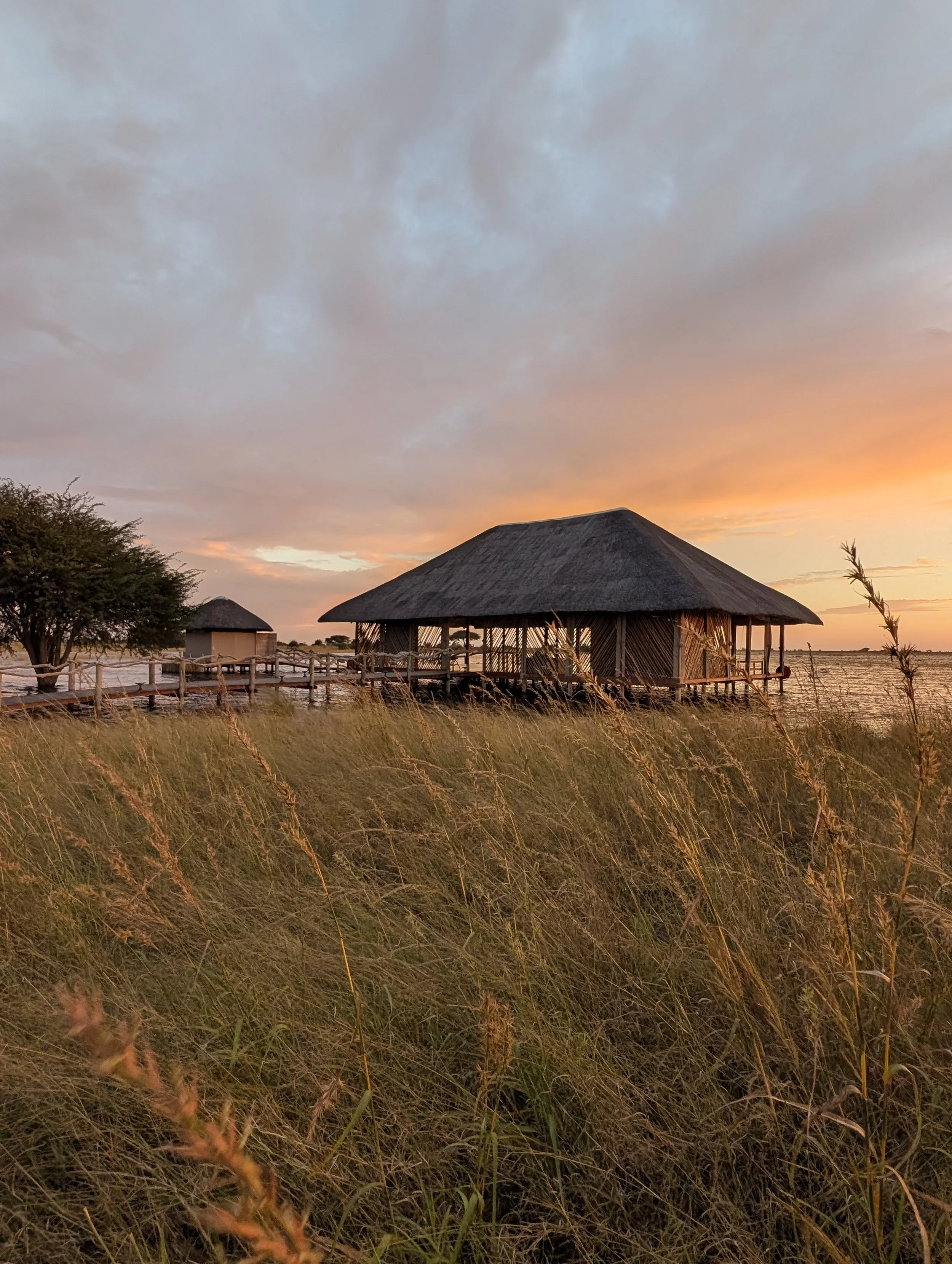
Every piece of wood, canvas, and thatch in the camp was placed with intention, so that if it were removed tomorrow, nature could quietly reclaim the land as its own. With comfortable en-suite rooms, the camp offers an intimate setting designed for one retreat group at a time.
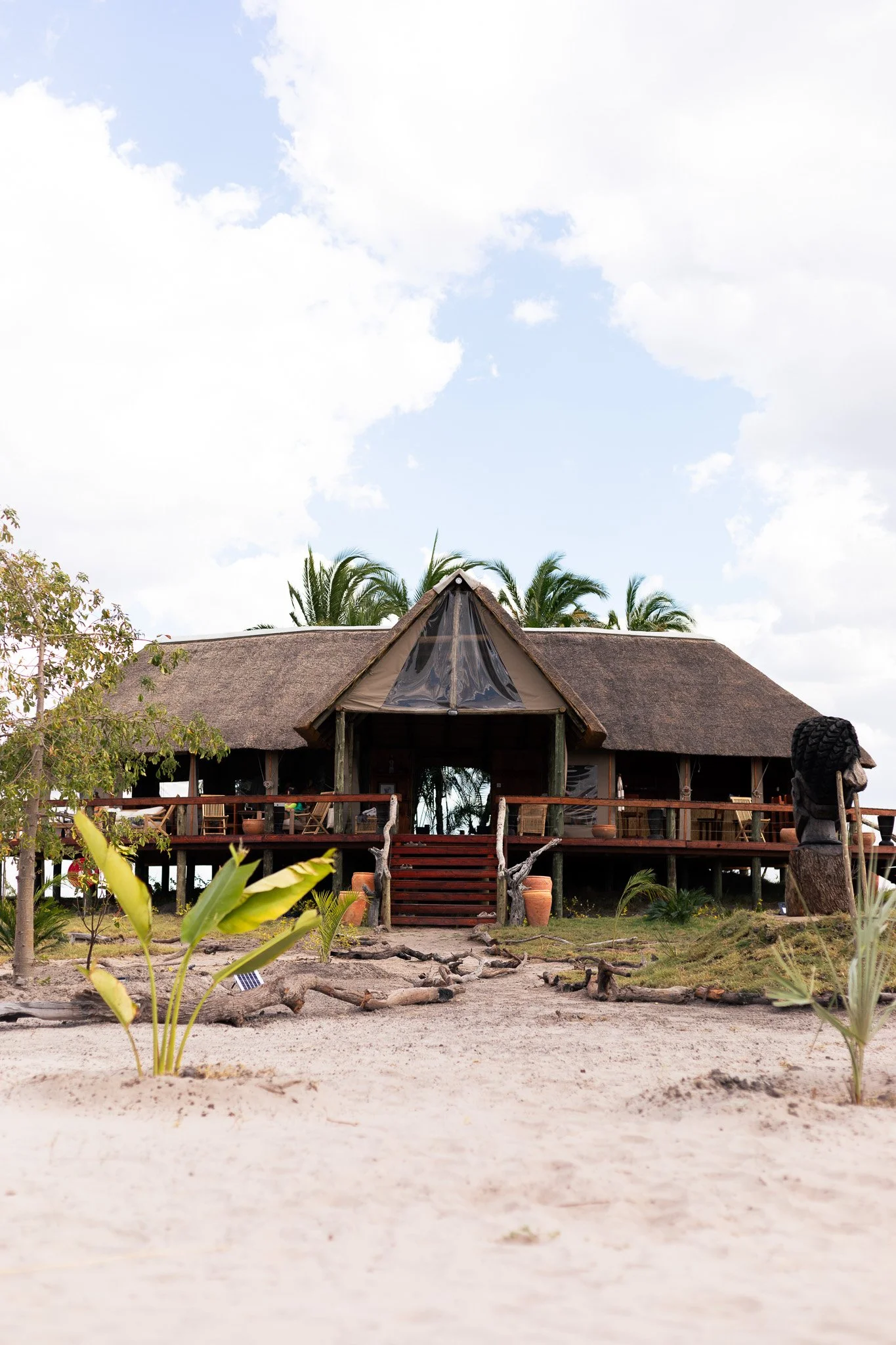
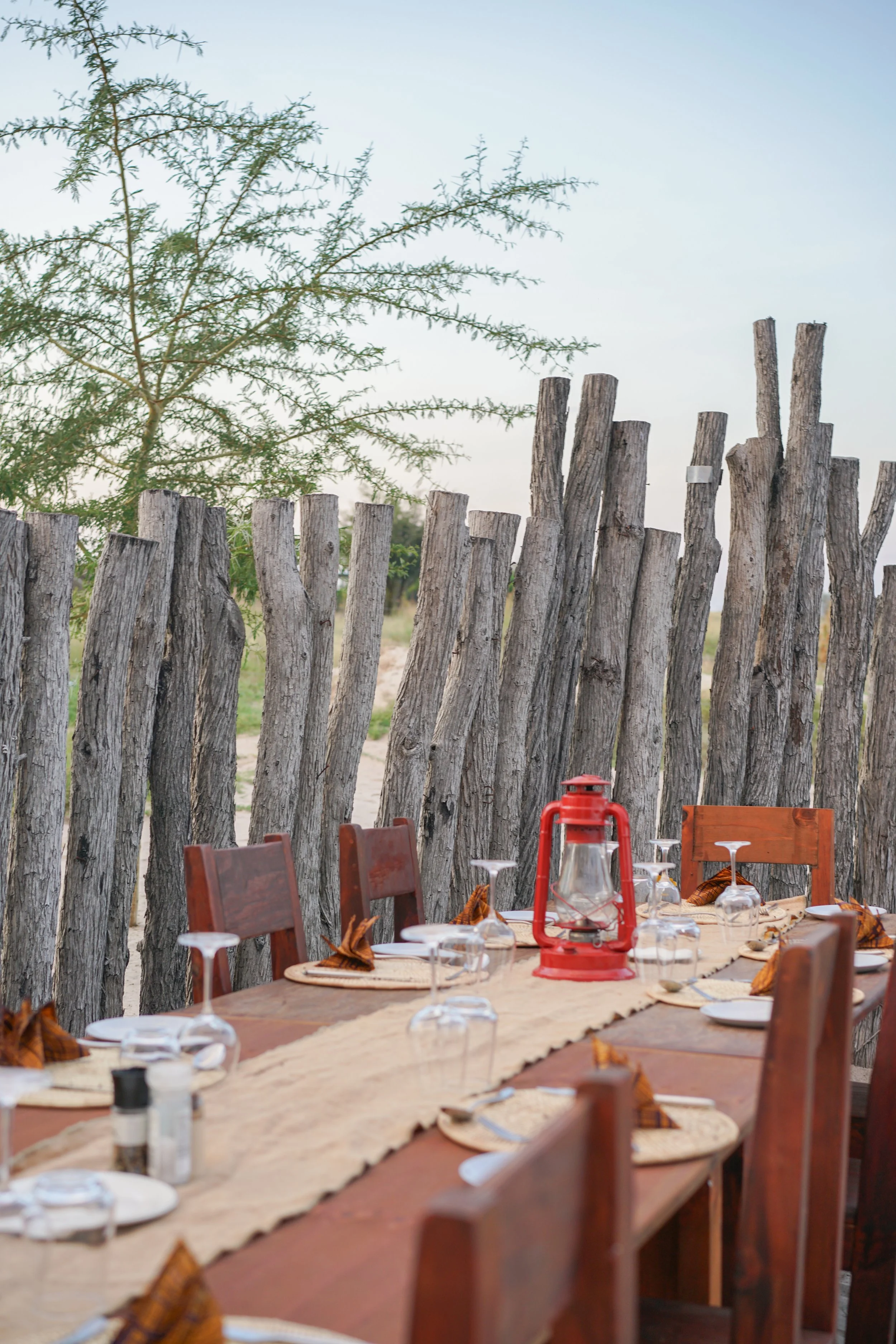
The main area is a space for connection and community, with a bar, swimming pool, relaxed lounge areas, and a boma for gathering under the stars at night. Guided by a commitment to self-sufficiency, we grow produce from our garden, run on solar power, and source and purify our own water.
Locally sourced, hand finished
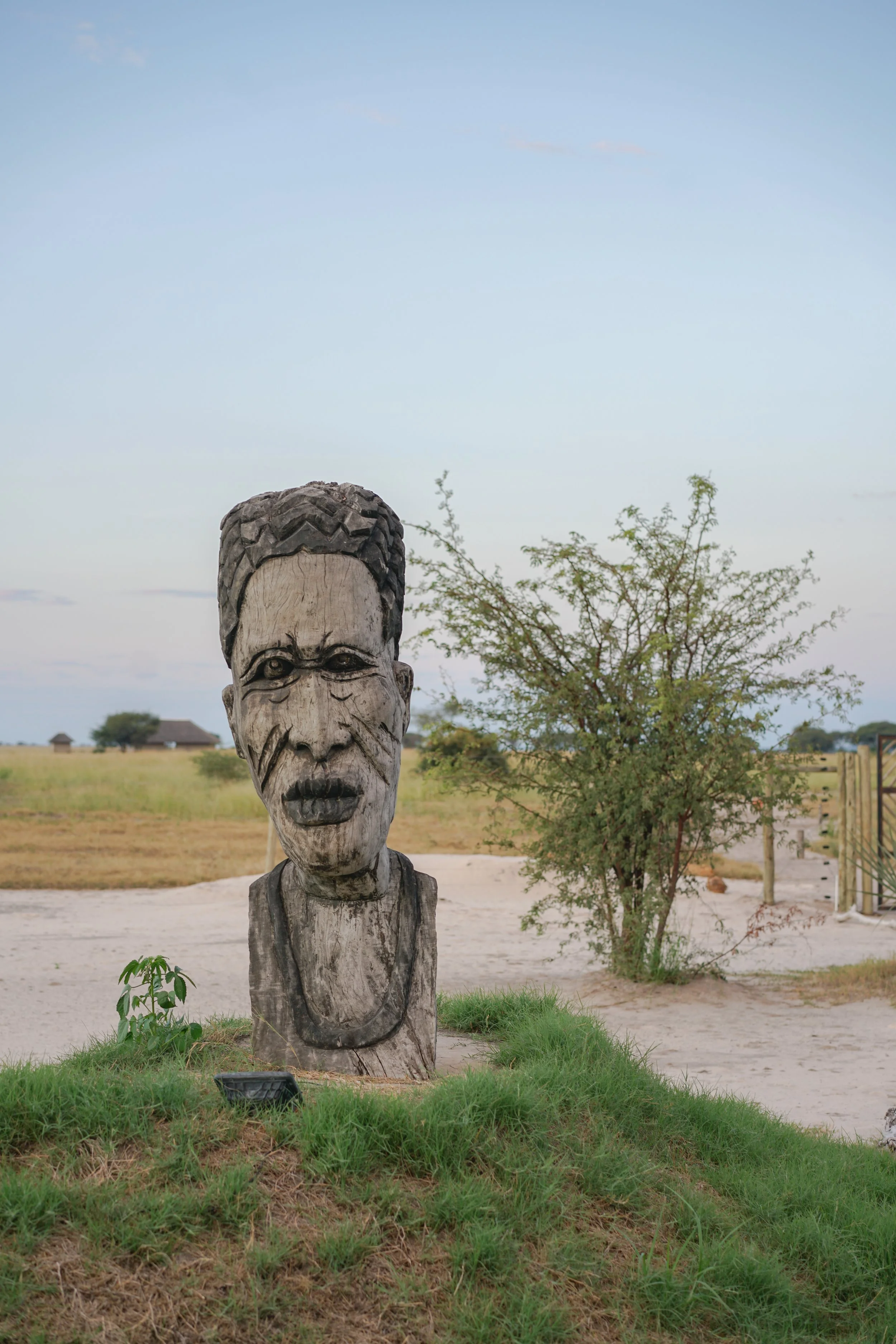
Every structure at Munga Plains was built by local artisans in wood, canvas, and thatching grass: nothing prefabricated, nothing imposed on the landscape. Each space was created to exist gently within the plains, in rhythm with its surroundings.
Entirely off-grid, the camp is designed to exist lightly on the land. Water is sourced from Munga Plains’ own borehole, with on-site water and sewage treatment systems. Solar power sustains the camp’s daily rhythm. Thoughtfully built to be self-sufficient, the camp cares for itself without leaving a lasting mark on the plains.
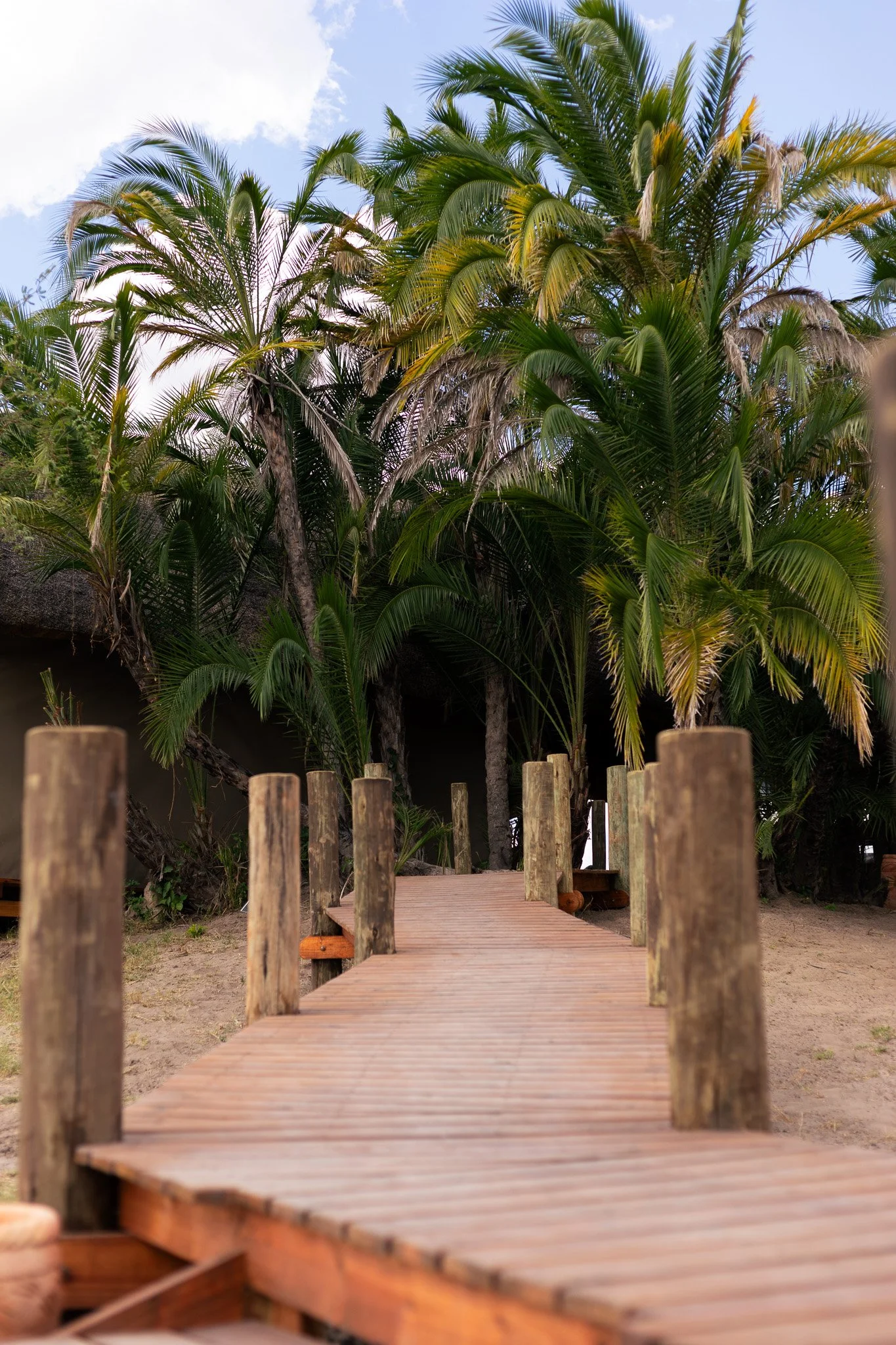
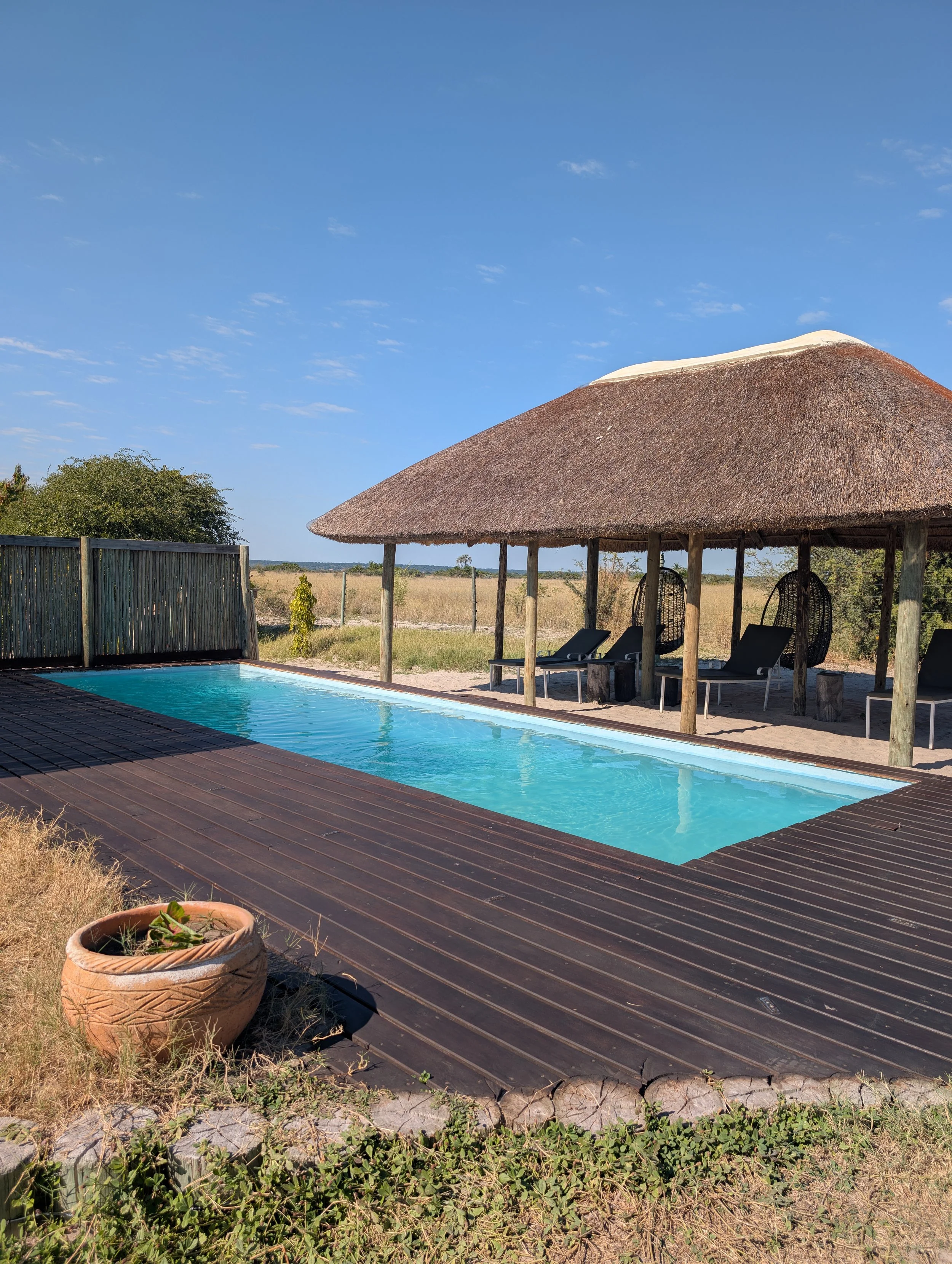
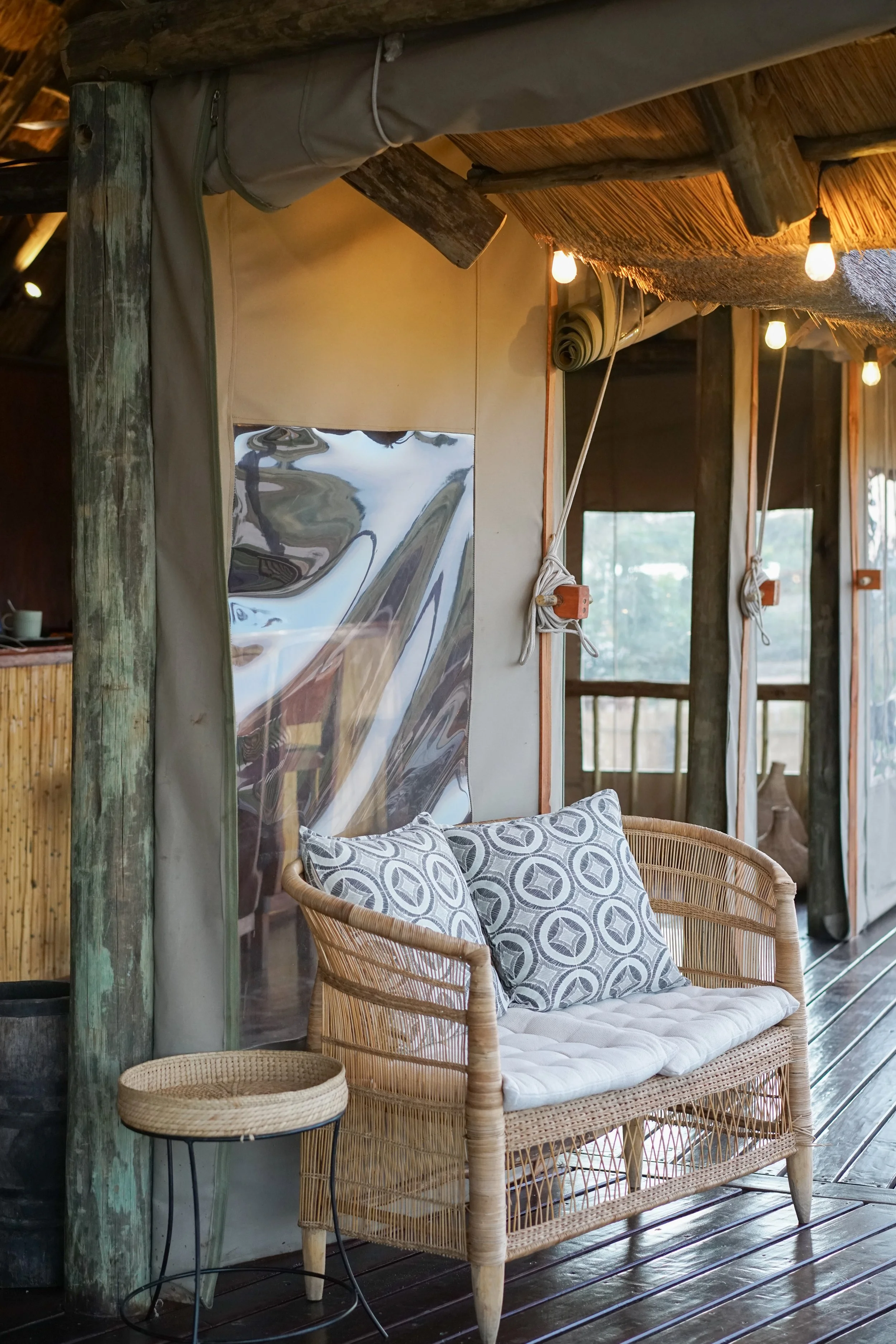
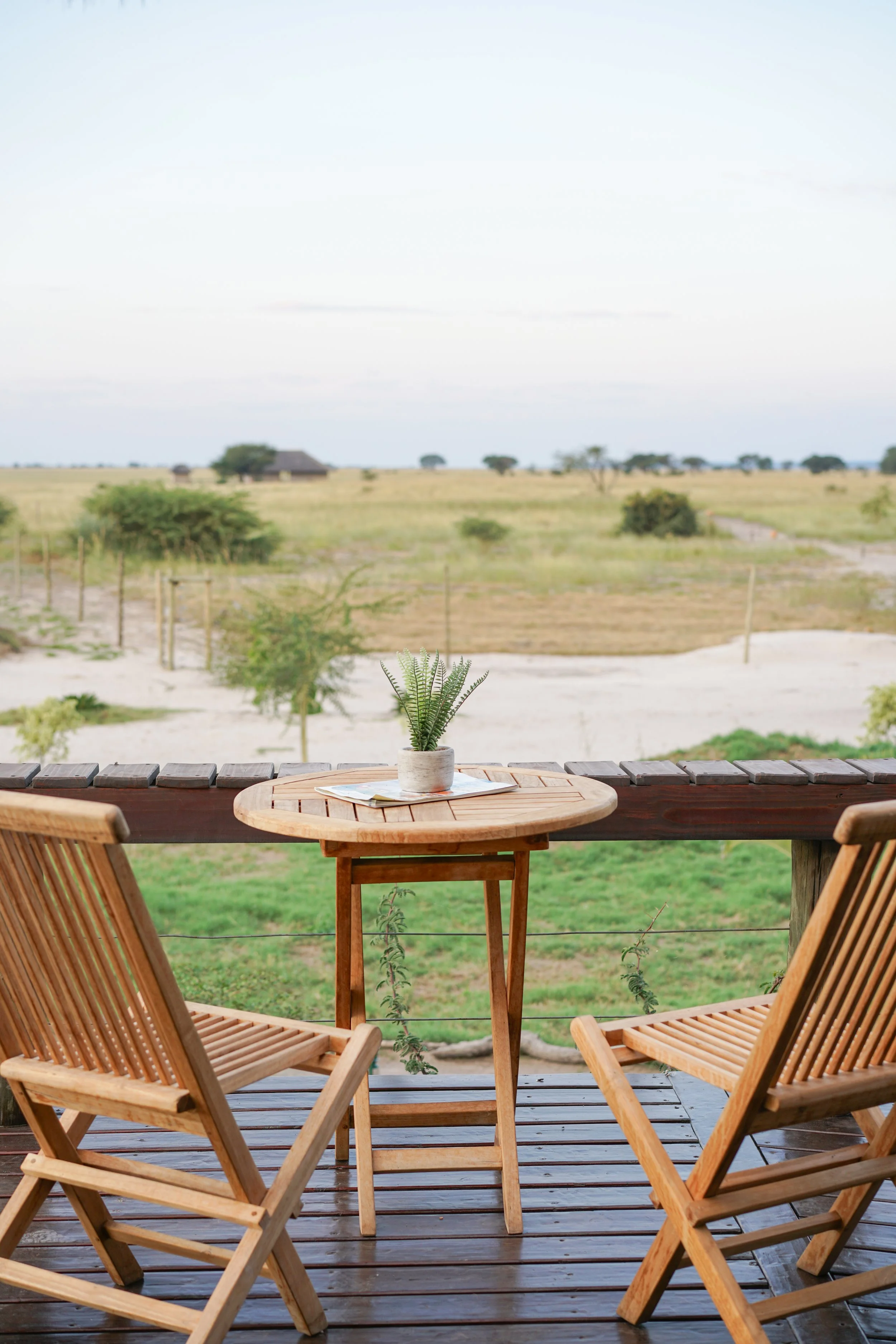
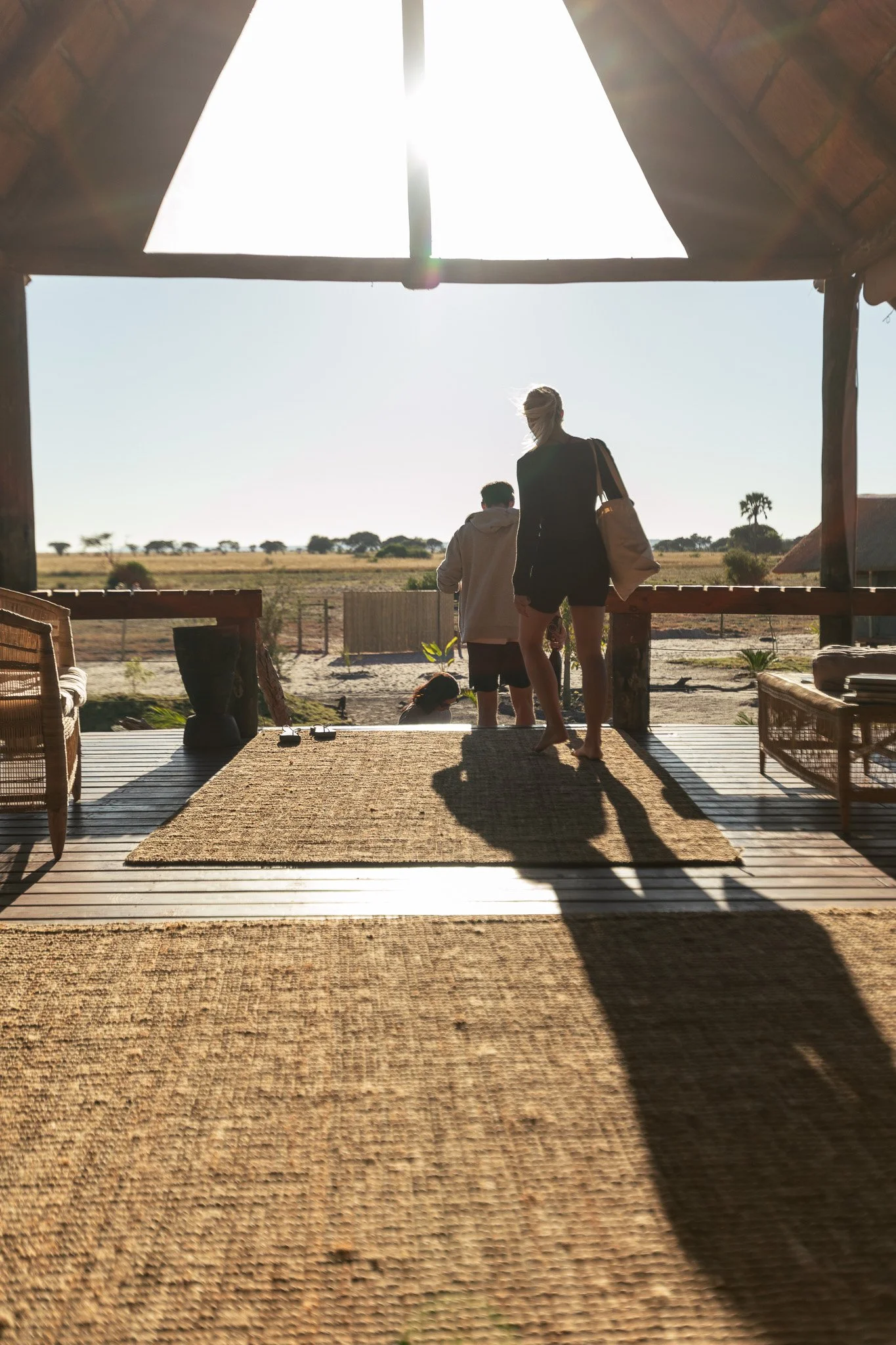
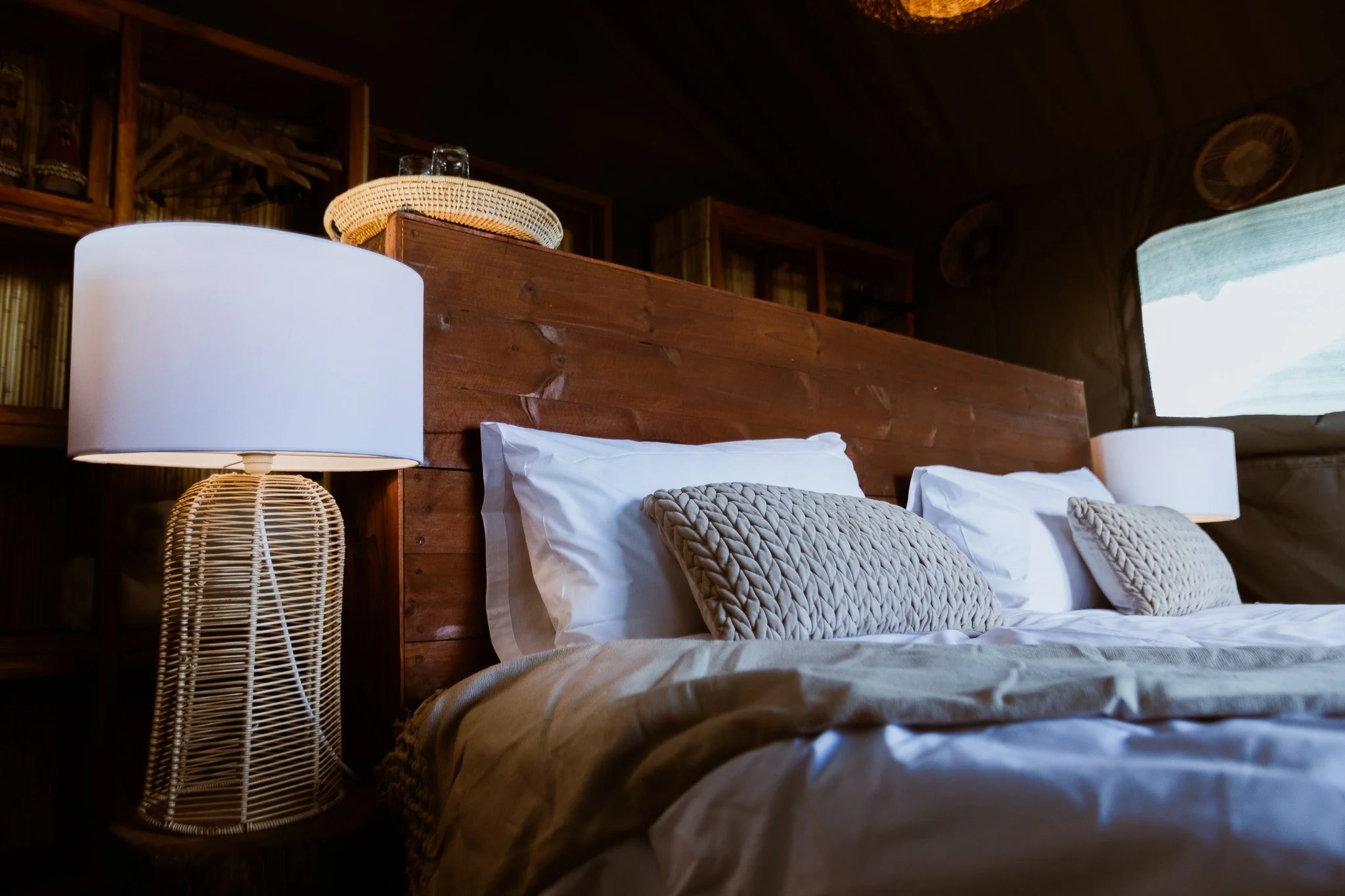
There are ten beautifully finished double glamping rooms, along with two reserved for visiting retreat leaders, are each set on their own wooden deck with a private veranda. Inside, you’ll find a wardrobe, fan, mosquito net, and comfortable beds that can be configured as either king or twin.
Each tent features an en-suite bathroom with a flushing toilet and hot-water shower. By night, the soft sounds of the bush drift through the canvas, grounding you in the wilderness around you.
Accommodation
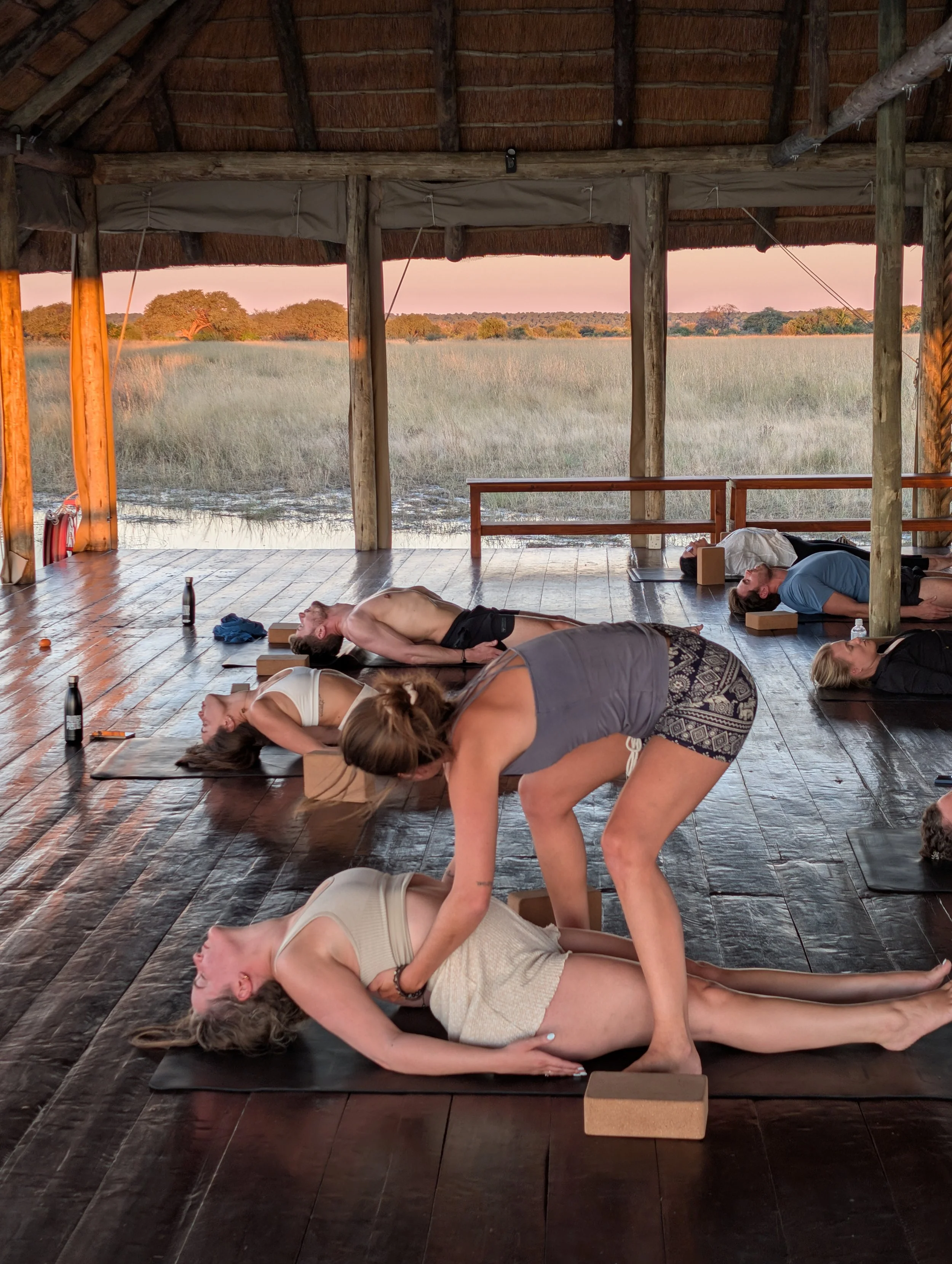
Yoga Shala
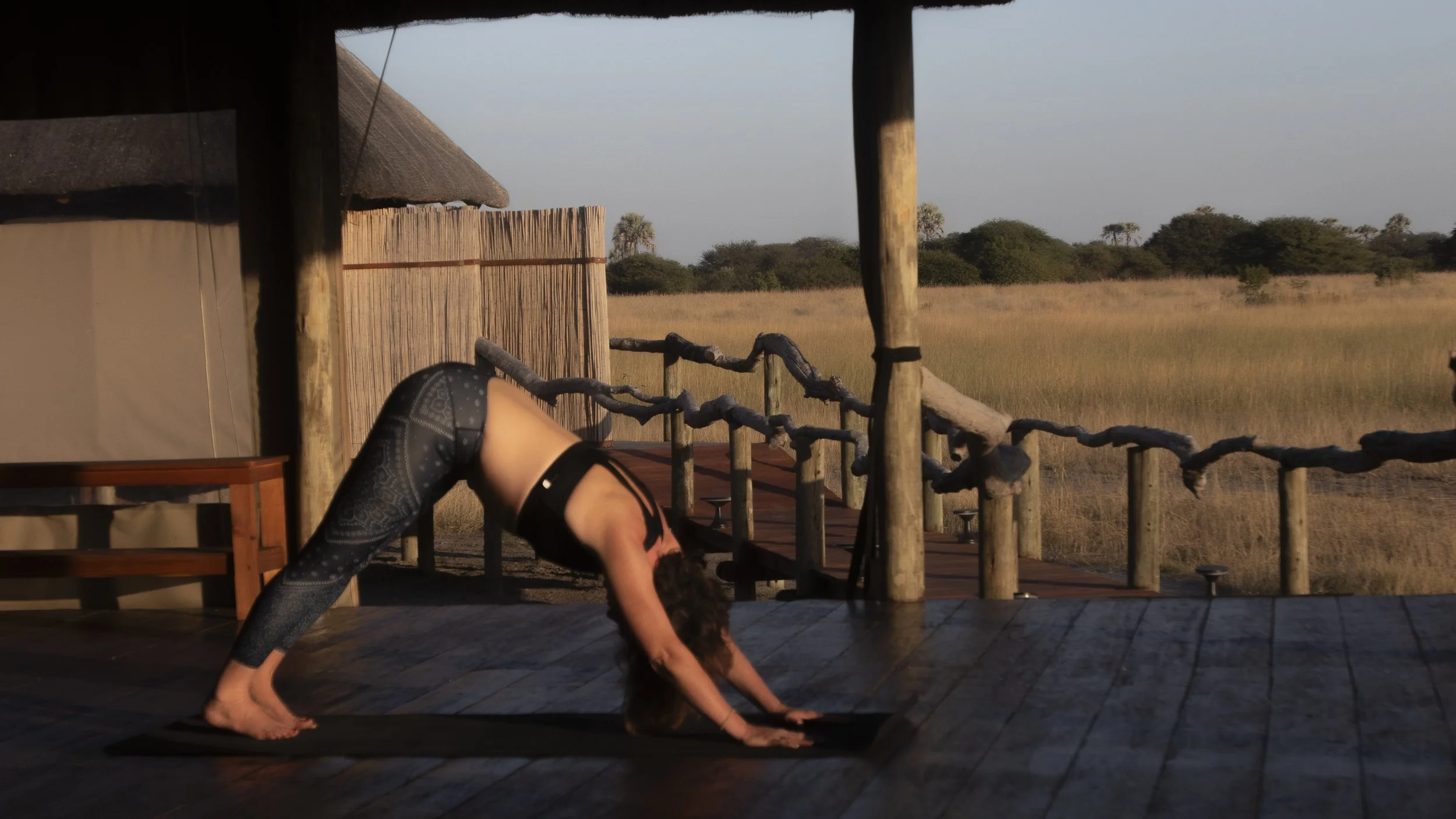
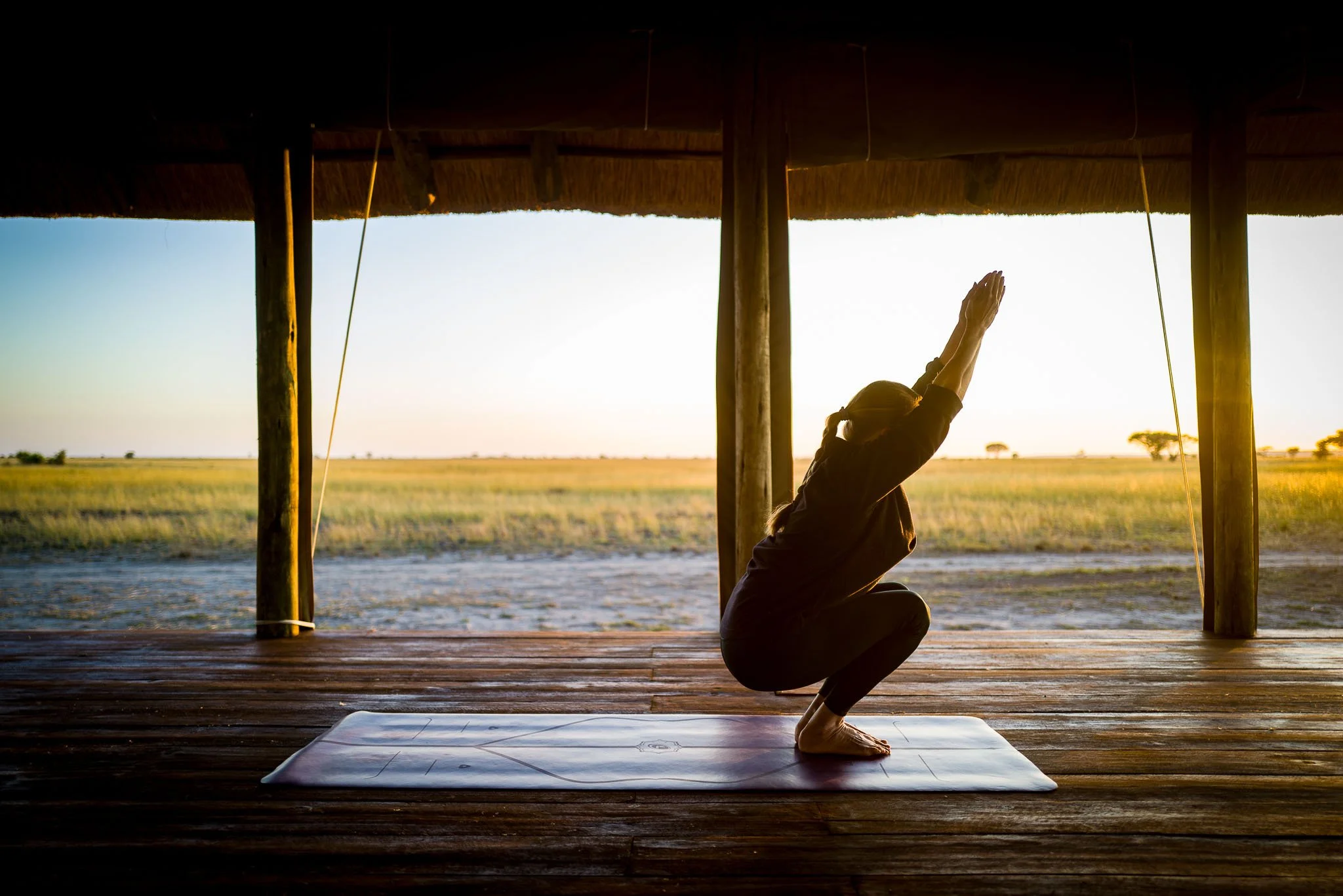
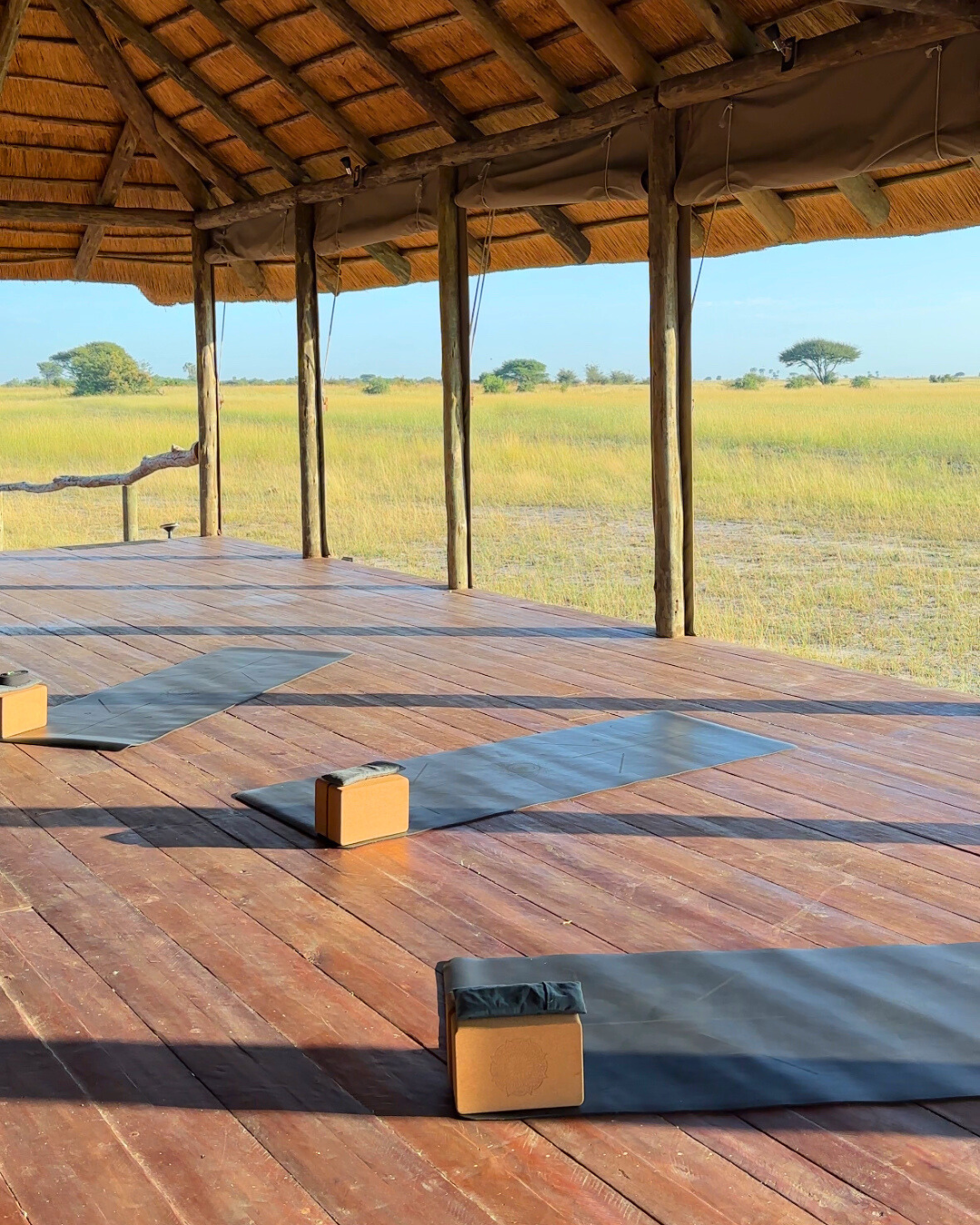
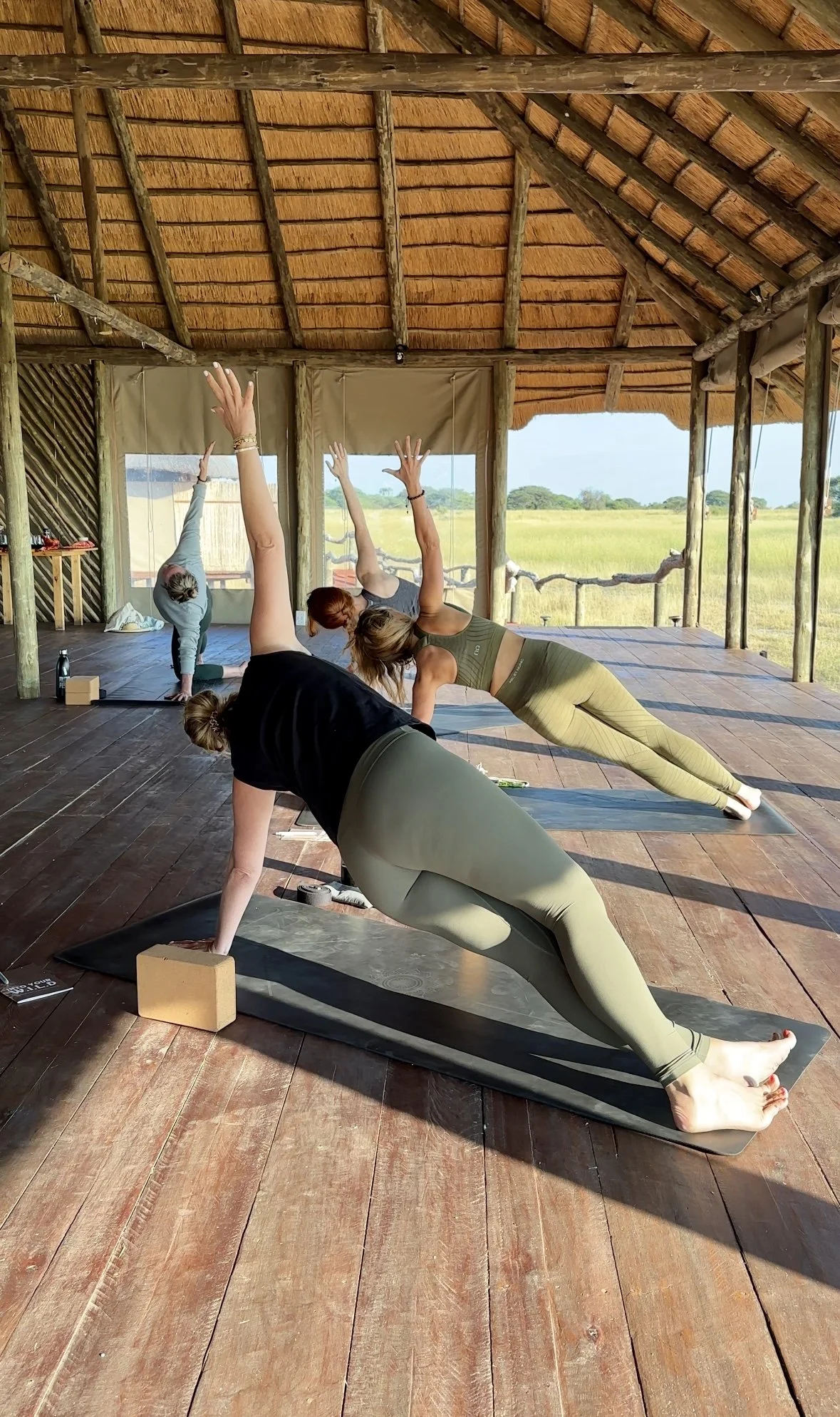
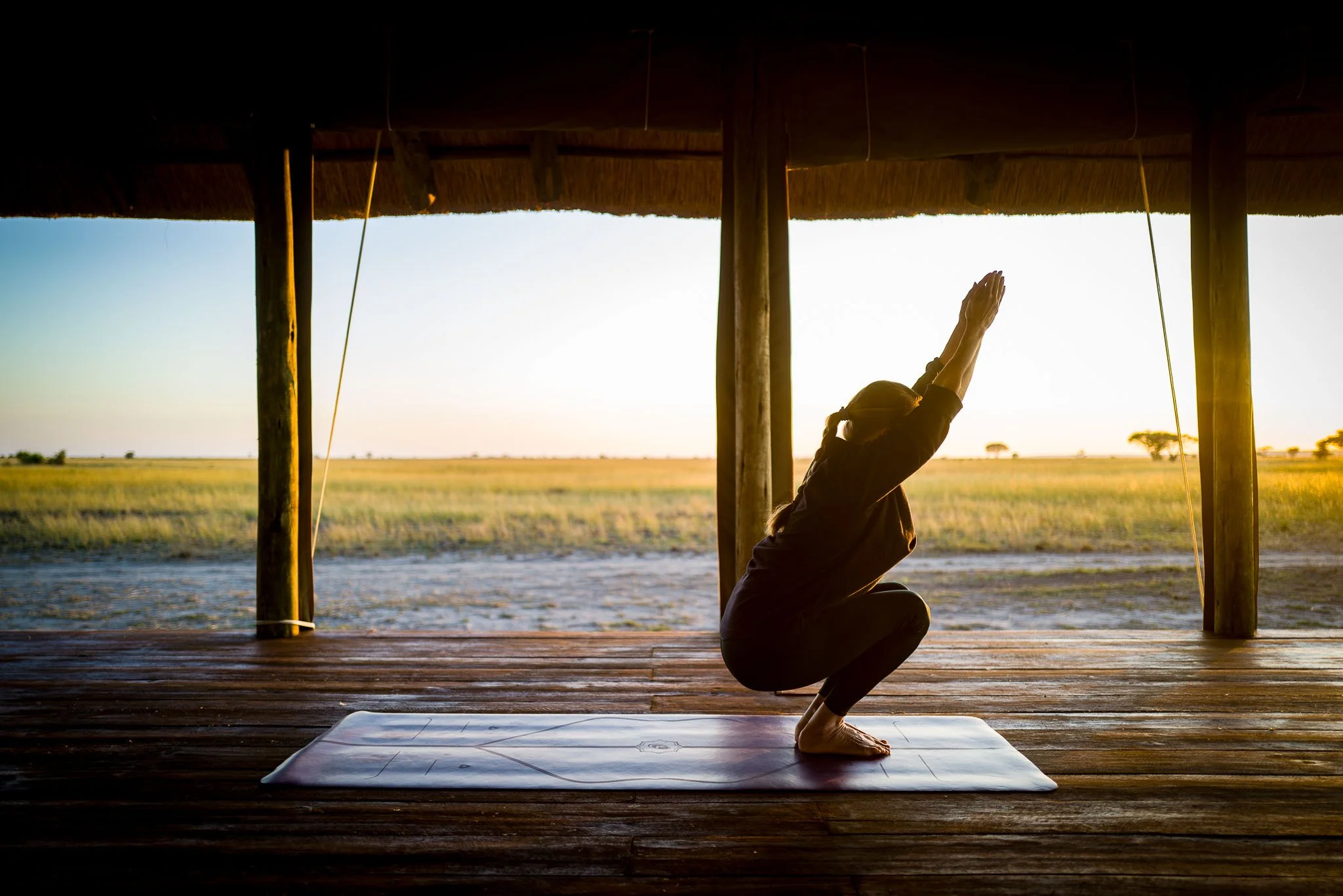
Set intentionally a short meditative walk from camp, the journey to the shala becomes part of the practice itself. Open plains stretch toward the horizon, dotted with palm trees and acacias, while wandering zebras occasionally pass through the landscape beyond.
Designed to keep you connected to nature, the shala is open to the wilderness around you. In case of wind and cooler temperatures, transparent canvas screens can be rolled down to offer protection.
Equipment provided
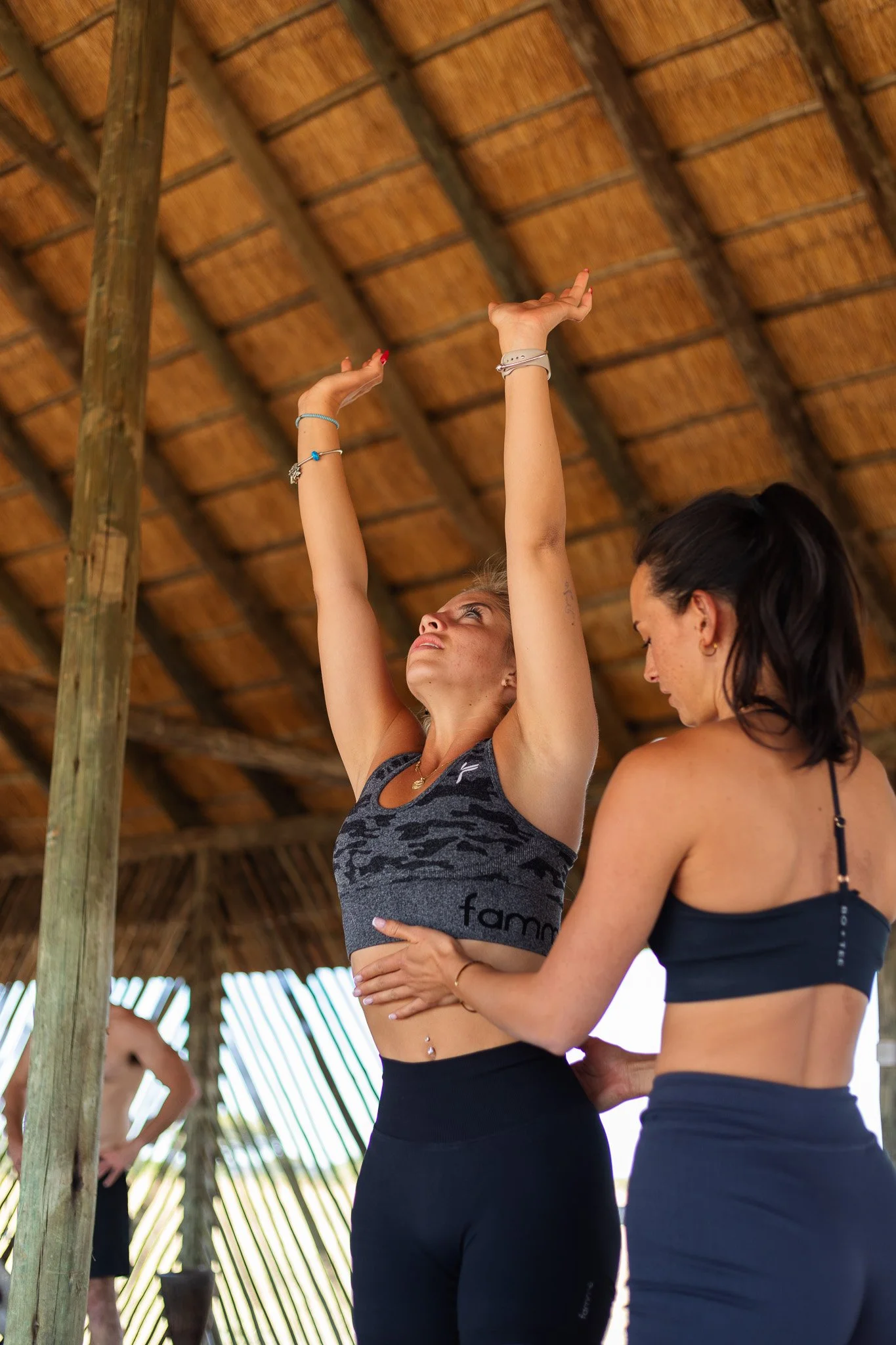
Fully equipped for up to 20 practitioners, including:
Mats
Blocks
Belts
Bolsters
Straps
Blankets
Aerial hammocks
Sound bowls
Safari & more at Chobe National Park
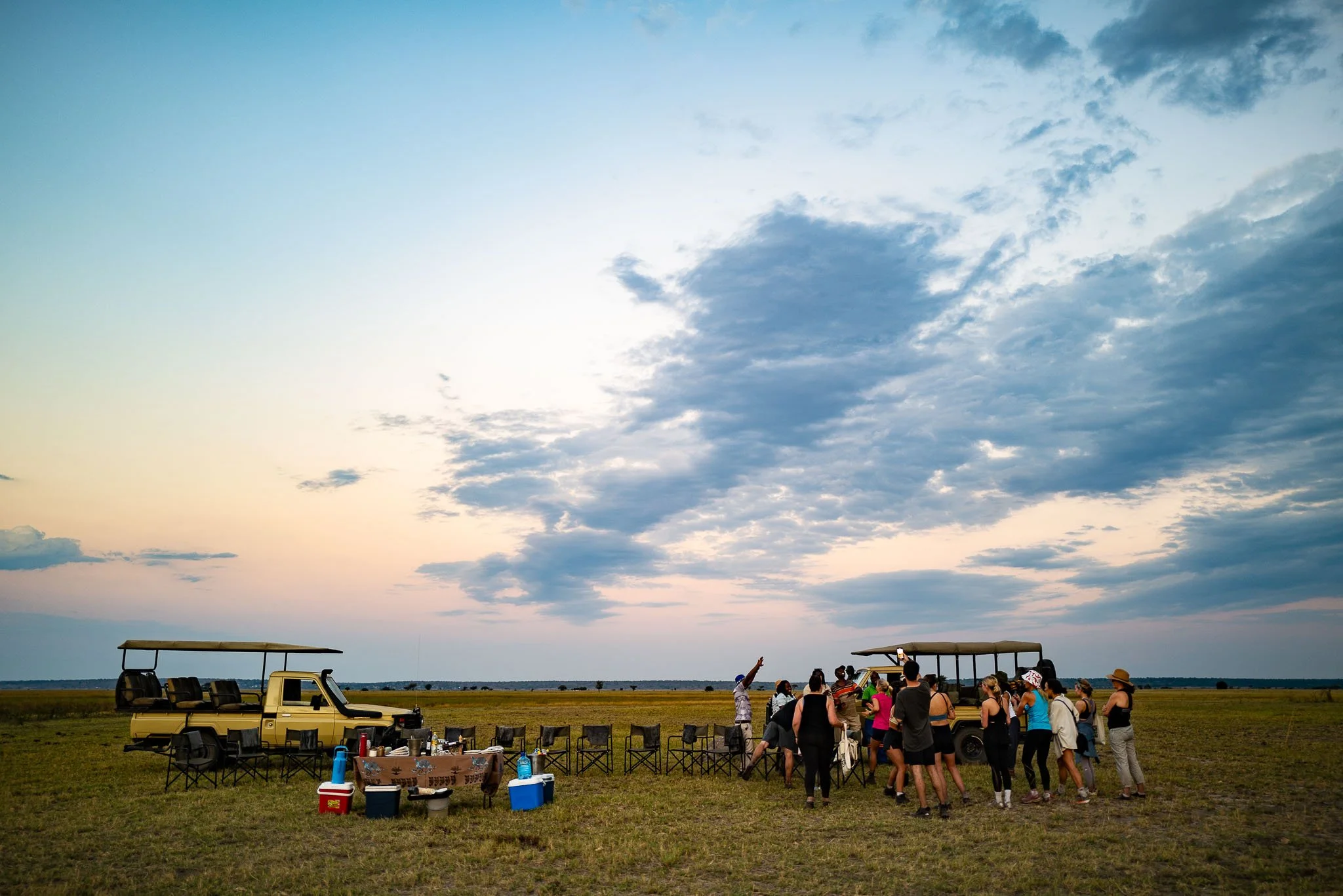
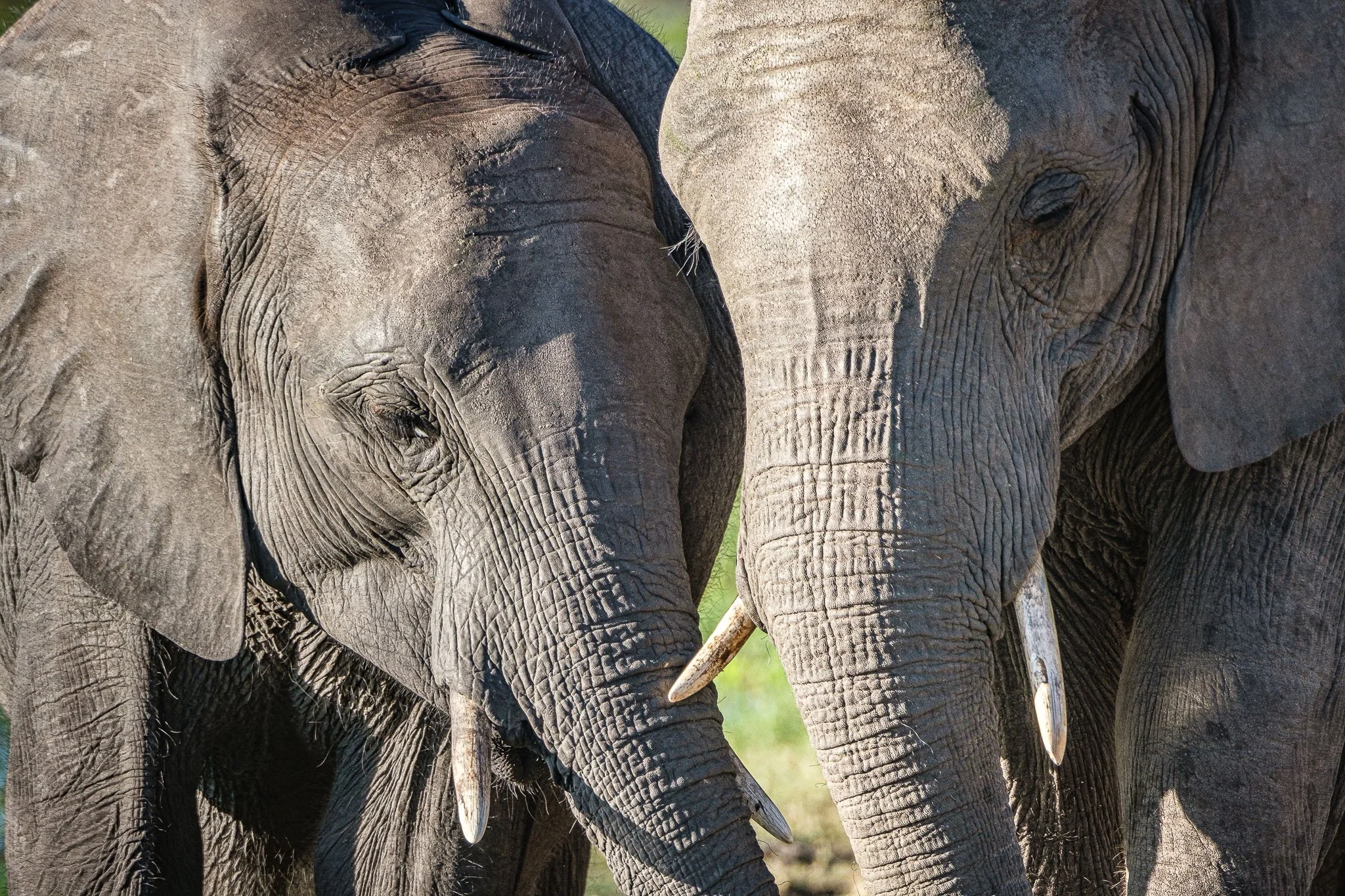
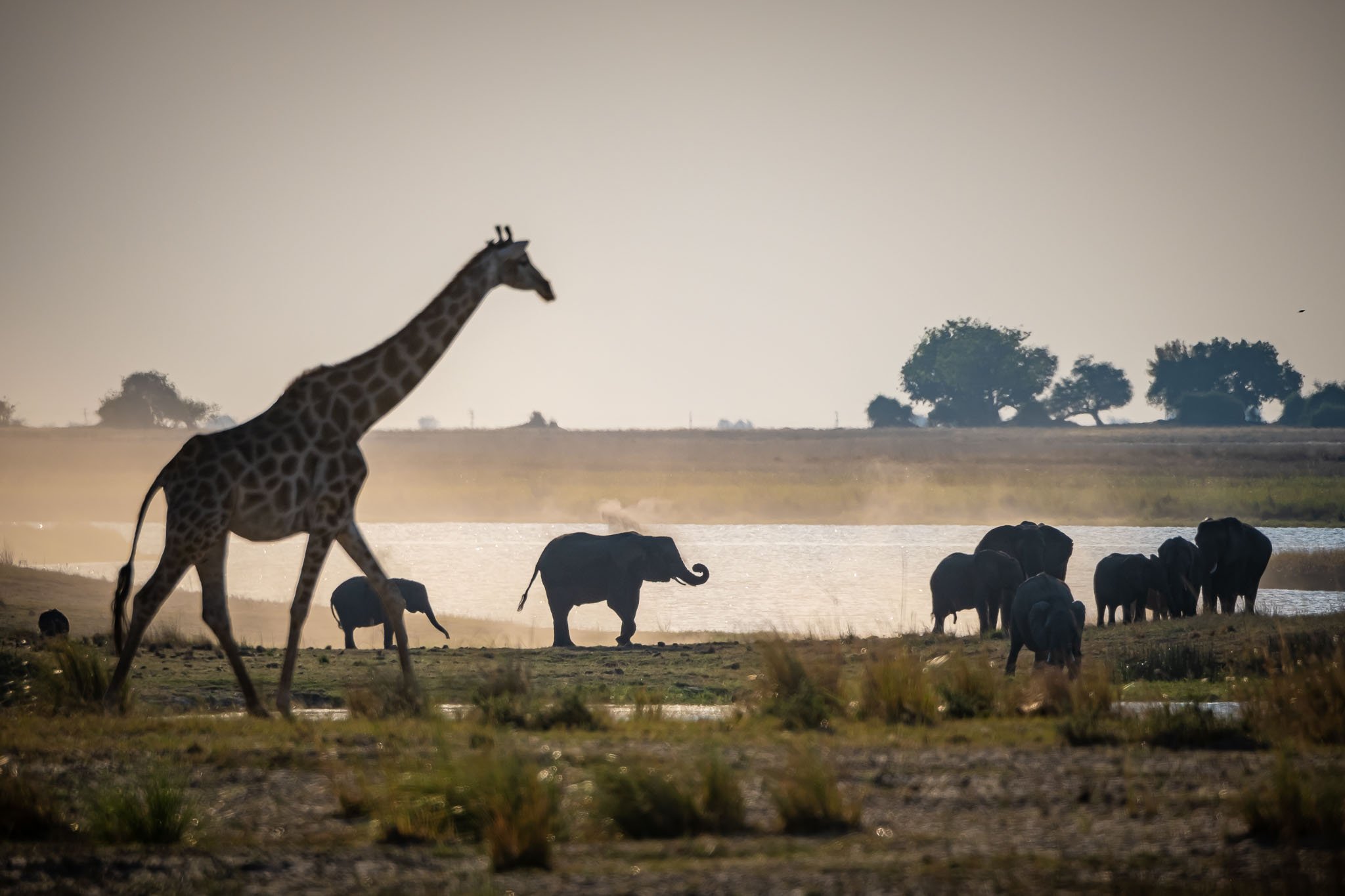
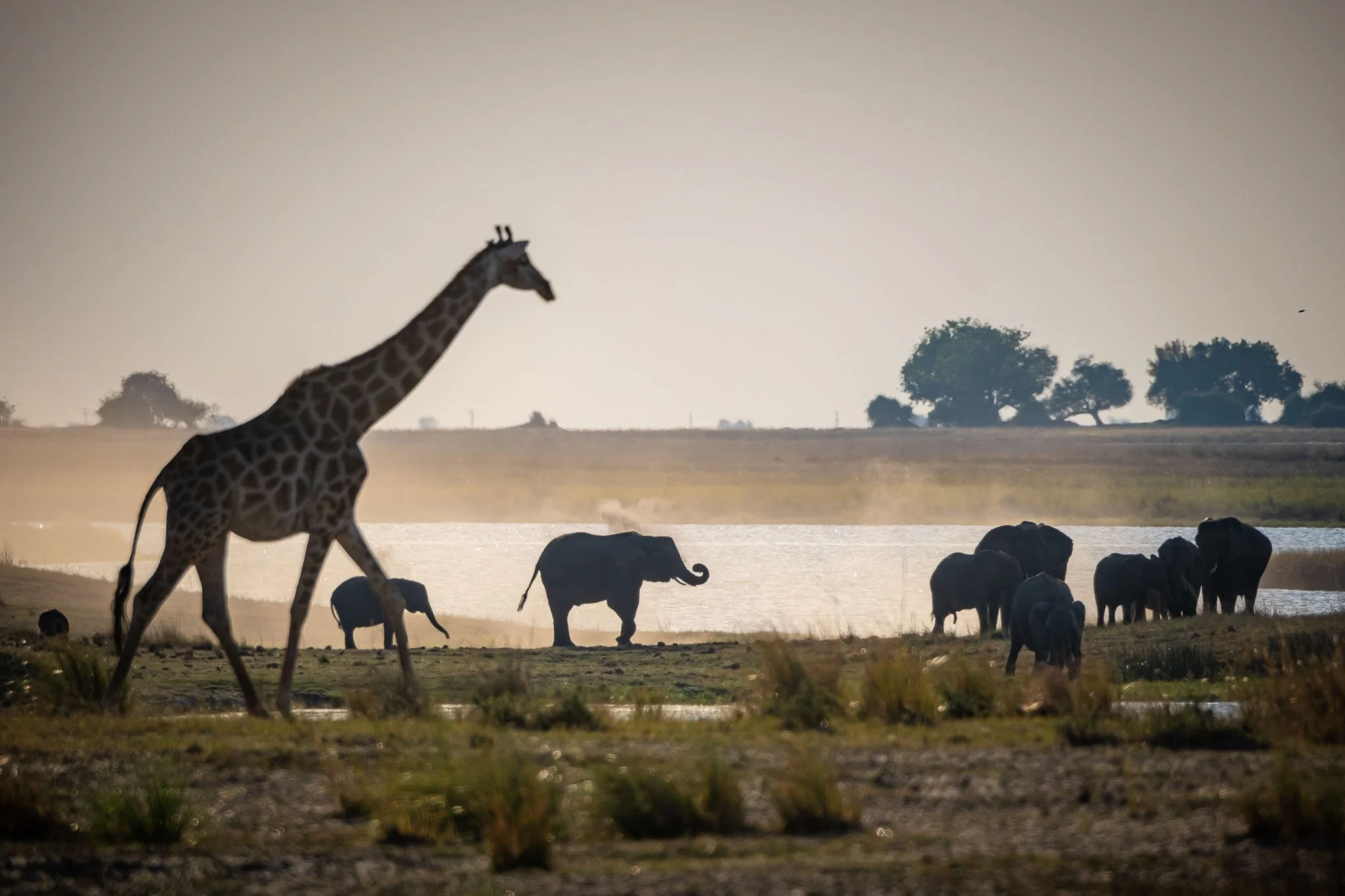
Without fences, animals roam freely and every safari unfolds differently. Home to the highest concentration of elephants in the world, Chobe National Park offers extraordinary wildlife where every sighting becomes a memorable moment.
-
Game Drives
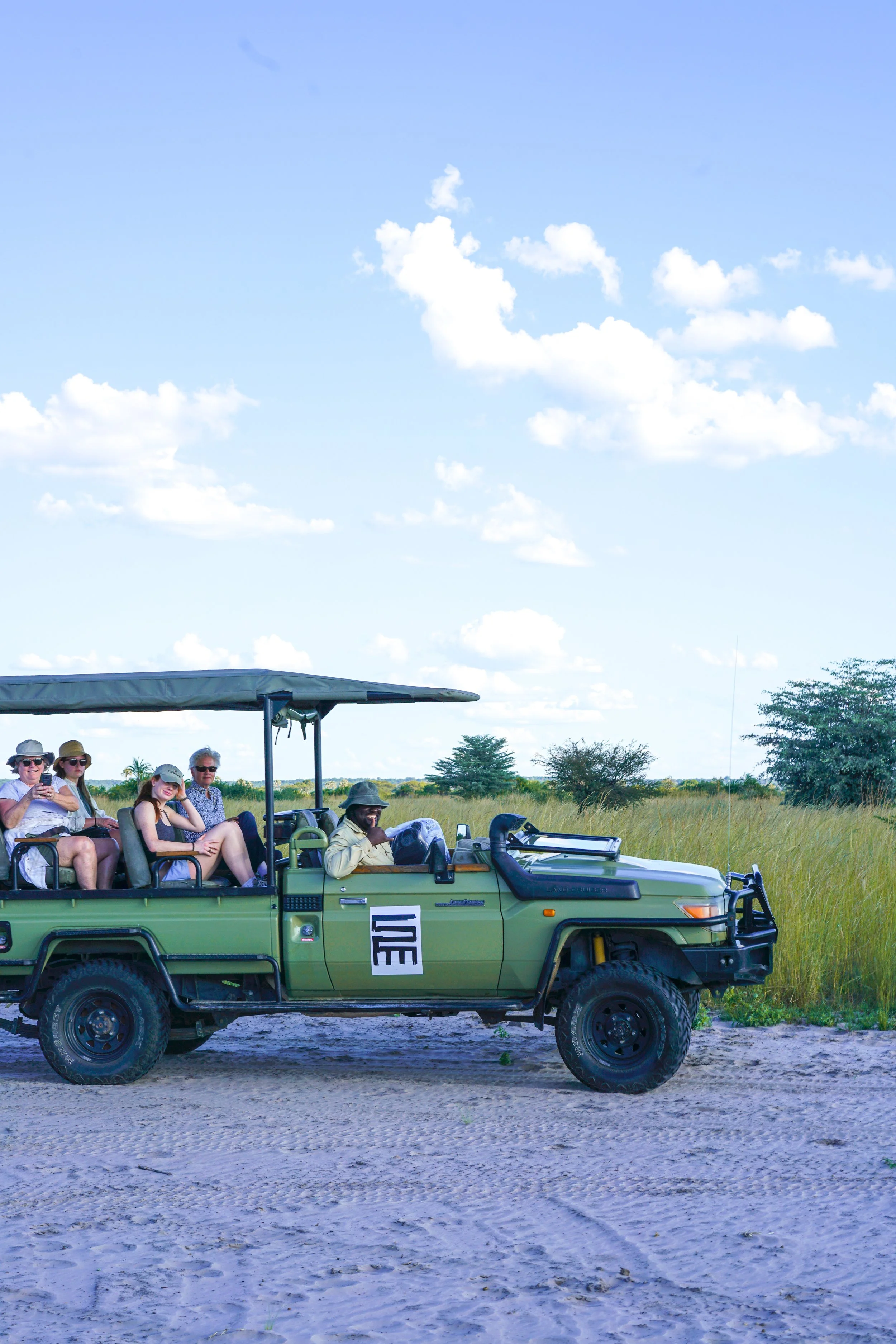
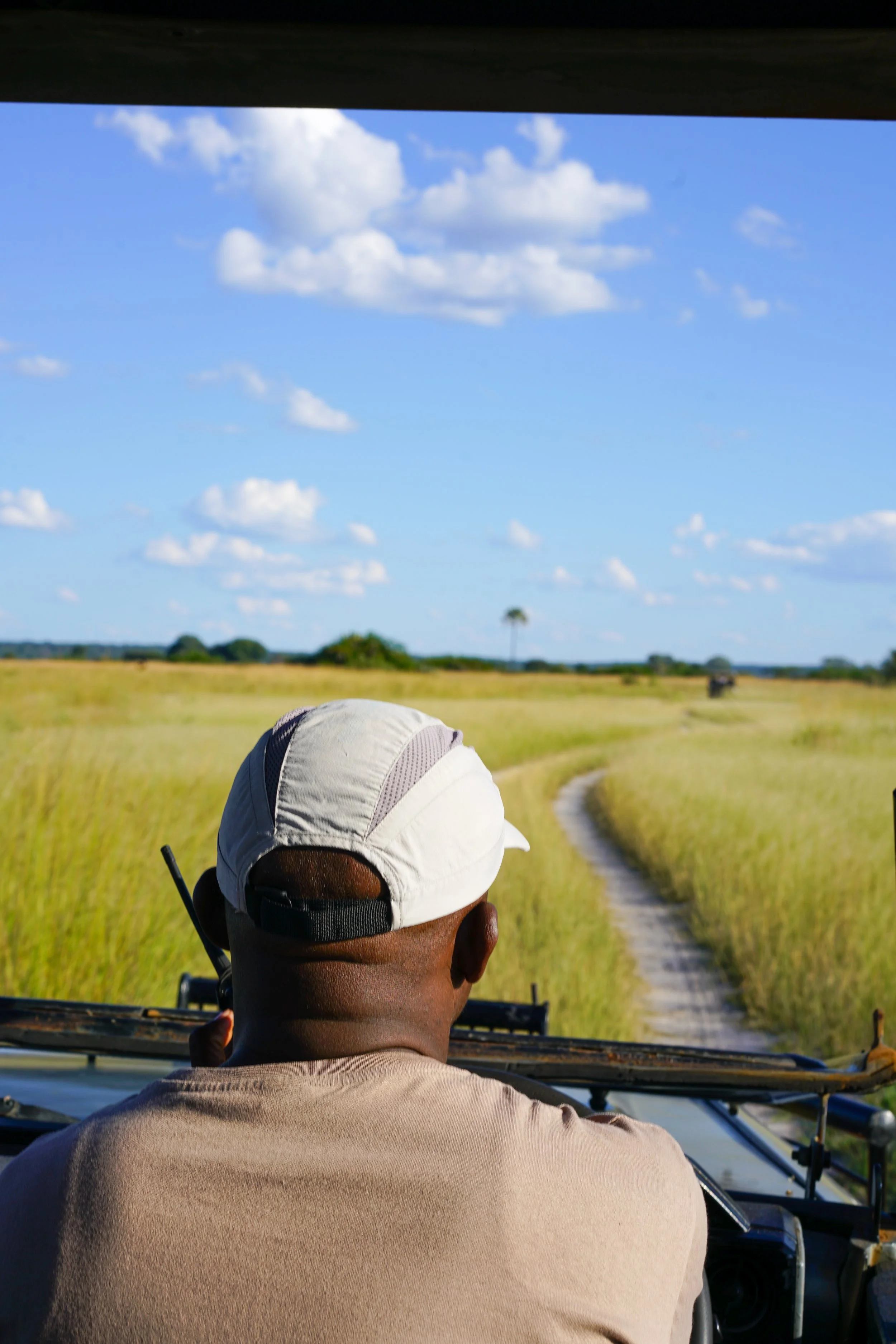
Morning and afternoon game drives through Chobe with a private vehicle and guide. Big cats, four of the Big Five, and whatever else the bush chooses to reveal.
-
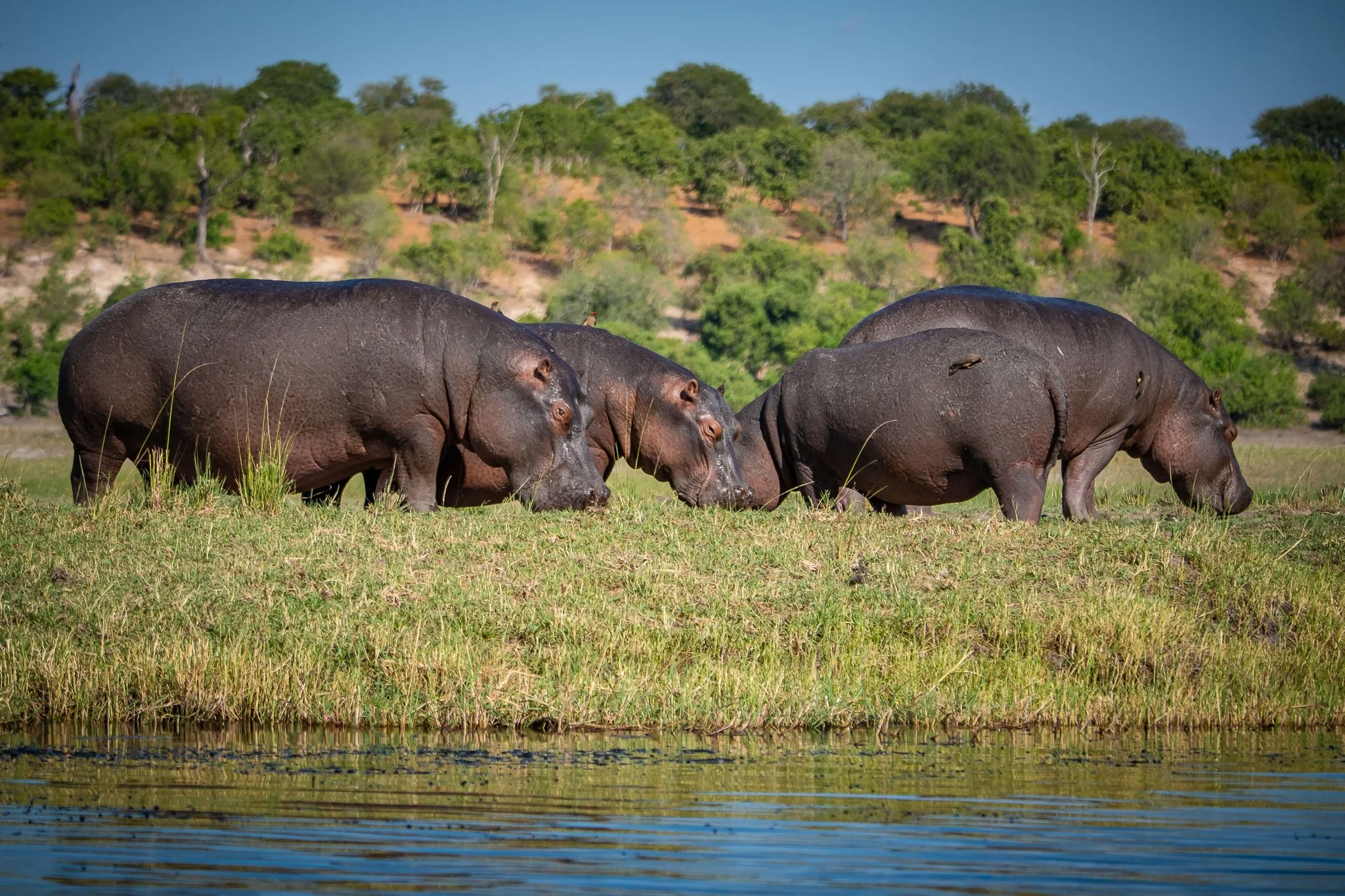
Boat cruise
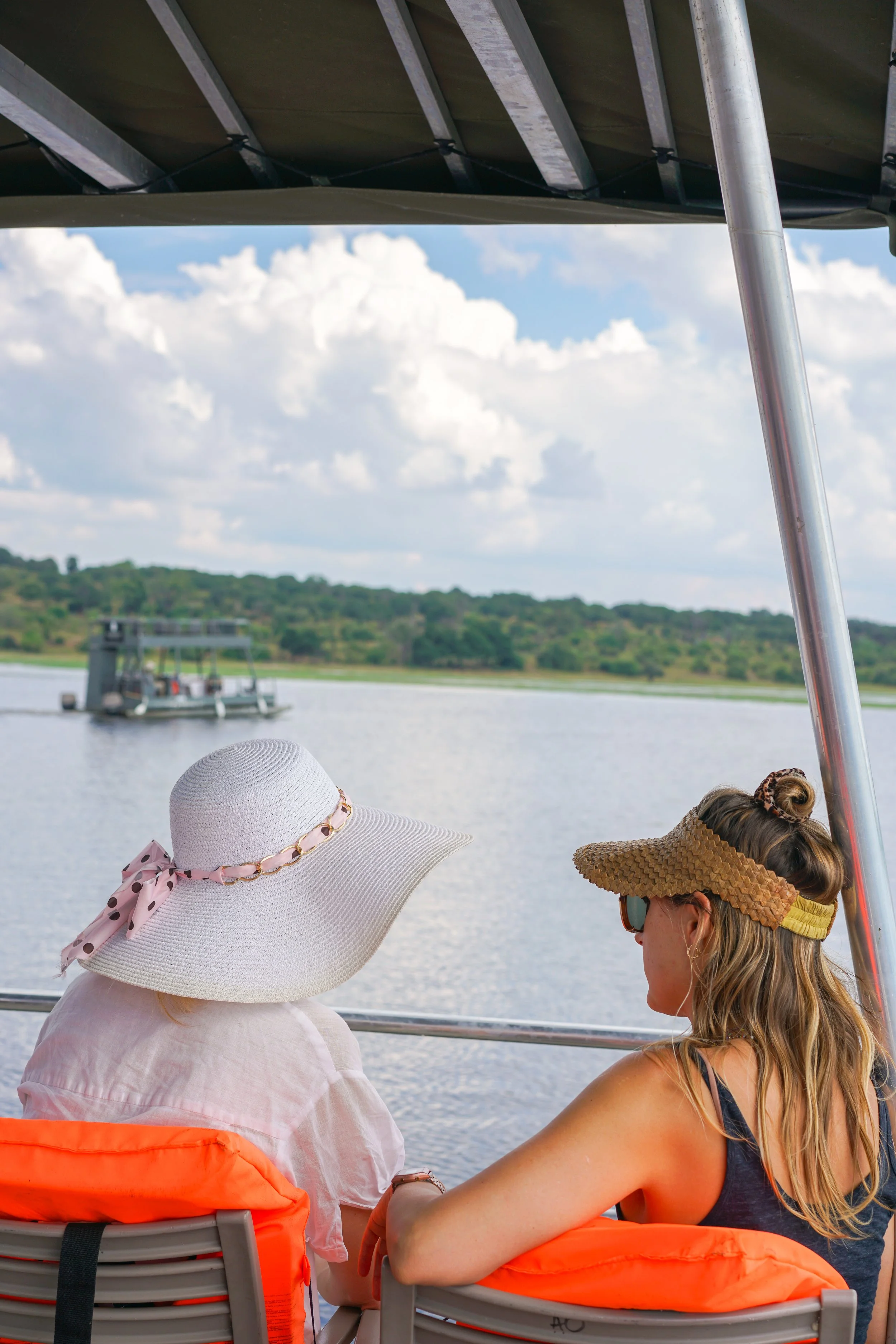
Three hours on the Chobe River with lunch served on board. Hippos calling through the water, elephants gathering at the riverbank, and crocodiles resting on the sandbanks.
-
Nature walk
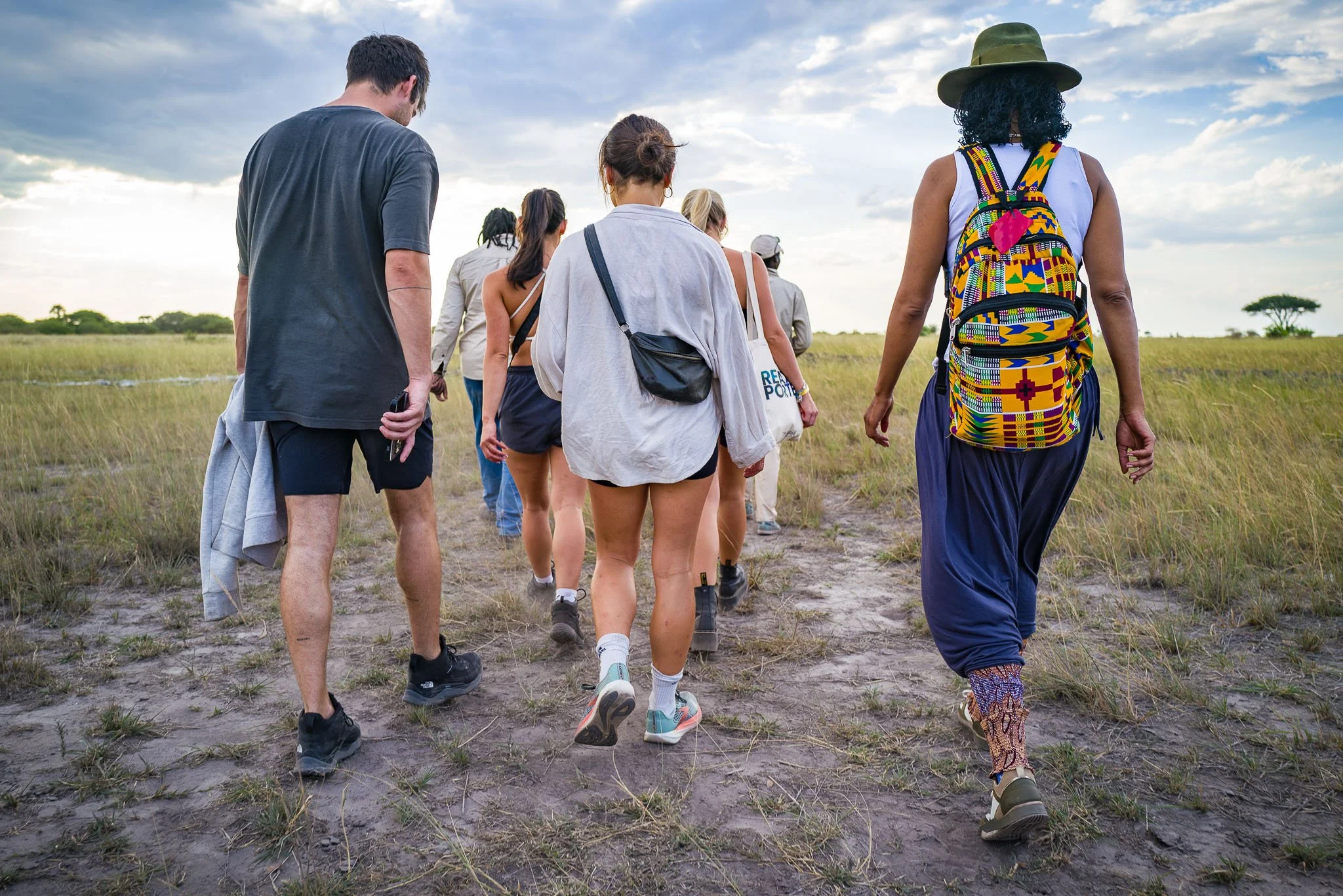
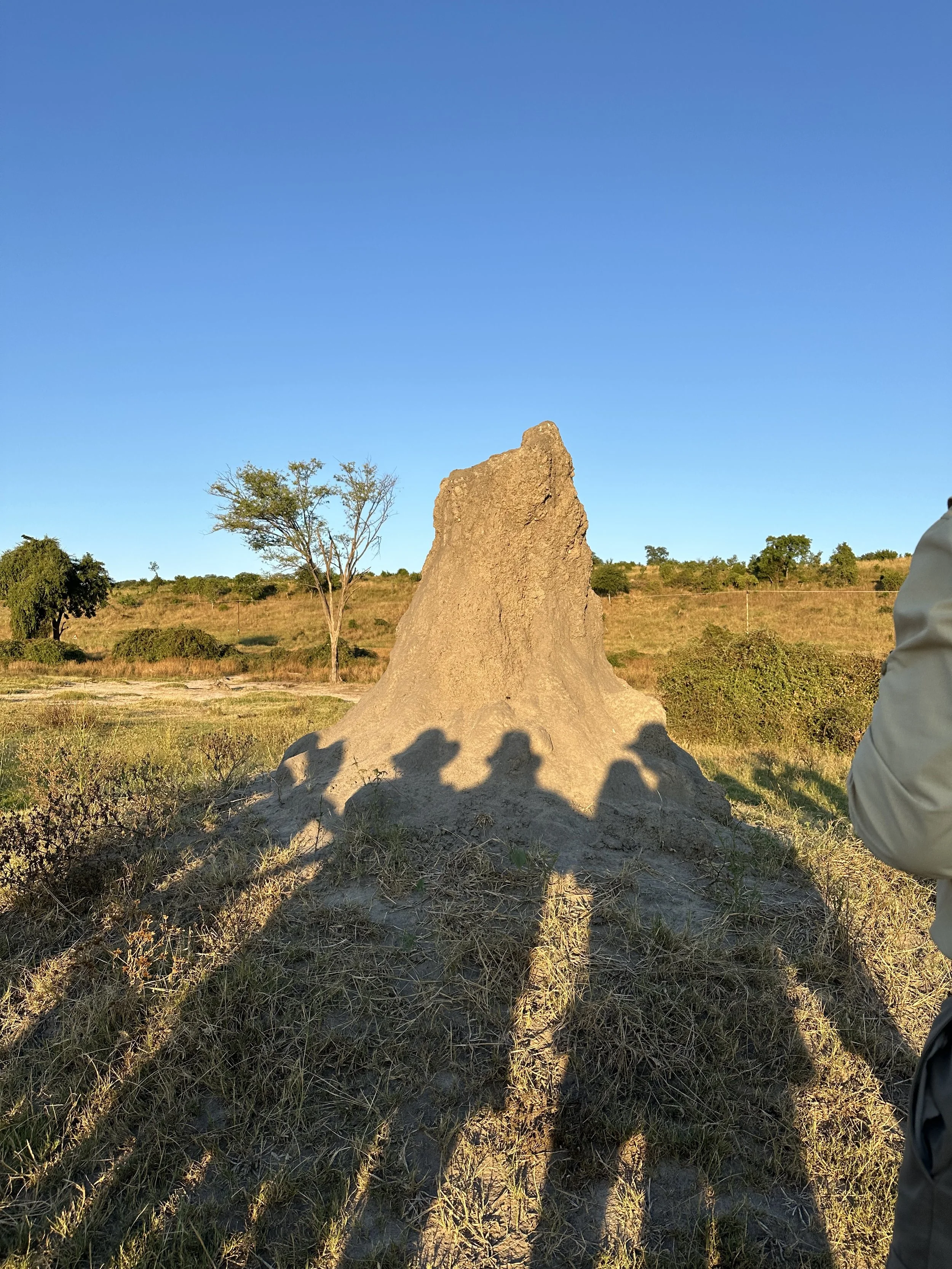
A slower pace that invites you to pause and notice. Tracks in the earth, medicinal plants, bird calls, and the small details often missed from a vehicle.
-
Mokoro
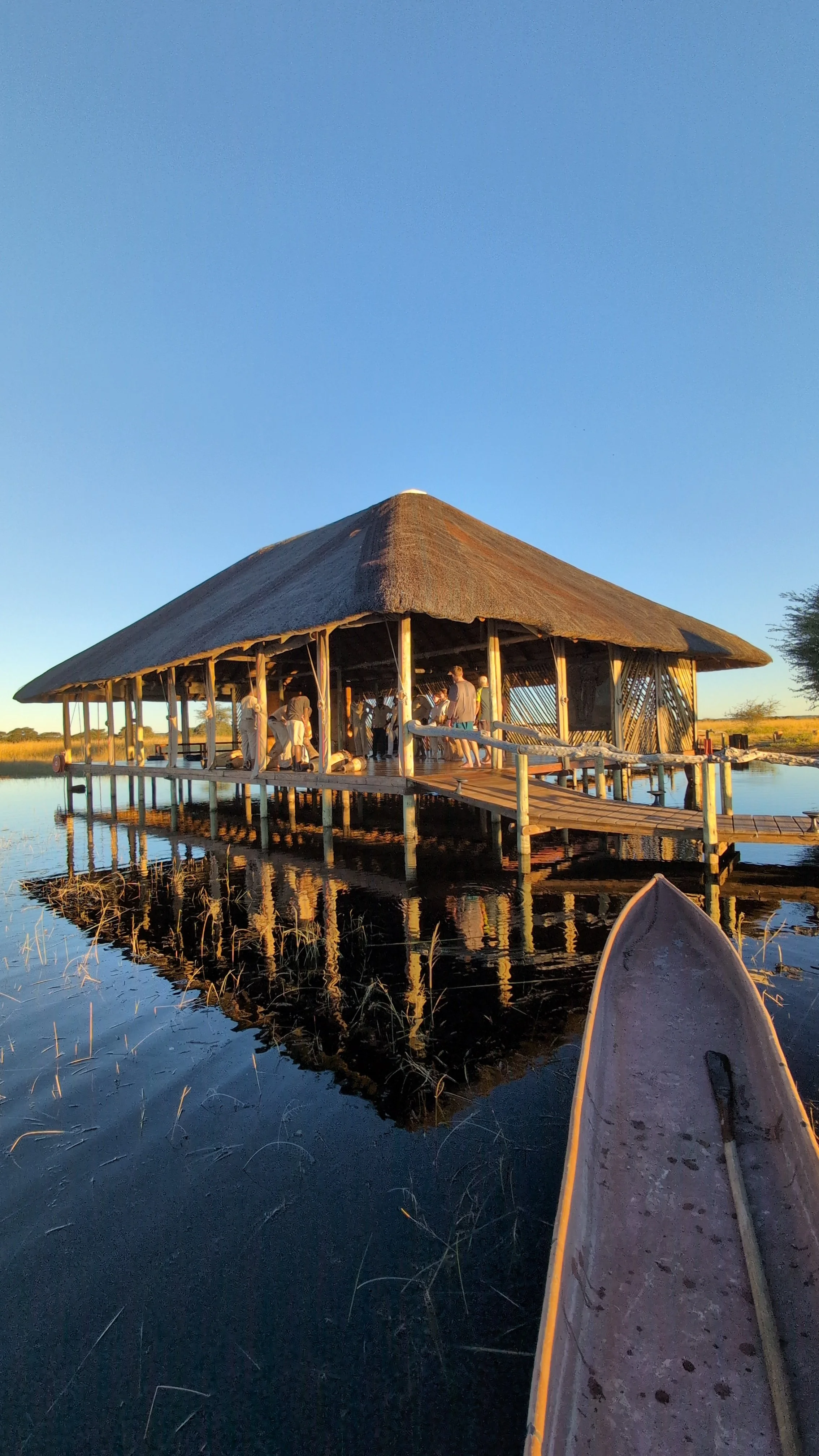
Glide through the Chobe channels in a traditional dugout canoe at sunset. Quiet, peaceful, and grounding: a moment to rest the mind and absorb the stillness of water.
Honoring local traditons
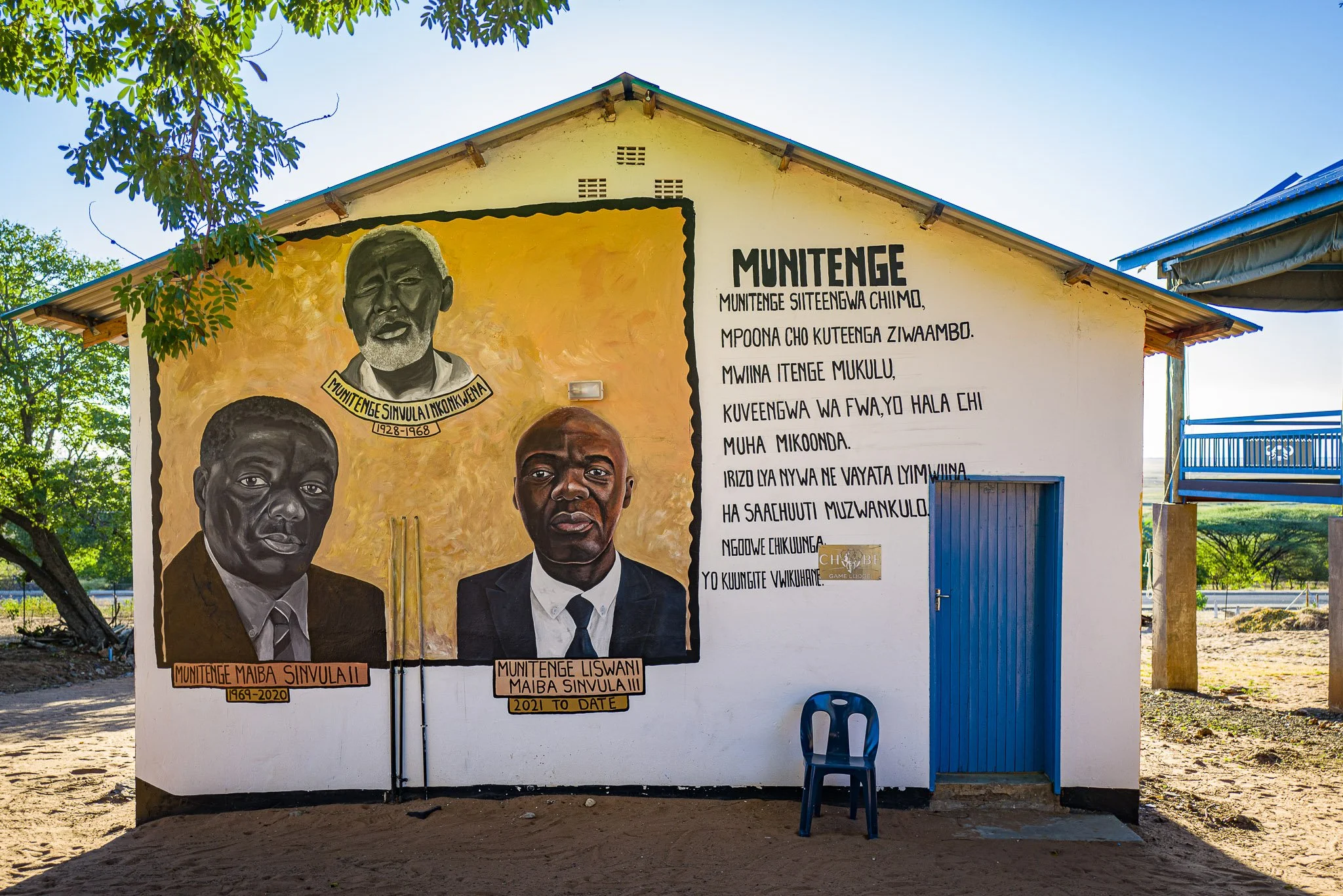
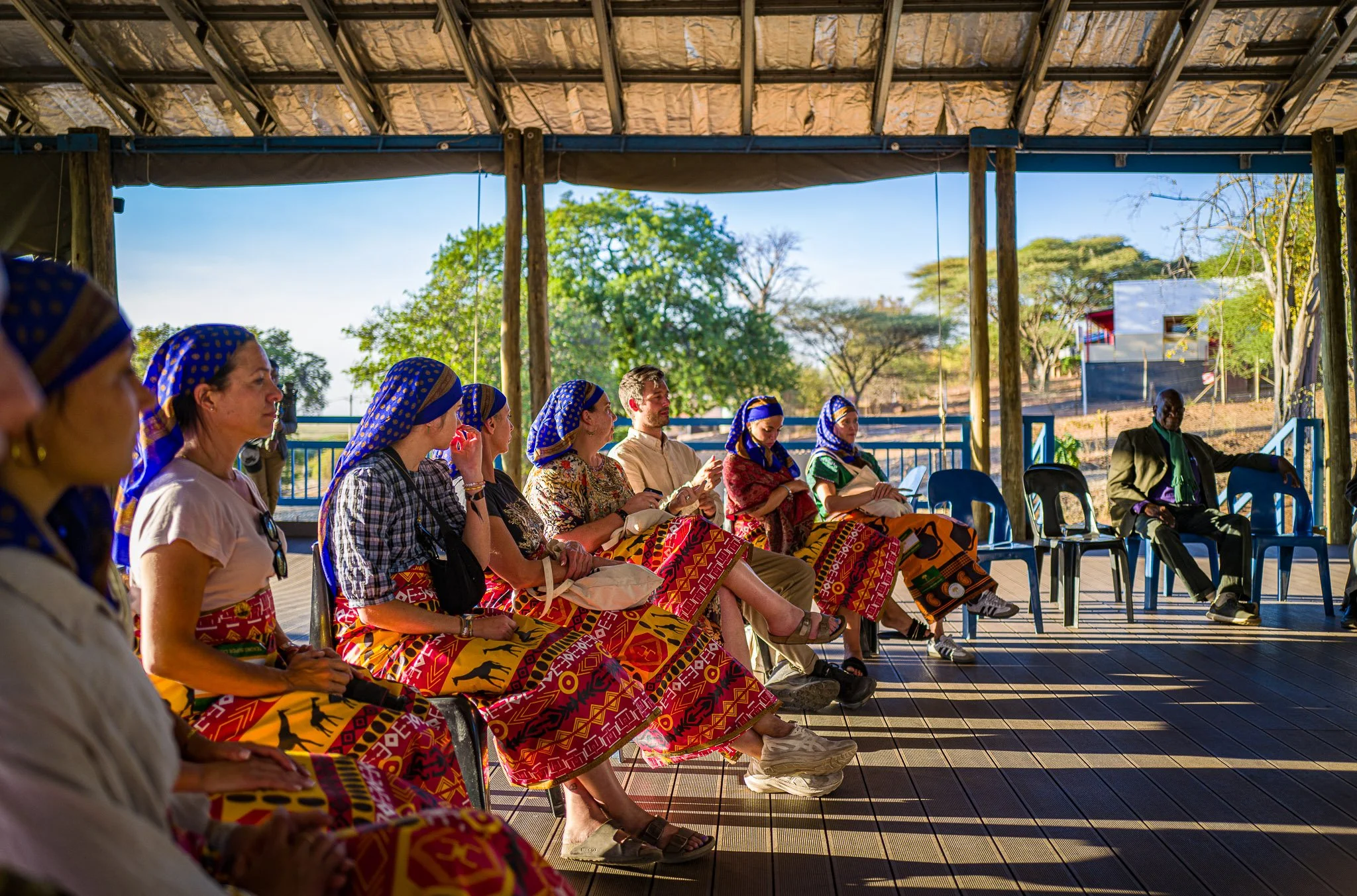
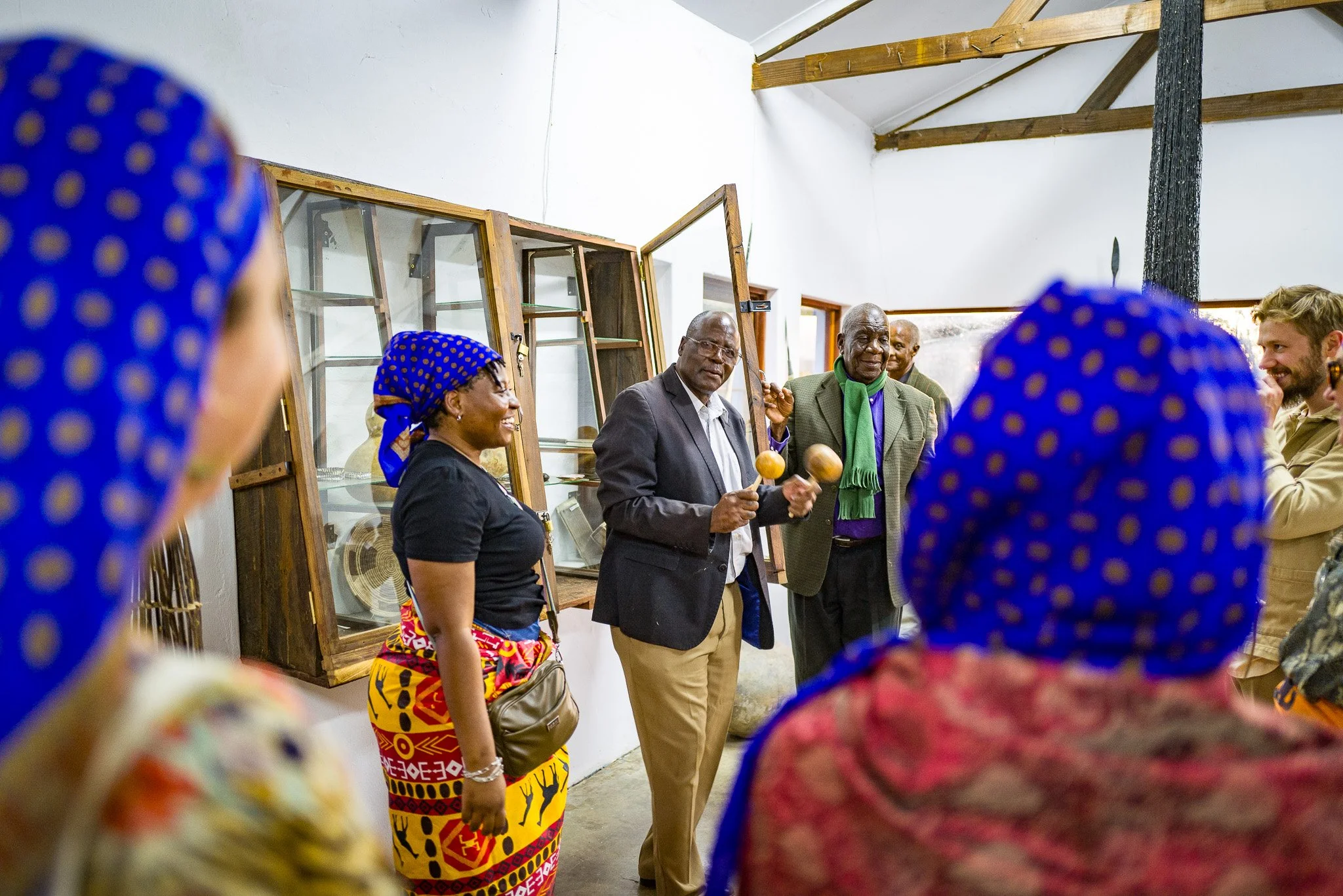
Most of the Munga Plains team comes from the Basubiya tribe, whose traditions are rooted in the land. This is an opportunity to connect with the community that forms part of the Munga family.
-
Authentic workshops
Discover ancestral skills and traditions passed down through generations. From basket weaving to drumming and dance, each experience offers a chance to learn, participate, and exchange with local community members.
-
Under the Milky Way
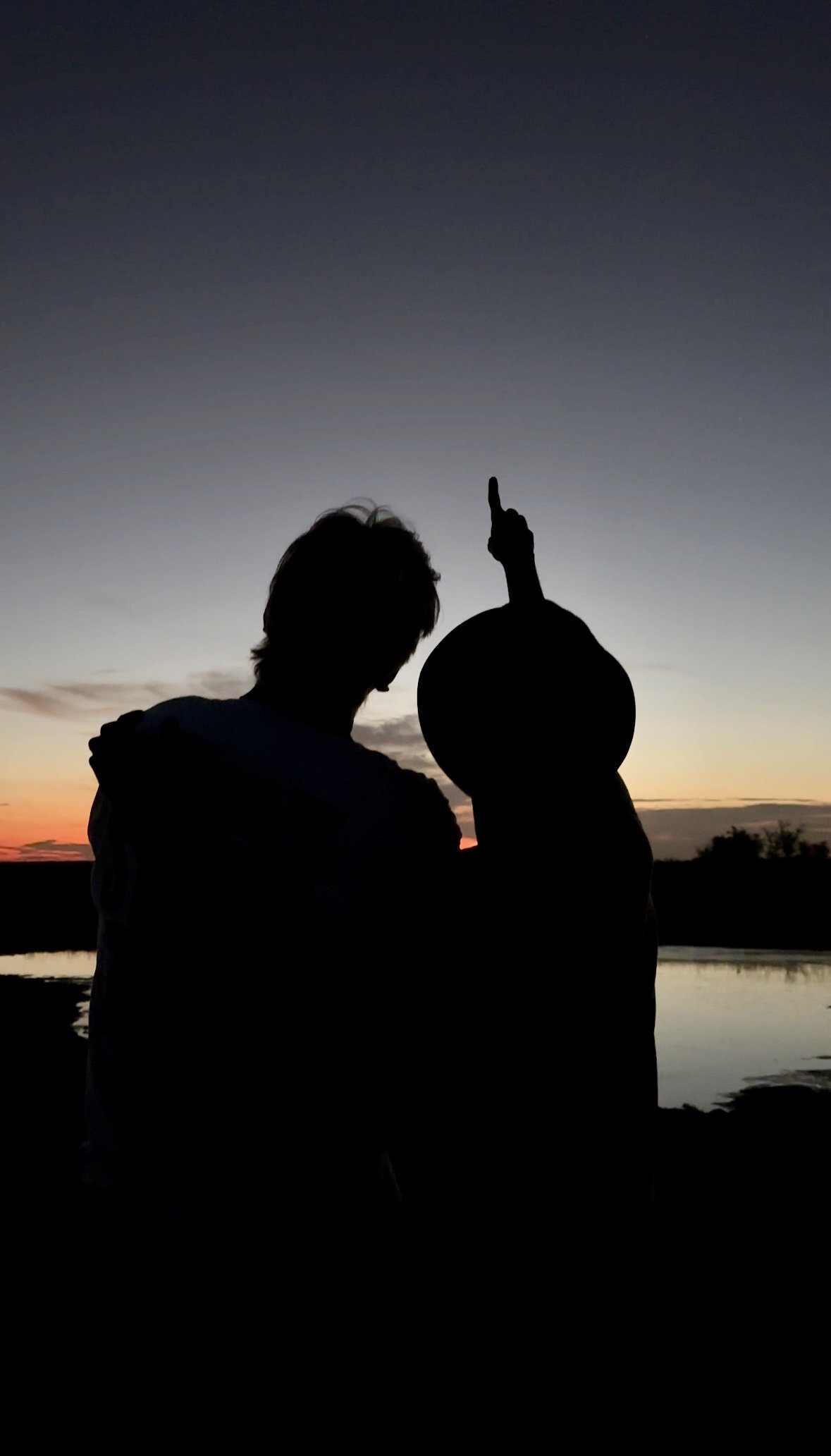
Evenings gather around the boma fire for storytelling and stargazing beneath some of the clearest skies in the world, where the Milky Way often stretches from horizon to horizon.
-
Village tours
Walk through the neighboring villages and visit the local school, where donations are welcome. Meet the people behind the camp, learn about their families, and gain insight into their traditions and daily lives.
-
Kachikau school
Munga Plains has a close relationship with the nearby primary school, which includes a Special Editation Unit supporting around 32 children with disabilites. There is an option to visit the school as part of the experience and contribute to ongoing community support initiatives.
Nourishment
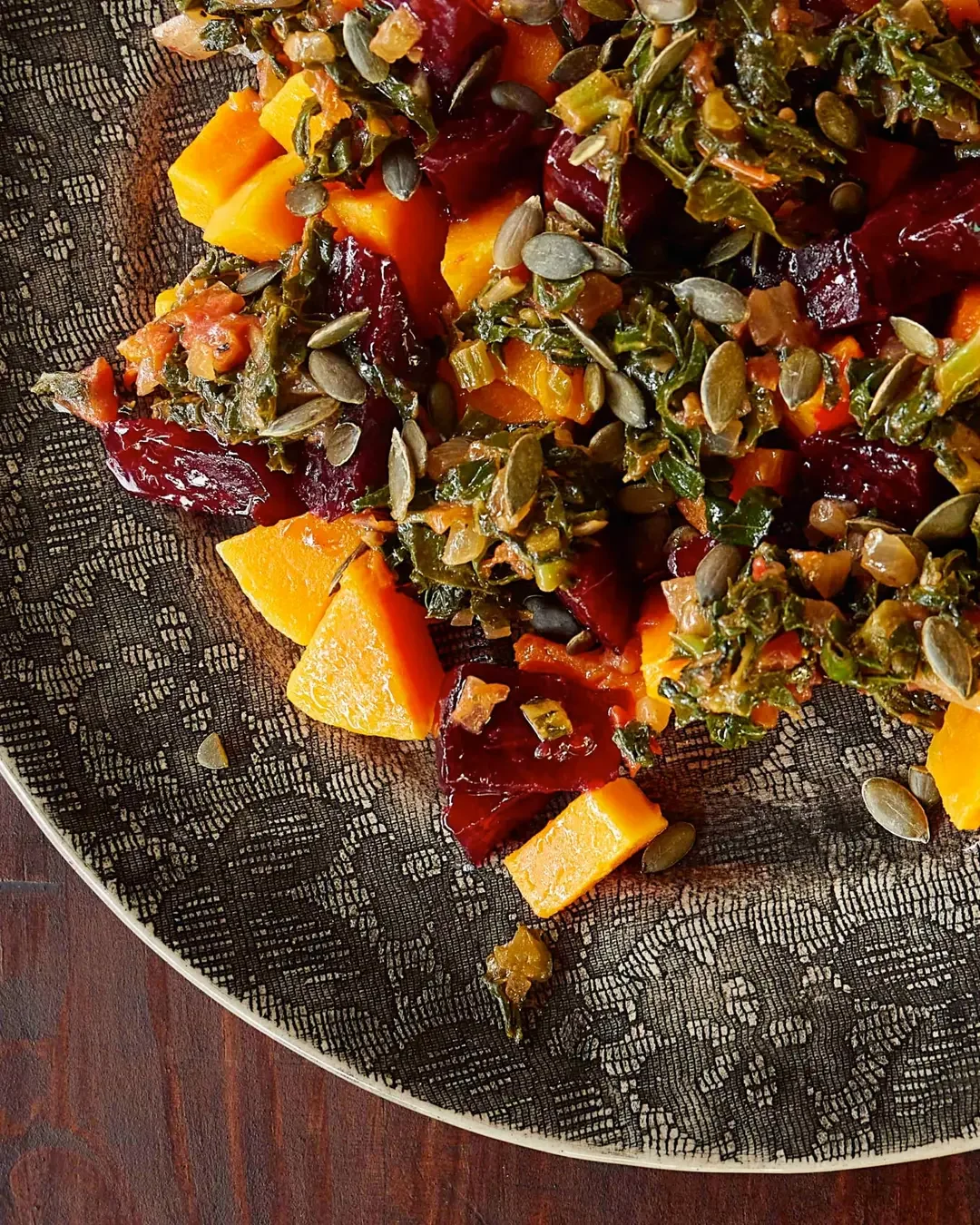
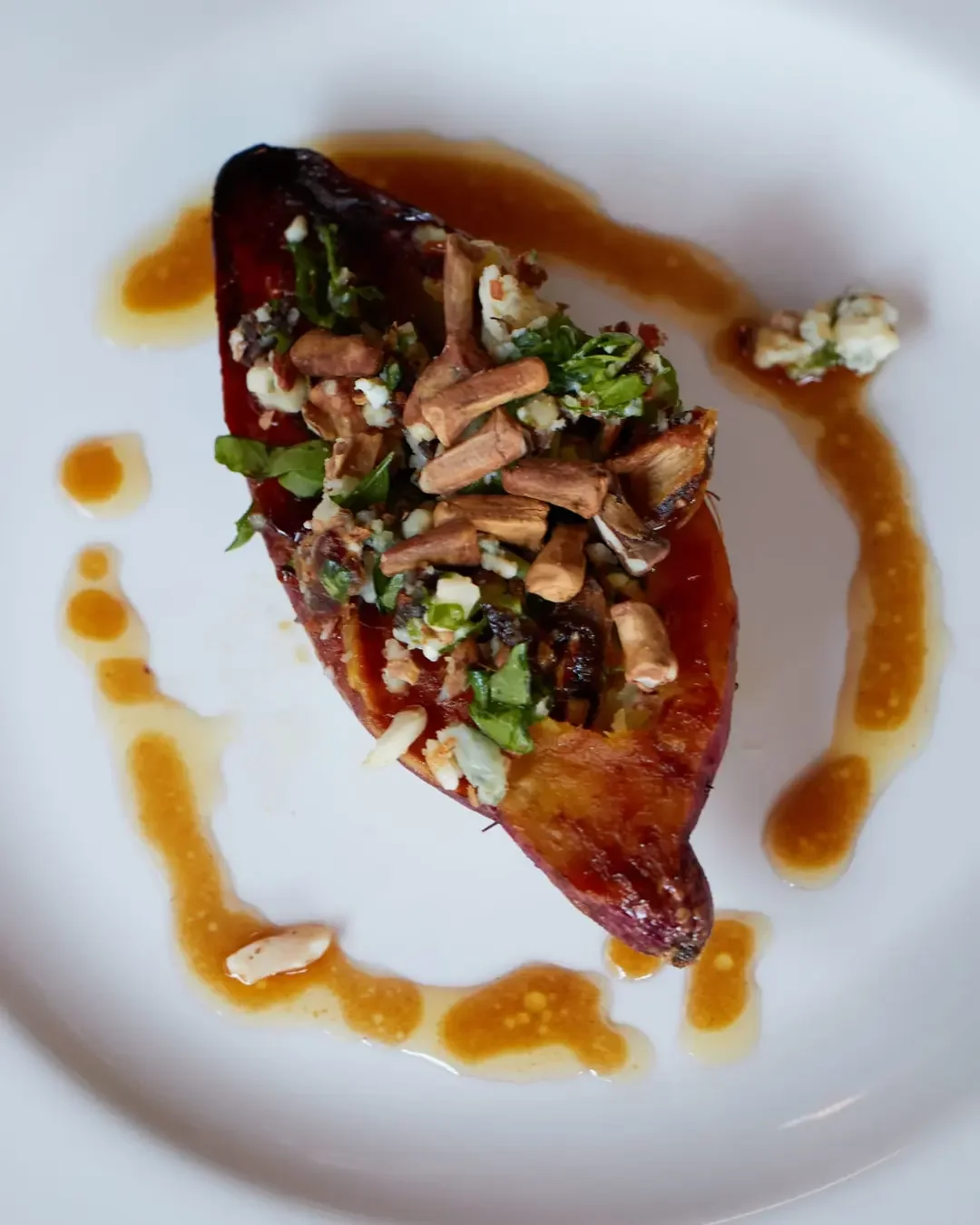
The meals at Munga Plains are inspired by traditional Botswana recipes, thoughtfully combined with fresh, nourishing ingredients and an international influence. Seasonal herbs and vegetables are sourced from our garden whenever possible. Dishes draw inspiration from Ednah Rosen’s A Taste of Botswana, bringing local flavors and wholesome dining to the table. Three full meals are served daily, along with snacks throughout the day. Vegan, vegetarian, and allergen-friendly options can be arranged in advance. Coffee, tea, juices, and water are always available. The bar offers soft drinks, cocktails, wine, and beer at an additional charge.

Visas, seasons, health
-
Visa
Most nationalities visa-free
Many travelers, including holders of US, EU, UK, and Commonwealth passports, receive a free 90-day visa on arrival in Botswana. Entry into Zimbabwe requires a visa, which can typically be obtained online in advance for a small fee.
-
Availability
March to December
Retreats run for ten months of the year. The camp closes from mid-December through the end of February during the height of the wet season and for annual maintenance.
-
Weather
Green, then dry
From May to October, the dry season brings cool nights, warm days, and exceptional wildlife viewing near the river. The shoulder months, March, April, November, and December, offer short afternoon rains, dramatic skies, and the arrival of migratory birds.
-
Currency
Botswana Pula
US dollars are widely accepted throughout Botswana and Victoria Falls. Cash is recommended for souvenirs, small purchases, and gratuities for staff and guides.
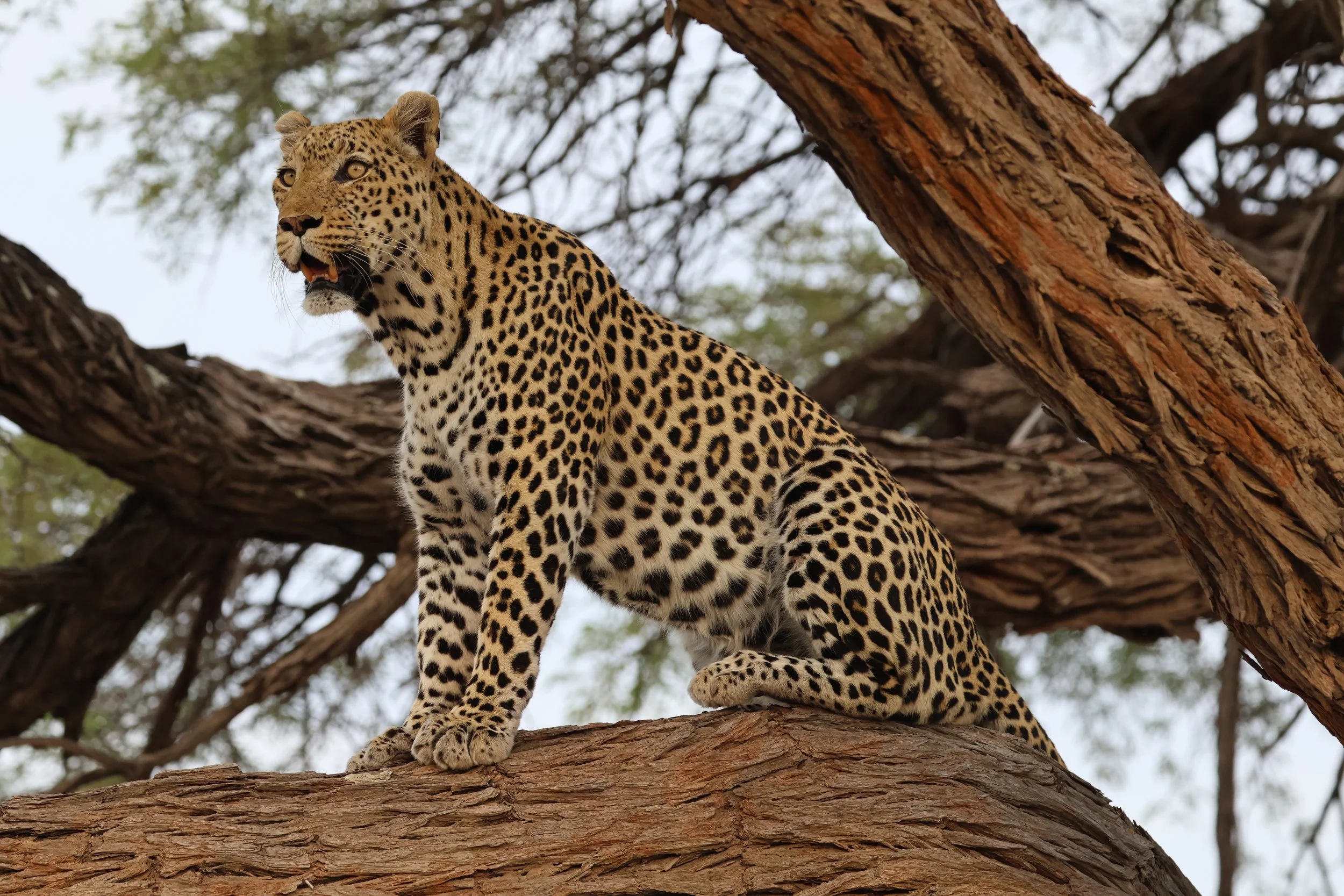
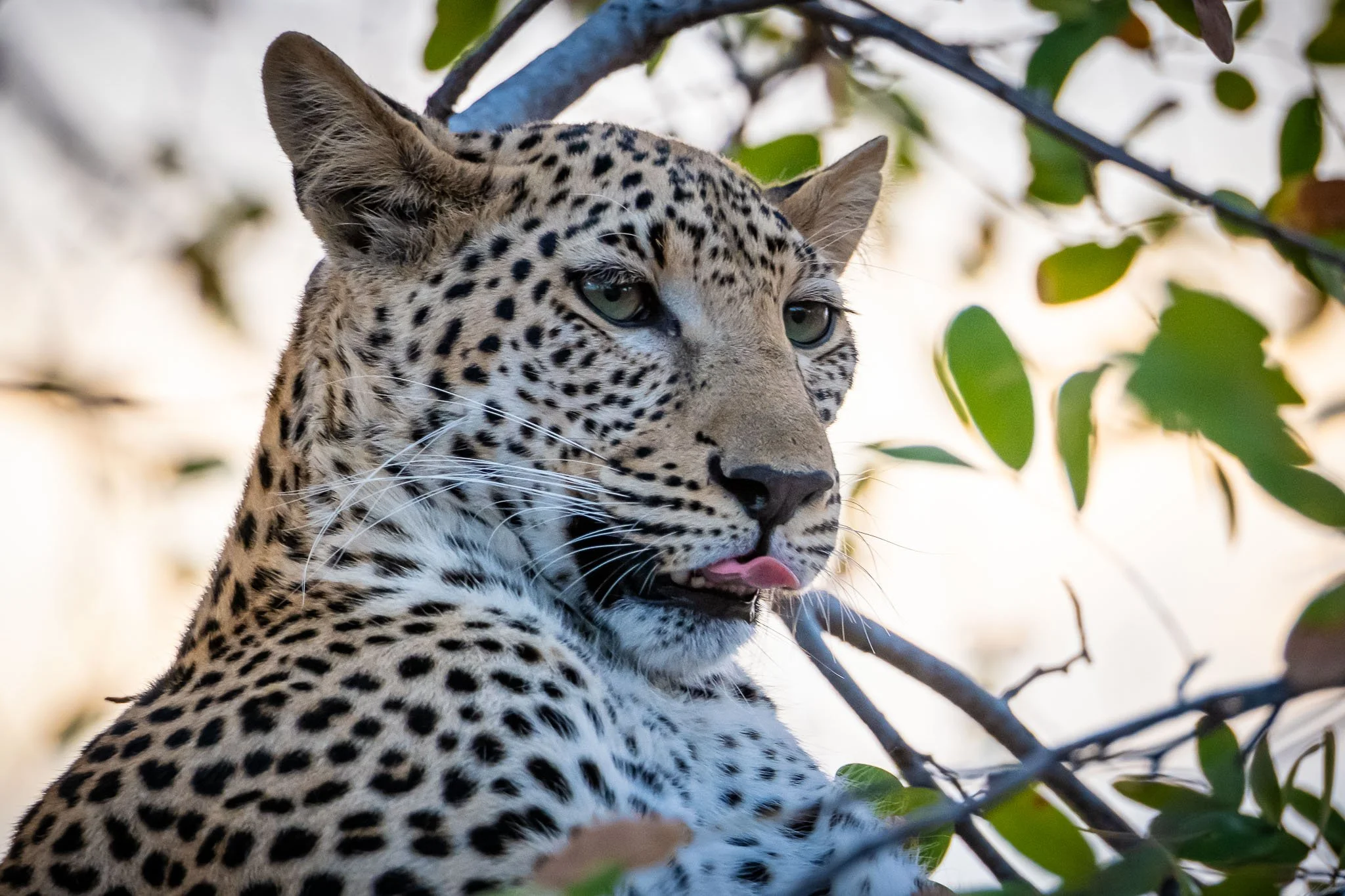
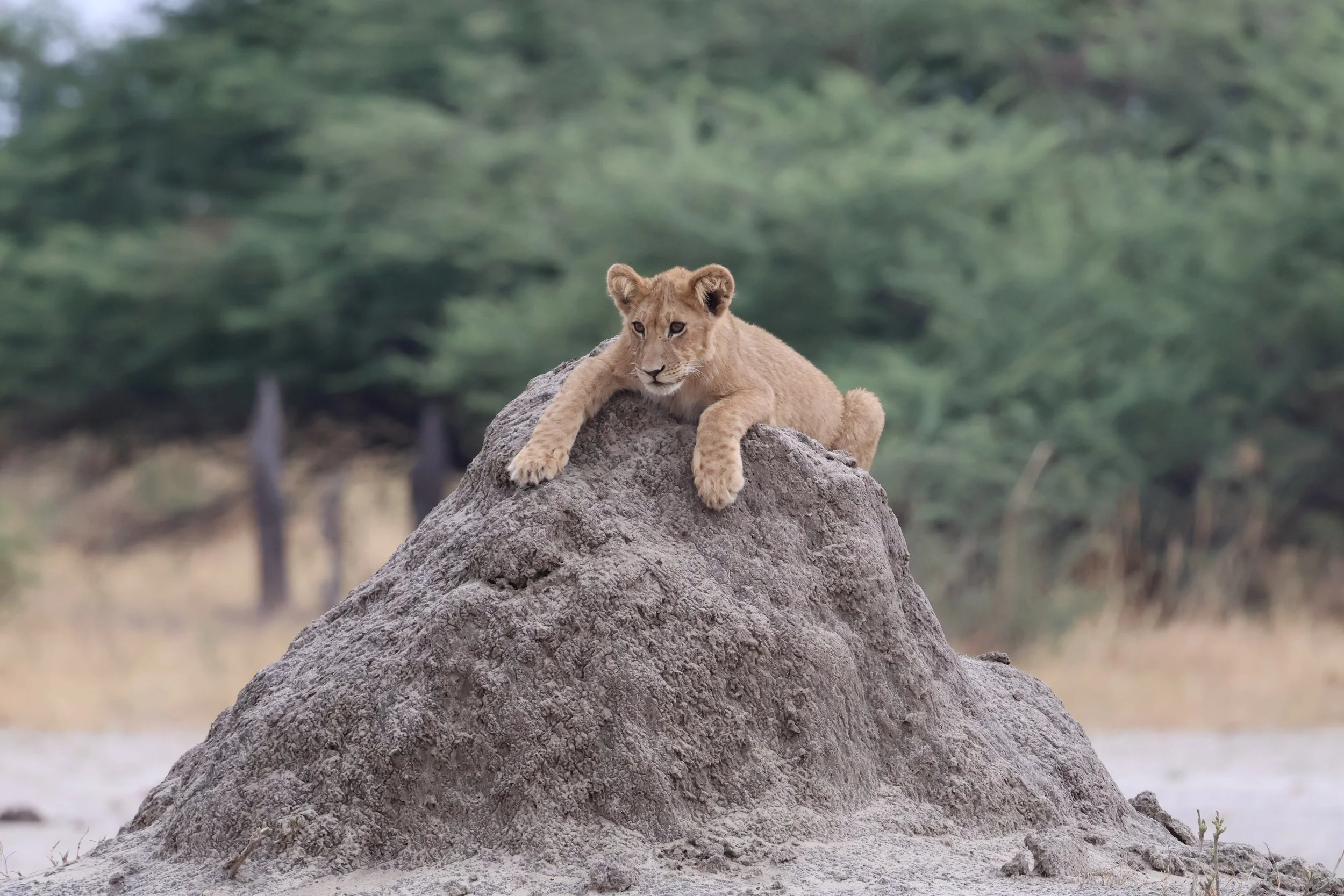
Chobe National Park is one of the few places in Africa where the continent’s great predators share the same terrain. Leopards move through the riverine forests, lion prides follow elephant herds across the bush, cheetahs roam the open plains, and caracals emerge quietly at dusk.
Munga Plains retreats focus on the Chobe Riverfront along the Namibian border, where game drives and boat cruises offer remarkable wildlife encounters throughout the year.
Chobe National Park
Established
1968
The park was declared shortly after Botswana’s independence to protect the wildlife along the Chobe River. Today, it remains the country’s third-largest national park after the Central Kalahari and Gemsbok regions.
Area
11,700 km²
Stretching from the Chobe River in the north to the Mababe Depression in the south, the park encompasses floodplains, riverine forests, woodlands, and vast marsh systems.
Elephants
50,000+
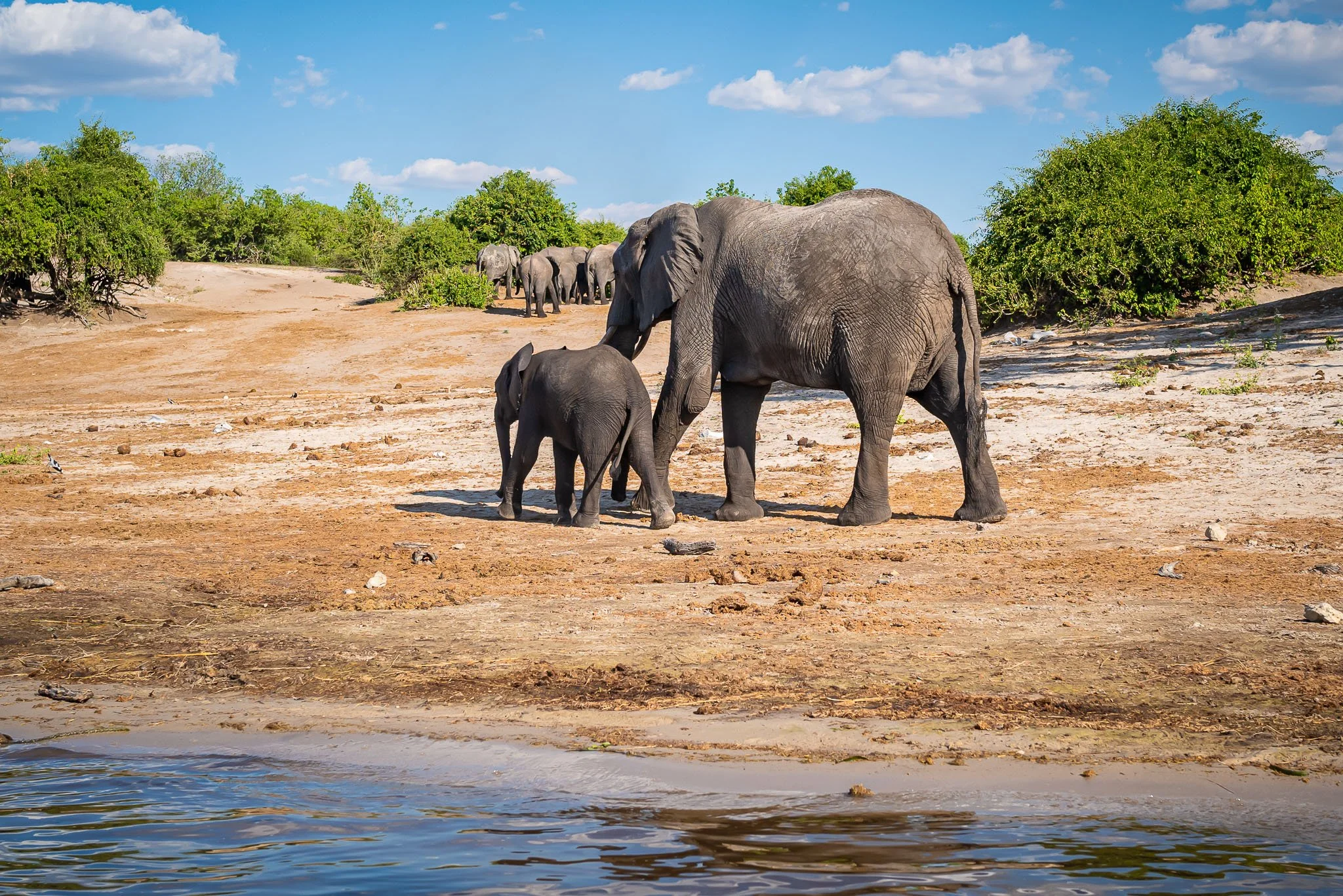
Large herds gather along the river during the dry season before dispersing deeper into the bush and across neighboring borders during the greener months.
Birds
450 species
Fish eagles soaring overhead, carmine bee-eaters nesting in cliffs, and lilac-breasted rollers flashing color across the plains make this a remarkable destination for bird photography and observation.
-
![]()
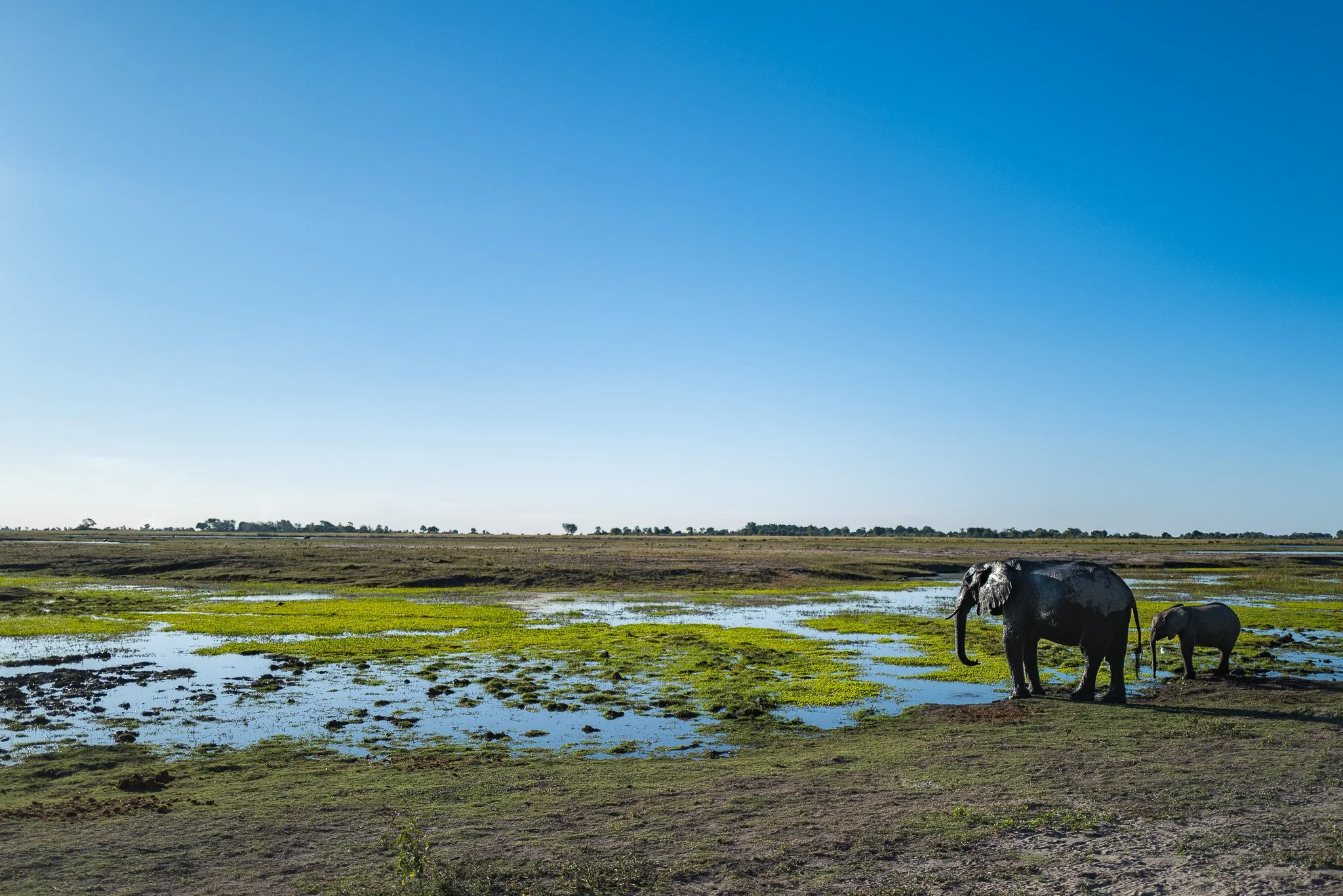
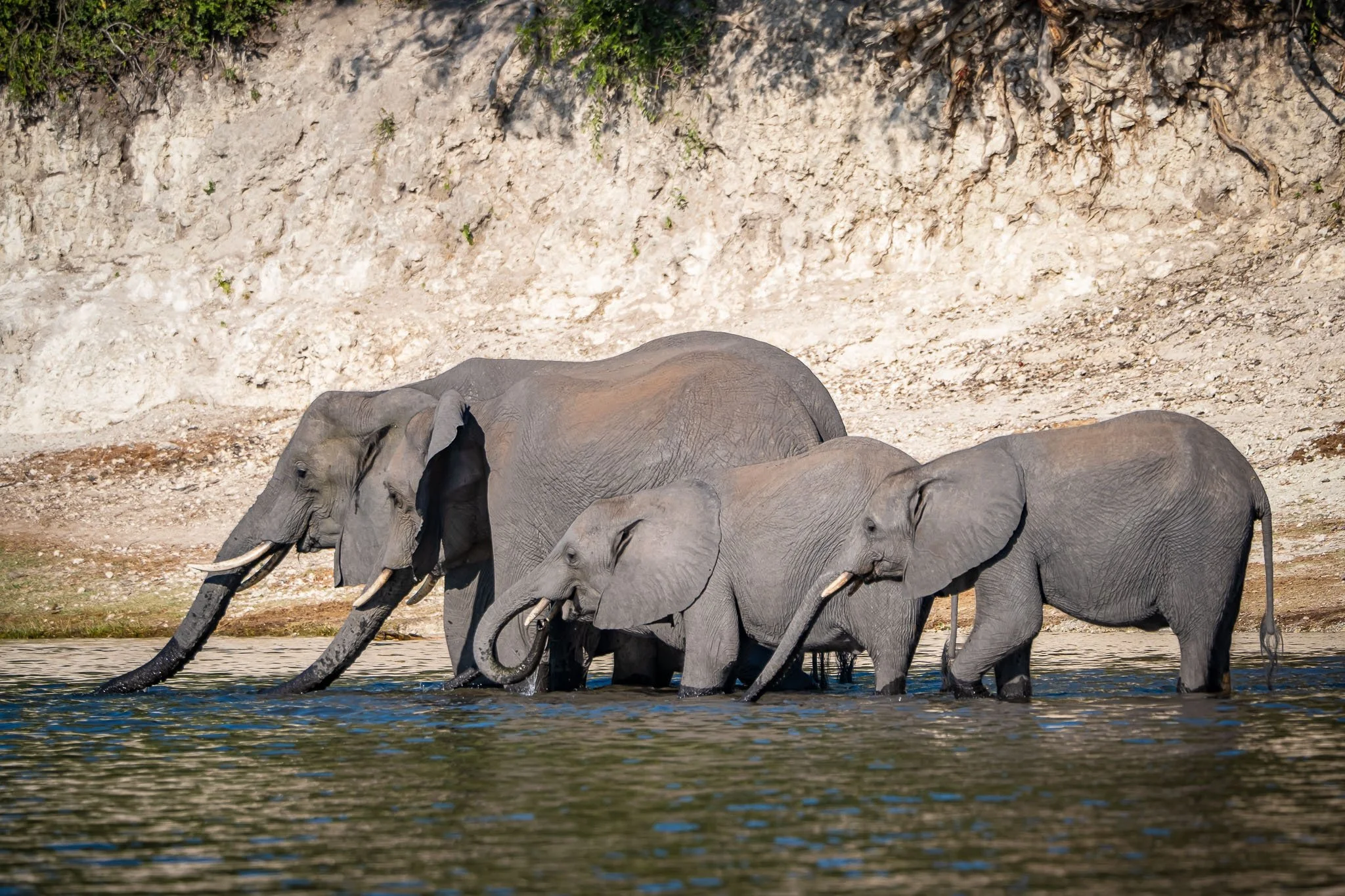
The world's largest elephant population
Named after the river that runs along its northern edge, Chobe National Park was Botswana’s first national park, established in 1968. Around 50,000 elephants live within the park itself, while more than 100,000 move across the surrounding landscapes between Namibia, Zimbabwe, and Botswana.
-
![]()
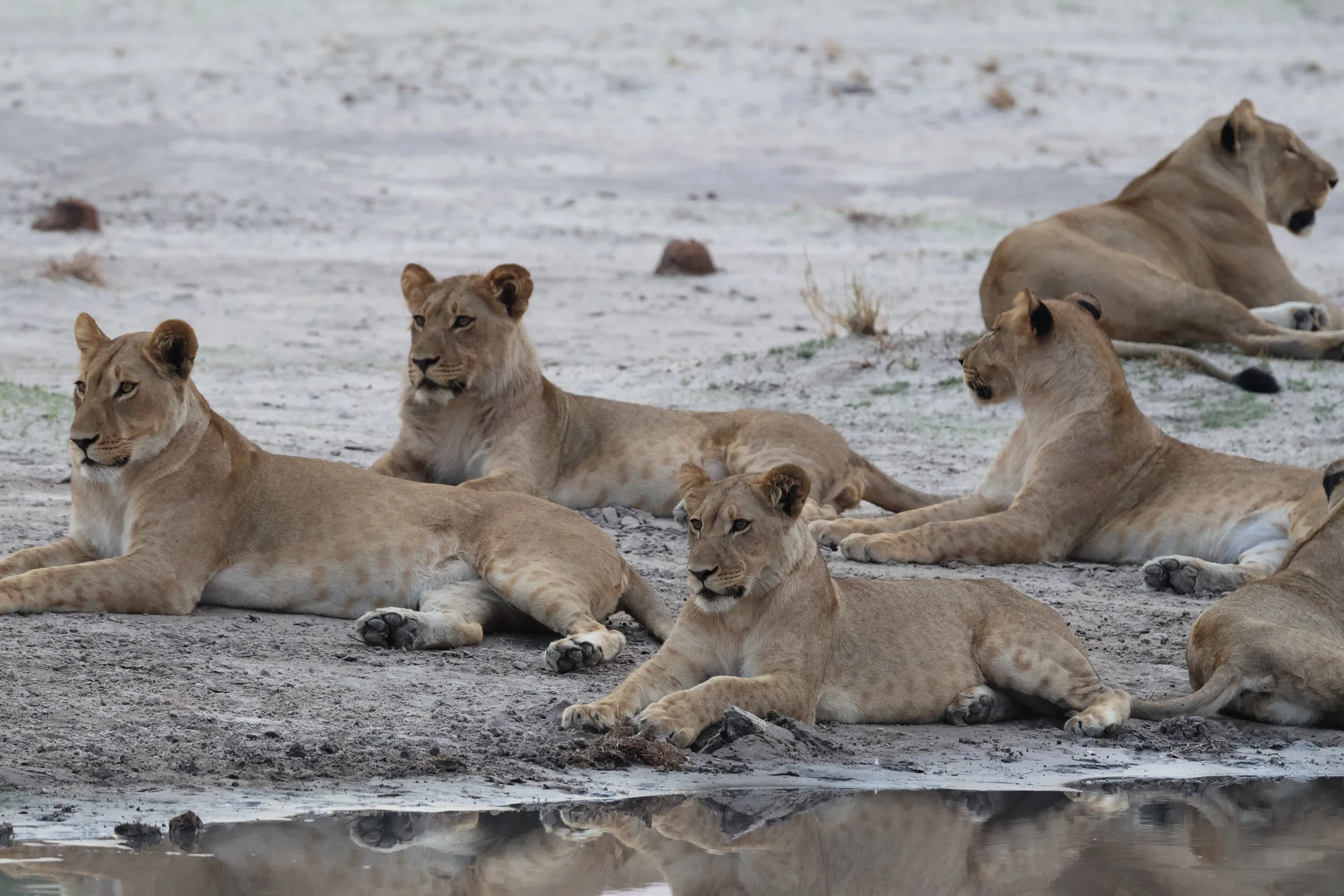
Wildlife & Ecosystem
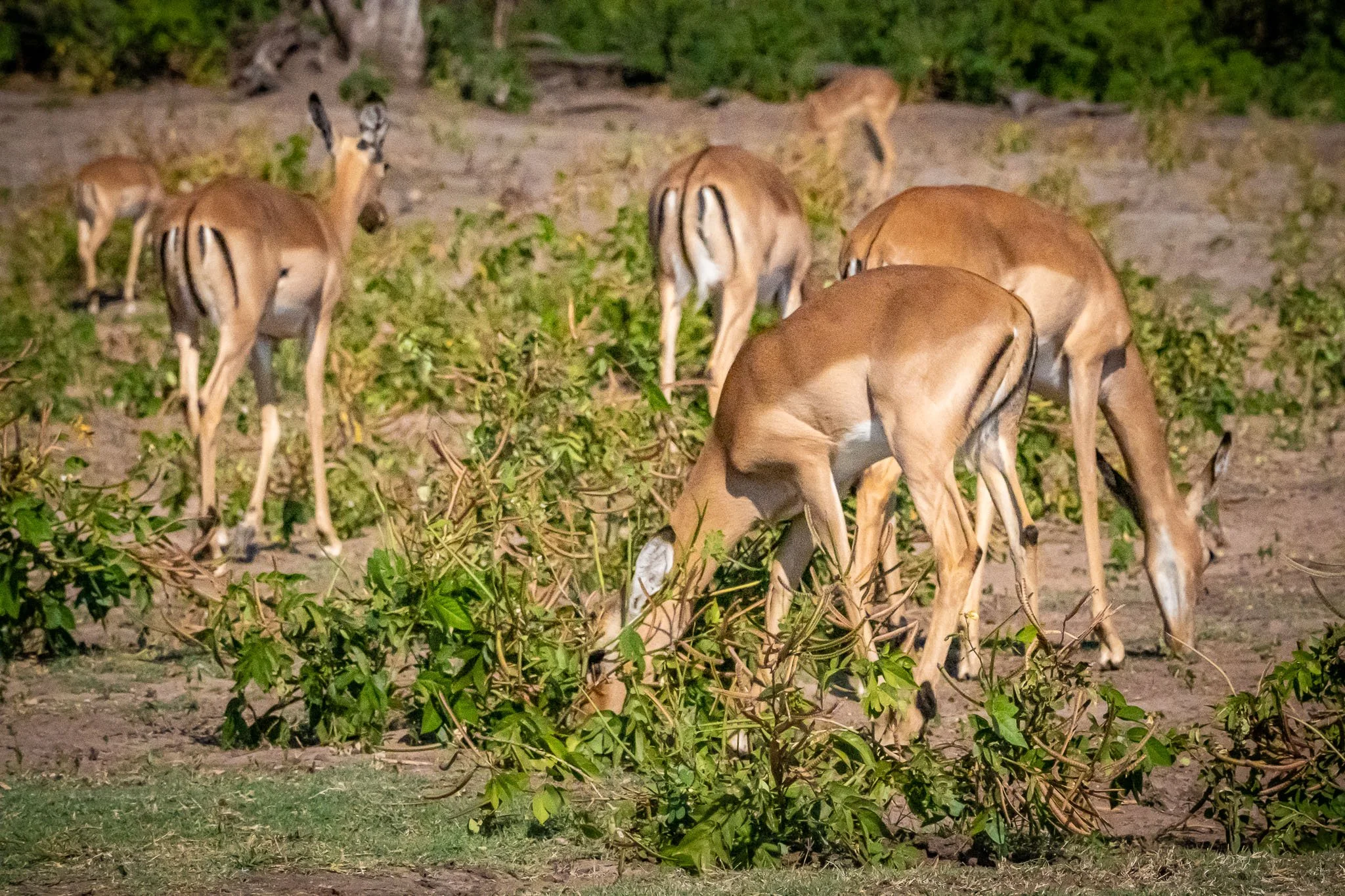
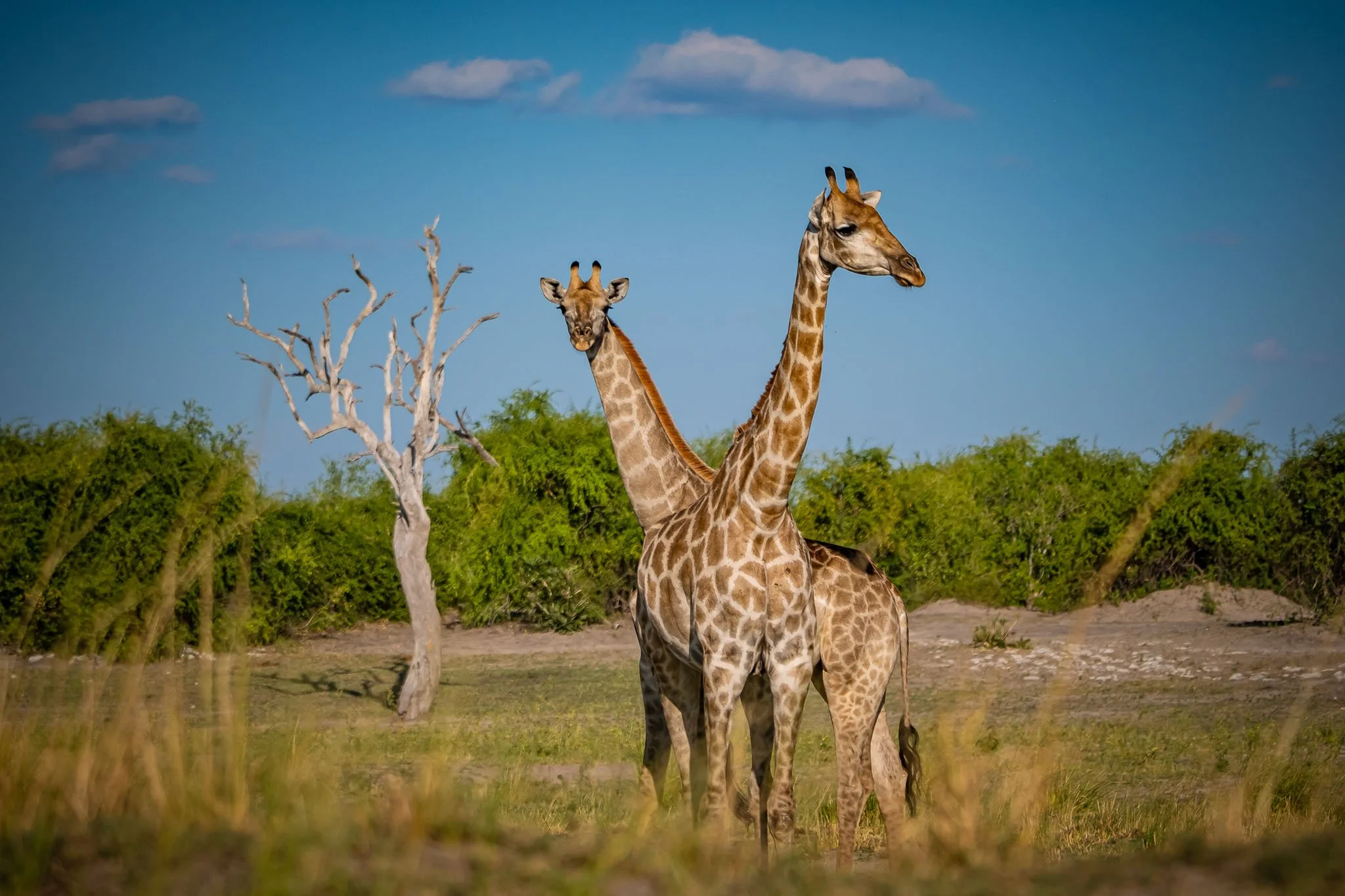
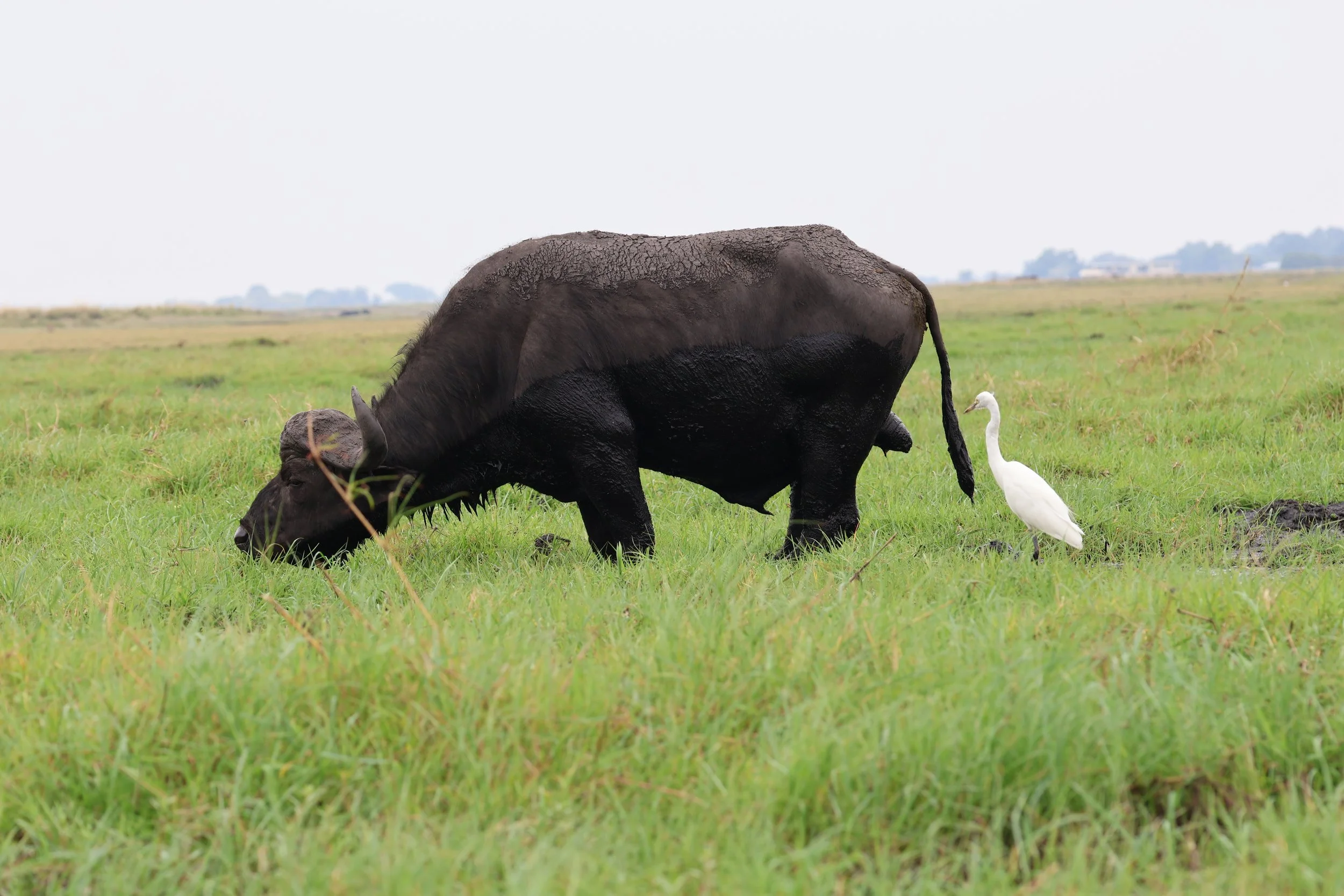
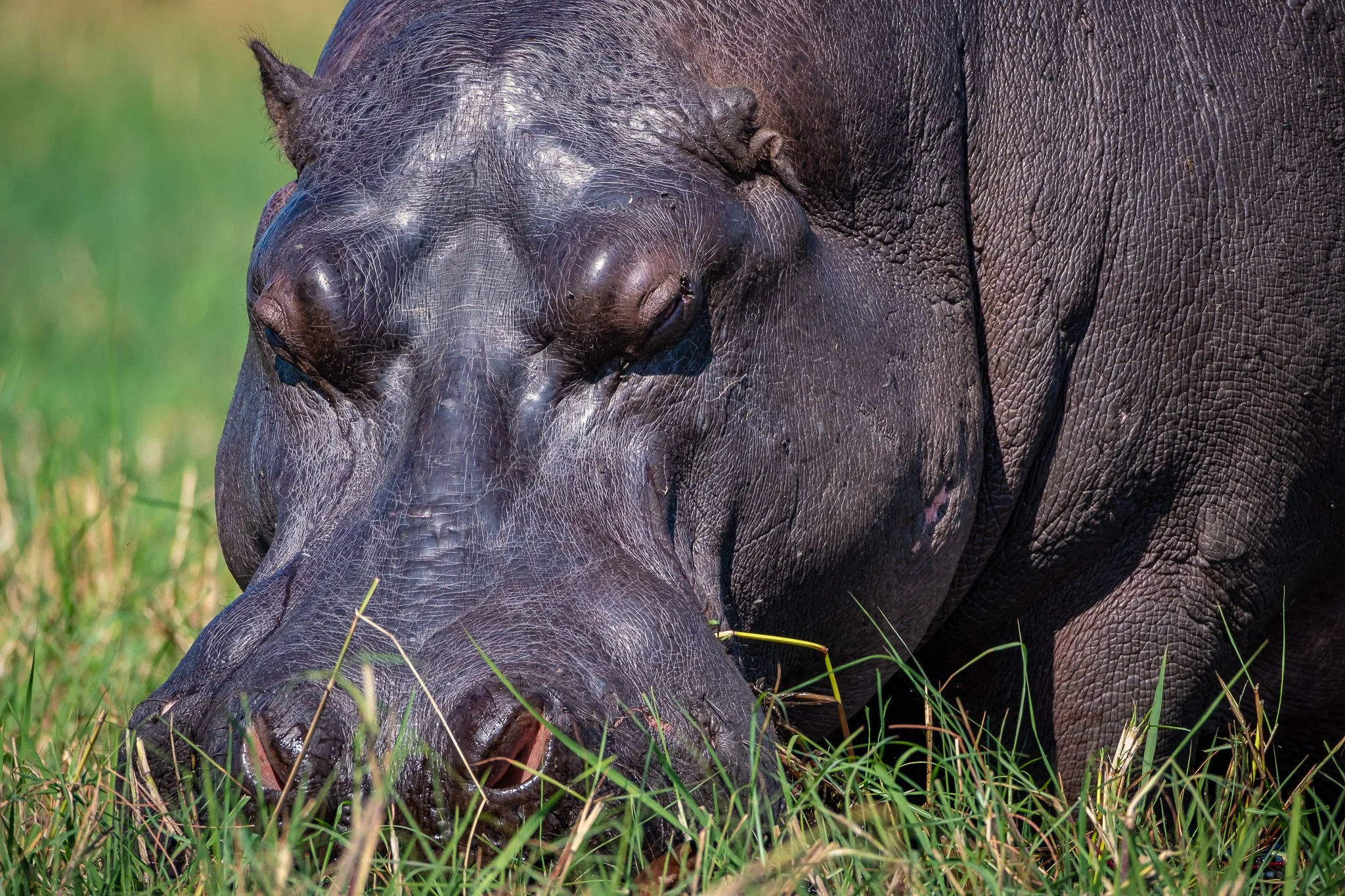
Alongside its vast elephant population, the park is home to lion prides, leopards, cape buffalo, hippos, giraffes, zebras, countless antelope species, and the endangered African wild dog.
-
![]()
Four landscapes, one park
Four distinct ecosystems shape the park: the Chobe Riverfront in the north, the Savuti Marsh in the centre, the Linyanti wetlands along the Namibian border, and the Nogatsaa grasslands that connect them. Munga Plains is based along the Riverfront, where camp is located, while our mobile safaris often begin in the dramatic landscapes of the Savuti Marsh.
-
![]()
Game drives
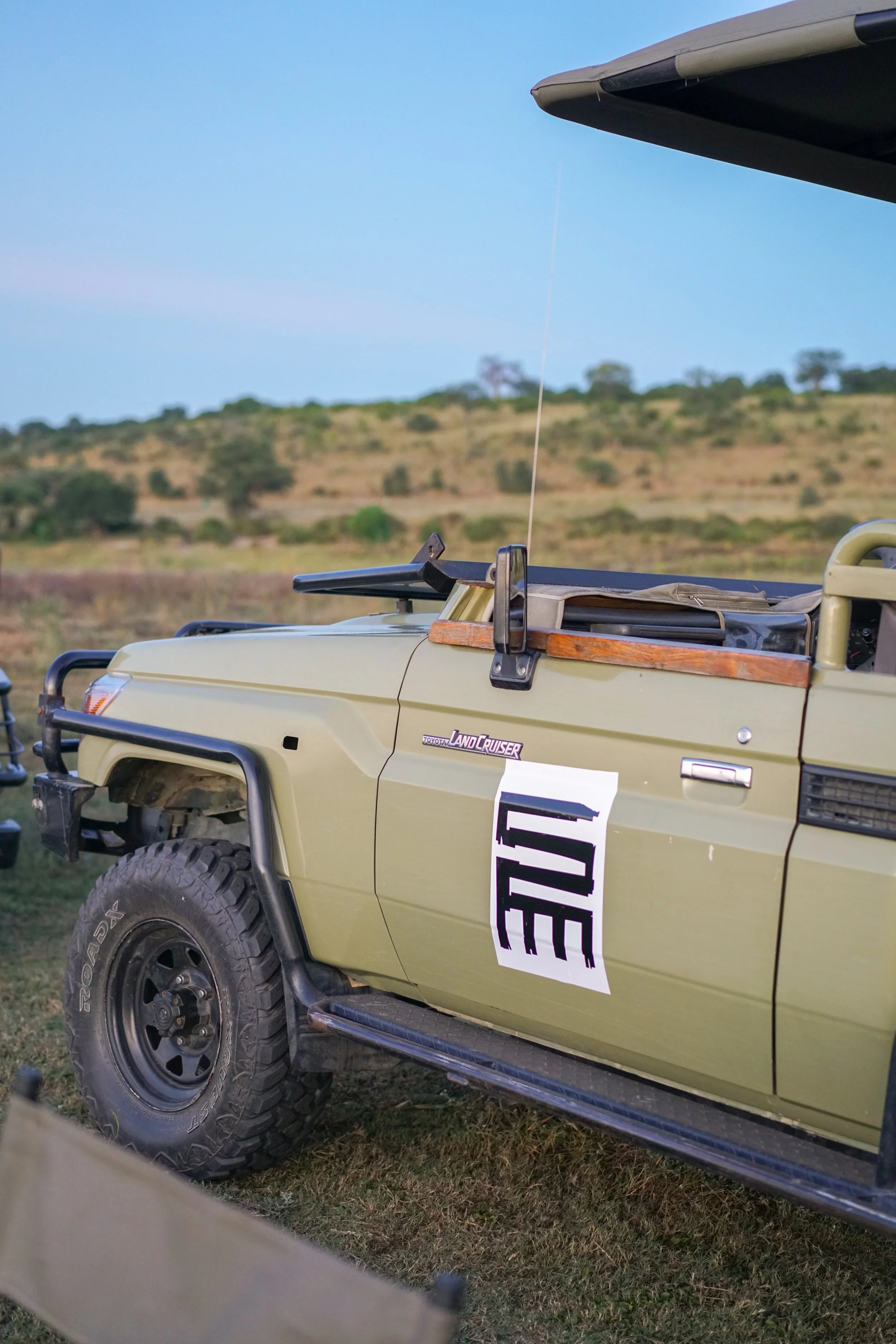
Game drives at dawn and dusk offer the classic safari experience from the comfort of a 4x4 vehicle. The guides were raised on this land and know its rhythms intimately: every road, every track, every call in the distance.
-
![]()
Boat cruise
Boat cruises along the Chobe River bring you close to elephants gathering at the banks, hippo pods drifting through the water, and crocodiles resting in the sun.
-
![]()
Walking safari
Walking safaris slow the pace, revealing tracks, medicinal plants, insects, and the smaller details of the bush often overlooked from a vehicle. Mokoro excursions glide quietly through the channels and floodplains among dragonflies and lotus flowers.
-
![]()
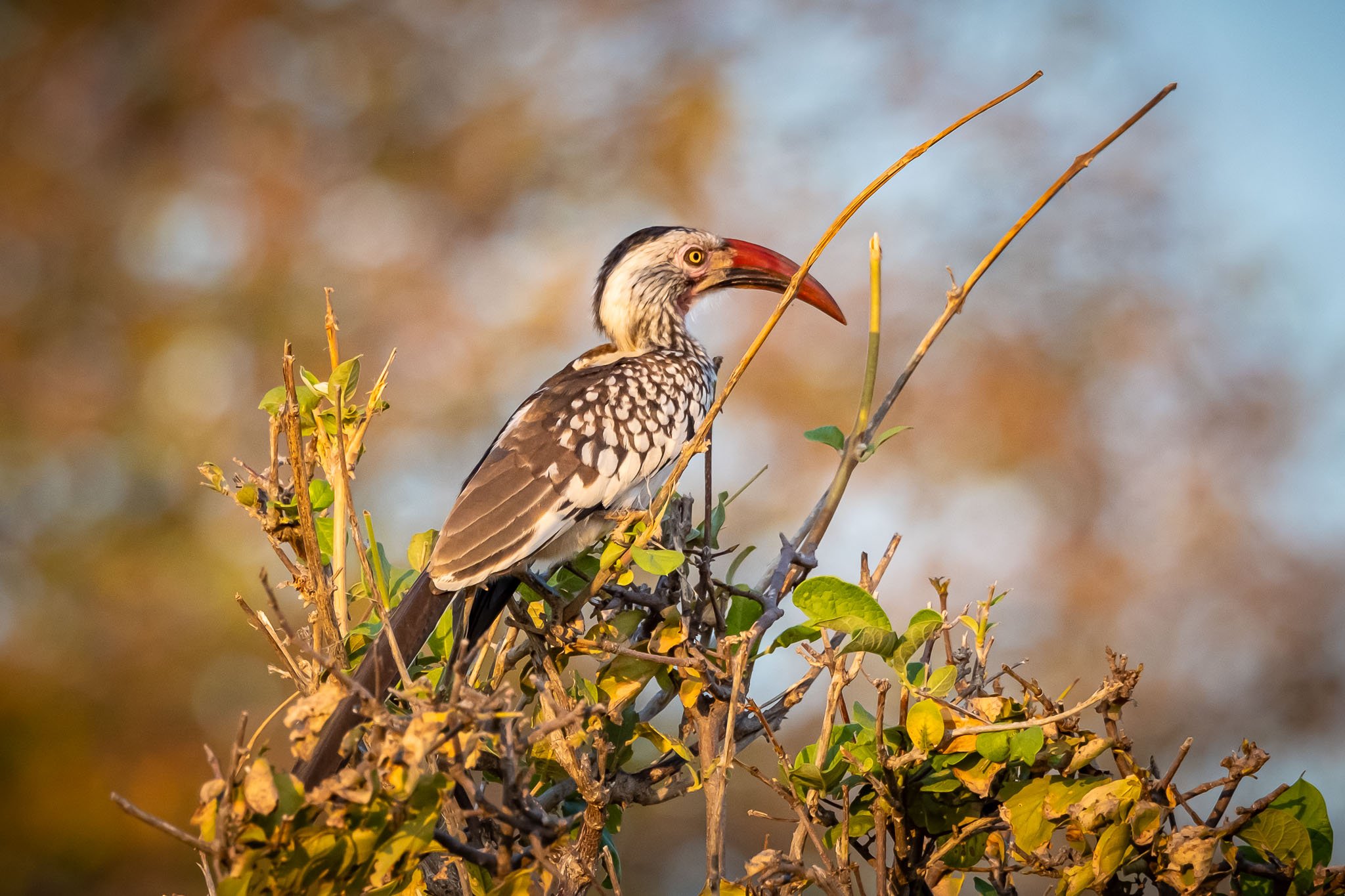
Four hundred and fifty bird species
With around 450 recorded bird species, the park supports one of the richest bird ecosystems in the region. A boat cruise along the river is one of the best ways to encounter many of them in a single outing.
Location
Chobe, Botswana, Africa
In the north of Botswana, where four African countries meet, the region offers a rare sense of remoteness while remaining rich in wildlife and relatively untouched by mass tourism. Around three hours by road from Victoria Falls Airport, the camp is perfectly positioned for those wanting to combine the retreat experience with a visit to Victoria Falls.
Upon arrival, the Munga Plains team welcomes guests and transfer them to a partner lodge where the group gathers as the retreat begins. It is a chance to settle in, rest, and arrive slowly into the experience.
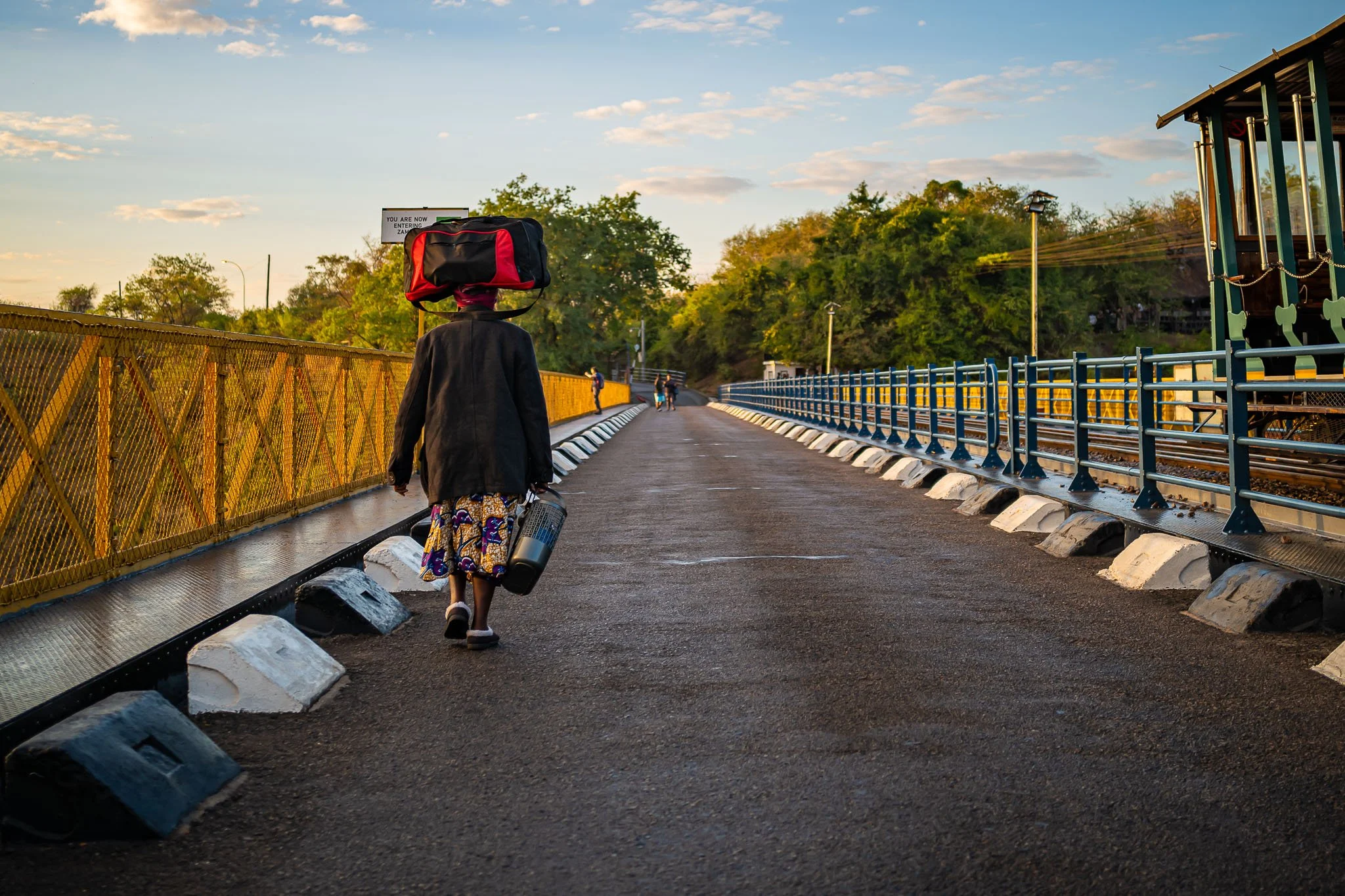
The journey to camp takes about three hours by road via Kasane, including all transfers and border crossings arranged by our team. A boat cruise along the Chobe River is included en route, offering a gentle transition into the rhythm of the bush.