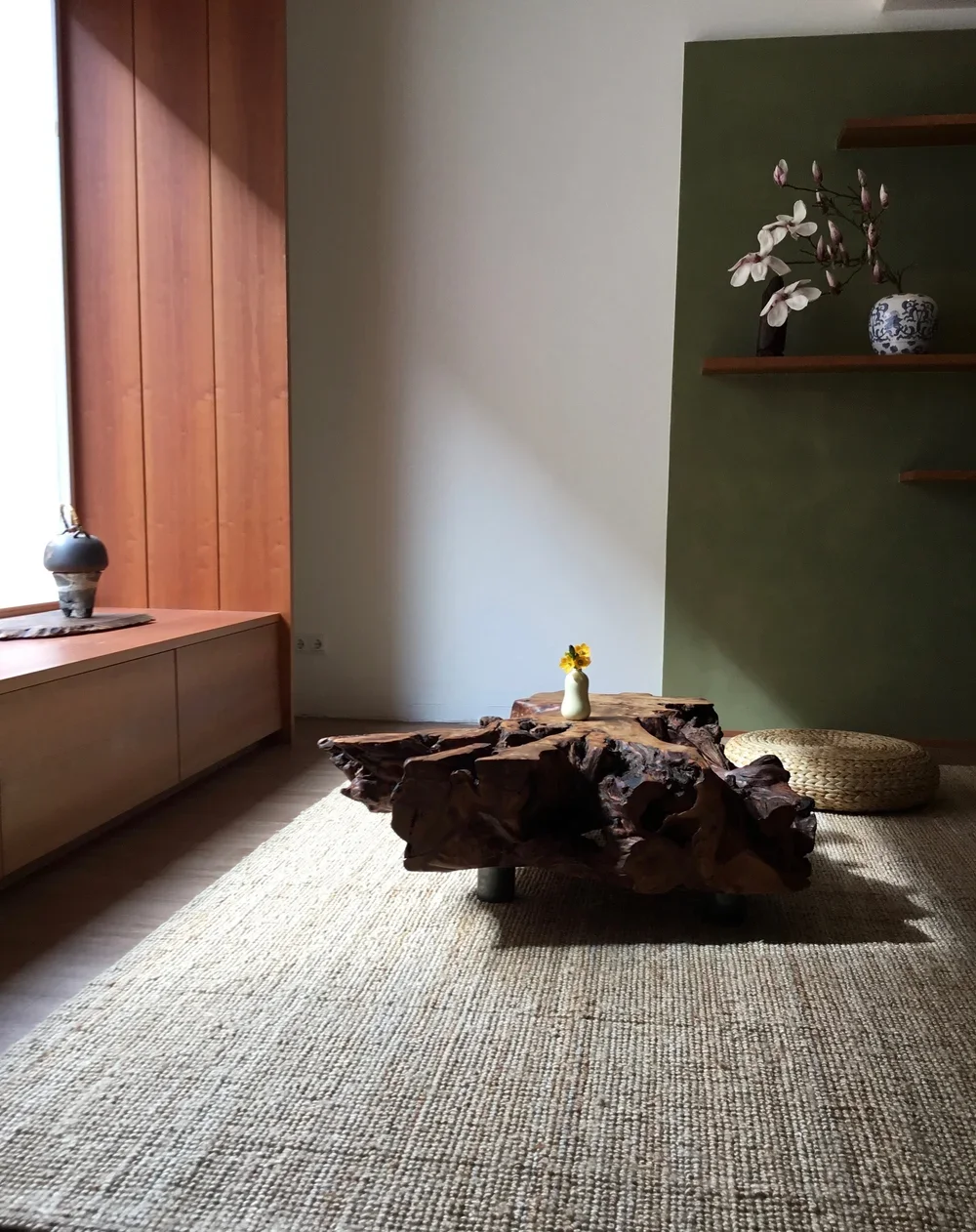
Hosted by Tushita Teehaus & Gallery
Discover how to bring the Japanese philosophy of Ikigai into your Western daily life. This introductory course bridges the gap between theory and practice, using Japanese Buddhist philosophy and Ken Mogi’s Five Pillars to help you foster a fulfilling life. Through simple, low-time-commitment exercises, you will kickstart a journey toward your true self and uncover what genuinely brings you joy and purpose.
The Japanese philosophy of life, IKIGAI, is a centuries-old, Buddhist-influenced tradition. Literally translated, IKI (生き) means life and GAI (甲斐) means meaning or value. IKIGAI is not only an inner, life-sustaining force that drives us and is the reason we get up in the morning, but also an energy capable of healing. We can achieve our personal IKIGAI through the Five Pillars.
Starting small
A Japanese proverb says, "Those who want to achieve great things must first do small things." Starting small, in the sense of the Ikigai philosophy, means taking small initial steps into action. Buddha warned his students against letting his teachings degenerate into mere philosophy, as they can only be grasped through action. Only through practice are concrete experiences, insights, and successes possible.
Developing joy in small things
Those seeking a powerful IKIGAI would do well to pay attention to the many small things in everyday life. With this attentiveness, we will automatically notice things that bring us joy and that give us a sense of purpose and gratitude—in short, an IKIGAI feeling. Discovering joy in small things therefore means perceiving IKIGAI moments and, in the next step, creating them ourselves by activating our IKIGAI sources.
Learning to let go
When we strive to cultivate a heart that equanimously observes the flow of constant change, we nurture our ikigai. Conversely, if we desperately insist that everything remain as it is, it will change anyway, bringing us only disappointment and suffering. For life is in flux, everything changes, and Lao Tzu advises: "Do not urge the river, let it flow." Letting go, therefore, means being in the flow. A Japanese proverb illustrates how essential this is: "Await happiness while sleeping." Letting things be and being like water—flowing, not clinging—gives us freedom, and freedom is the only condition for happiness.
Living harmony and sustainability
Harmony is equilibrium and balance. In Japan, it is called WA or NAGOMI. It is a necessary condition for our IKIGAI and the smooth interaction of all life forms in all areas of life, and is therefore all-encompassing. Everything, by which I mean humanity, Earth, and the cosmos, naturally strives for balance as long as humans do not interfere. Therefore, only humans can disrupt this harmony, but also actively bring it about or restore it. Sustainability means maintaining this harmonious balance permanently.
Being in the here and now
Our IKIGAI reveals itself in the here and now. We don't have to chase after IKIGAI. It is said that if you pursue it too much, you drive it away. It finds us when we actively choose to do so. But what exactly is the here and now? It is where our body and mind come together in the present moment, where body and mind are one. The vehicle to the here and now is mindfulness.
About the host
Japanologist and mental coach Marianne Hoffmann brings decades of authentic experience to her work. Having lived in Japan in the 1990s, she has spent 23 years practicing Shingon Buddhism and mastering Ikigai philosophy. She shares this expertise through her seminars and her book "SIMPLE IKIGAI – The Five Pillars of Inner Peace, Clarity, and Joy of Life" ( https://swiy.co/ikigai). Furthermore, she has advised the board of the Fraunhofer Society and its 75 institutes on Japanese affairs for 19 years.
Language: German
Tickets: 44€